
Researchers find no beeswax in Diego Rivera mural
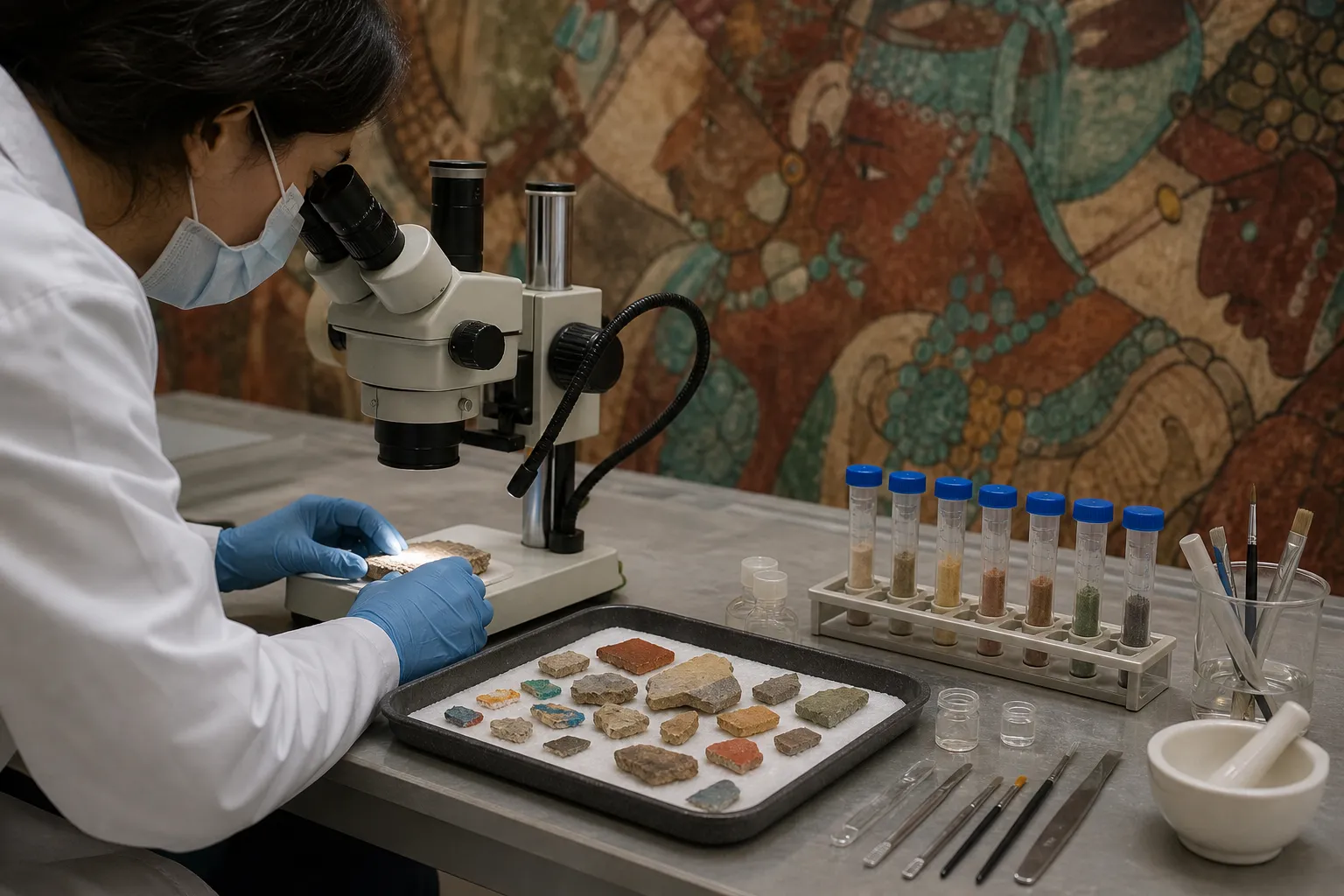
Researchers at the National Autonomous University of Mexico (UNAM) found no beeswax in the mural “La Creación” by artist Diego Rivera, although the artist claimed that he had used the ancient encaustic technique. Mexico News Daily reports on the results of the years-long study.
Rivera created “La Creación” in the early 1920s after returning from Paris to post-revolutionary Mexico. The mural at the Antiguo Colegio de San Ildefonso depicts the birth of humanity with Adam and Eve and also includes motifs from ancient Greek mythology. Today, the work is widely regarded as the starting point of Mexican muralism.
Testing the materials
Encaustic painting involves mixing beeswax, resin and pigments, then heating the material before applying it to a surface. Rivera told artist Juan O’Gorman that in “La Creación” he had revived genuine encaustic painting and had also used copal tree resin as a binding material.
A team of art historians and chemists studied the mural’s composition for about ten years. First, art historian Sandra Cetina Ocaña used optical, digital and electron microscopy to identify areas for sampling. The samples were then analyzed using chromatography and nuclear magnetic resonance.
More current news is available on the UA.News Telegram channel Telegram.
Traces of copal were found in every sample examined, but no beeswax was detected. Chemist Pablo Aguilar-Rodríguez re-examined the samples using a method that combines spectroscopy and microscopy and makes it possible to create chemical maps of paintings. He had previously clearly detected wax in another Rivera work, “El Matemático,” but was unable to confirm its presence in “La Creación.”
The wax did not disappear due to heating
The researchers tested the assumption that the wax could have disappeared as a result of heating during the work or degraded over time. They subjected wax samples to varying degrees of heating, but the substance could still be detected in subsequent tests. The scientists also confirmed the presence of beeswax in other encaustic murals from Rivera’s era, including works by David Alfaro Siqueiros and Jean Charlot.
According to Aguilar-Rodríguez, no wax was added to “La Creación.” At the same time, Cetina Ocaña does not rule out that Rivera may have announced his intention to use encaustic before beginning the work or deliberately concealed features of his own technique. She noted that the artist did in fact work with wax in other works.
The scientists emphasize that determining the composition of artworks is also important for their preservation. In other studies, the UNAM team analyzed the degradation processes of Frida Kahlo’s painting “Las Dos Fridas” and identified the materials used in Rafael Coronel’s mural “Paisaje Abstracto” in order to develop appropriate conservation approaches.




