
Russian strikes halt Zaporizhstal after four attacks — BBC News
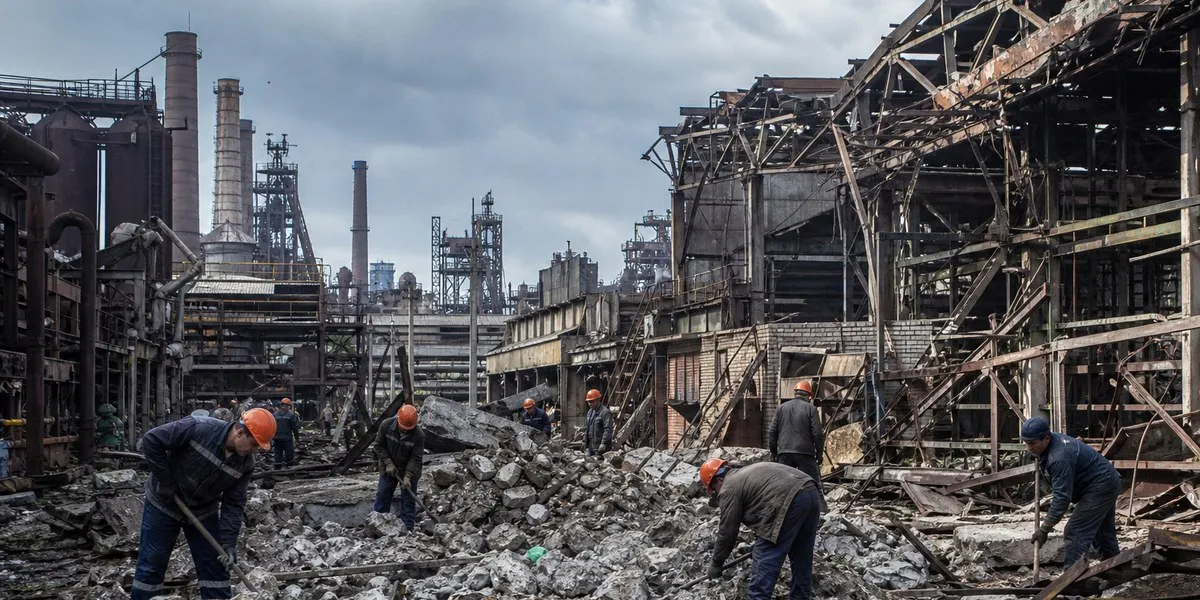
In Zaporizhzhia, Ukraine, the Zaporizhstal steel plant, which employs 8,500 people, has been shut down indefinitely after four waves of Russian missile strikes. Two attacks occurred in August and two more in September. According to BBC News, Russia, an aggressor state, fired a total of 17 missiles at the facility, said Metinvest Group Chief Operating Officer Oleksandr Myronenko.
Myronenko said that eight employees were killed in the attacks and another 31 people were injured. Plant worker Denys Maksyshko said the facility's equipment has been almost completely destroyed, the blast furnaces are nearly ruined, no windows remain in the buildings, and there are holes in the roofs. Workers are clearing debris and trying to plan reconstruction, but it is currently unknown whether Zaporizhstal will be able to resume operations.
Strikes on the steel industry
Russia's campaign of air strikes on Ukrainian steel enterprises, BBC notes, began in August. All of Ukraine's steel plants have been struck, some repeatedly. Myronenko said the industry has practically come to a halt and its contribution to the country's GDP has likely approached zero.
Before the full-scale invasion in 2022, the steel and mining industries accounted for about 10% of Ukraine's GDP and one-third of exports. More than half a million people worked in the sector, and every thirteenth job in the country was directly or indirectly connected to it.
More current news is available on the UA.News Telegram channel Telegram.
Risks for industrial cities
On September 25, Ukraine's largest steel plant, Arcelor Mittal Kryvyi Rih, reported that it could not resume operations after repeated attacks over five weeks. The company said five of its employees had been killed. Oleksandr Vilkul, head of the Kryvyi Rih Defense Council, said the plant's shutdown would affect not only employment but also local budget revenues and the funding of city infrastructure.
Stanislav Zinchenko, head of the consulting company GMK Center, told the BBC that taxes from steel enterprises had financed between 30% and 70% of local budget expenditures in the cities where they operate. He warned that a prolonged shutdown of the plants could lead to hundreds of thousands of people losing their jobs and waves of migration far beyond Ukraine's borders.
An attempt to restart one of Zaporizhstal's blast furnaces was interrupted by a new air attack 10 hours after its launch. The industry's operations are also complicated by strikes on railways and ports, as well as EU steel import quotas introduced on July 1.




