
The ability to speak has long ceased to be a skill reserved solely for TV hosts, politicians, or people who regularly take the stage. Today, doctors run social media accounts, managers record videos for their teams, entrepreneurs present their projects, and even specialists who previously had almost no contact with an audience are increasingly becoming public representatives of their companies.
At the same time, short videos are training people to shift their attention quickly, messaging apps are replacing face-to-face conversations, and artificial intelligence can already write a speech or a response to a complex message in a matter of seconds.
According to Svitlana Nakonechna, a trainer in business communication and public speaking, in these circumstances it is especially important not just to talk a lot, but to be able to listen, ask the right questions, understand the other person, and manage your own behavior during difficult conversations.
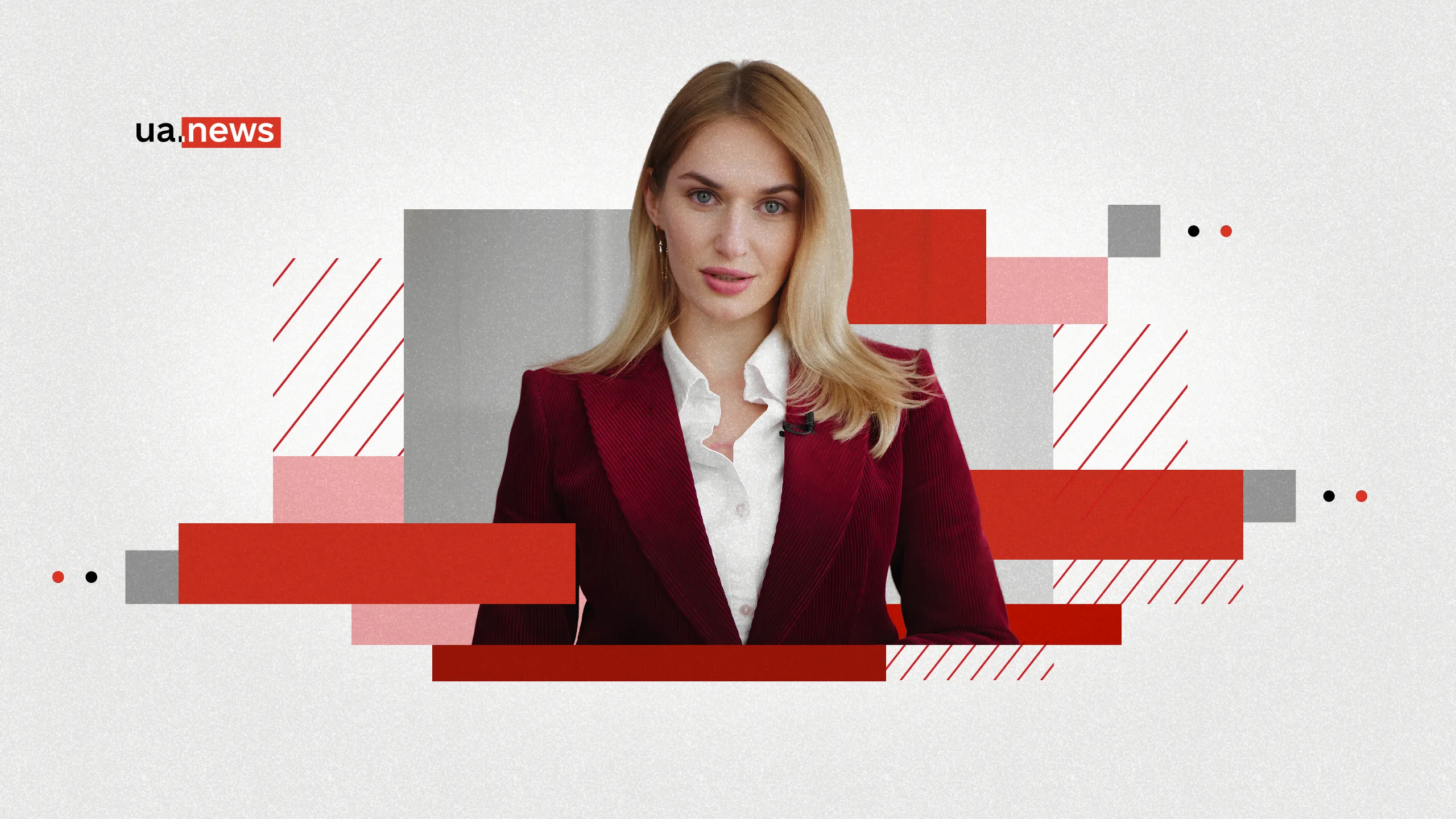
UA.News spoke with Svitlana Nakonechna, owner of the “Krasnomovets” public speaking school, Svitlana Nakonechna about the fear of public speaking, business negotiations, manipulation, body language, the influence of TikTok and artificial intelligence on our communication, as well as why, in her opinion, it’s worth starting to develop communication skills as early as in school.
From Television to Communication Training

Nakonechna’s professional journey did not begin with training courses. She received an acting education focused on theater, drama, and film, although her parents were initially opposed to this choice. After graduation, she worked in film, theater, and television.
She didn’t start teaching public speaking until much later—and, as she says, she hadn’t planned on it at all.
“I never planned to teach. At the time, I was working in television as a journalist and TV host. The owner of a local cosmetic clinic, who had seen me on TV, reached out to me. She was organizing a brunch for her community and invited me. That was my first public speaking engagement,” said Svitlana Nakonechna.
Today, she recalls that before her first presentation, she didn’t feel nearly as confident as one might expect from a future instructor.
“I didn’t know what to say; I felt awkward. And I was really surprised that people actually liked it. After that, I started getting more invitations, and then I was asked to teach a course at a school,” said Nakonechna.
Great communicators aren’t born that way
One of the most common reasons people don’t even try to develop public speaking skills is the belief that they simply aren’t “cut out” for it. Nakonechna strongly disagrees with this approach.
In her opinion, public speaking cannot be equated with creative talent, which people tend to view as innate.
“This is a very mistaken idea. Public speaking is not an innate talent, like, for example, painting, composing music, or writing poetry. It is a communication skill. You need to understand the psychology of communication and know the techniques that help you hold people’s attention, persuade them, and inspire them. And anyone can master these tools,” explained Svitlana Nakonechna.
Over the years, her own way of interacting with people has also changed. She says that today it’s much easier for her to connect with strangers, and her developed communication skills have become more than just a professional tool for her.
“I connect with people very easily, and they are drawn to me. When they face difficult situations in life, they often come to me for support. This creates a very strong network of connections. And it helps in business, too: you go to an event where someone else might struggle to make a connection, but for you, that connection happens almost on its own. Such connections are sometimes more valuable than money,” said the coach.
Communication skills, she said, also provide a sense of inner resilience in situations that might previously have caused severe stress.
“An unexpected conflict no longer throws you off balance. If you need to discuss something regarding your child at preschool or school—you know how to handle it. Whether you need to talk to family members or give a toast—you have that confidence,” Nakonechna noted.
Professional speakers get nervous, too
Having experience doesn’t mean you’re completely free of fear when speaking in public. On the contrary, Nakonechna considers nervousness a normal human reaction.
The difference between an experienced and an inexperienced speaker lies primarily in the fact that the former understands their own state of mind and knows how to manage it.
“Yes, professional speakers get nervous, and that’s perfectly normal. It’s not normal to not be nervous at all. It’s just that for people who speak often, this nervousness is different. Fear is a basic reaction to the unknown. Before a public speech, you can’t predict how people will react to you, so it’s normal to be afraid,” explained Svitlana Nakonechna.
She herself, she says, is well aware of how her nervousness manifests and doesn’t try to get rid of it entirely.

“I recognize my reactions when I’m really nervous. But they don’t throw me off track. I know how to cope with it, how to channel that state into greater energy rather than apathy,” said the coach.
From a psychological standpoint, she identifies the fear of judgment as one of the main sources of such anxiety.
“People are very often afraid of being judged: that they won’t be understood correctly, won’t be heard properly, that they won’t come across the right way, or that they aren’t competent enough. In other words, many fears are actually linked to a person’s own expectations of themselves,” Nakonechna explained.
At the same time, she says, an inexperienced speaker can often be recognized within the very first few seconds.
“The first thing is making excuses: ‘I don’t know,’ ‘I didn’t prepare,’ ‘I’m sorry,’ ‘I’m nervous,’ ‘This is my first time.’ This reassures the speaker, but it doesn’t benefit the audience in any way. A professional may be nervous, but they won’t waste the audience’s time explaining their nervousness,” said Svitlana Nakonechna.
Among other mistakes, she cites speaking too quickly, a lack of eye contact, constantly jumping from one topic to another, and providing too much information.
“You need to deliver information in small doses. You give a certain portion, see the reaction, and once the audience has absorbed and ‘digested’ it—then you can move on to the next part. Someone who doesn’t have a feel for this will ramble, repeat themselves, drag things out, and talk too much,” explained the coach.
In negotiations, the key is not to speak, but to listen
Nakonechna considers one of the biggest mistakes in communication to be the belief that a large number of words automatically means good communication.
In practice, she says, it works almost the opposite way.
“People think: if I’m speaking, that means I’m being heard. Or if I talk a lot, that means I’m contributing a lot. But communication is when the other person does most of the talking, and you know how to listen,” said Svitlana Nakonechna.
She places listening first and foremost in business negotiations as well.
“Only by listening can you build effective communication. If you don’t understand what the other person needs, or if they don’t feel heard, understood, and supported, no techniques will help,” explained Nakonechna.
At the same time, negotiation techniques themselves—such as a long pause or deliberately lowering the initial offer—can be effective. However, she does not recommend using a single tactic throughout the entire conversation.
“There are different stages in negotiations. You might use one strategy at the beginning, another in the middle, and a third at the end. For example, you might start from a more open—or even weaker—position to establish rapport and see how much the other person is willing to open up. It’s a mistake to maintain a single strong position from start to finish,” the coach explained.
In her opinion, negotiations should vary in pace and emotional dynamics.
“Whether it’s negotiations or public speaking, things need to change. That’s when you’ll be more interesting, less predictable, and able to gain the upper hand,” said Svitlana Nakonechna.
Where Does Firmness End and Manipulation Begin?
A firm conversation in and of itself is not yet manipulation. For Nakonechna, the main line is drawn where a person stops talking about specific behavior and shifts to attacking the other person’s character.
She gives the example of being late.
“You can say, ‘I understand there’s traffic right now, but your tardiness is affecting our conversation.’ That’s an assertive approach. A harsher version would be, ‘I find it unacceptable when people are late; it affects the quality of our conversation.’ But you’re still not attacking the person,” explained Svitlana Nakonechna.
Manipulation, she said, begins with personal labels, generalizations, and attempts to get under the other person’s skin.
“If you say, ‘You’re late, as usual,’ that’s a personal attack. That’s when a completely different kind of communication begins,” said the coach.

Another sign of manipulation is when the other person frames a certain idea as if you’ve already automatically agreed with it.
“The person speaks as if this were already your established opinion: ‘Everyone thinks so,’ ‘We all understand,’” explained Nakonechna.
Psychological and communication skills, however, can be used not only to benefit the person you’re talking to.
“It’s a very powerful tool. If you know how to influence people, some use it with good intentions, while others use it for their own purposes. Politicians do this all the time. Unfortunately, that’s how it is,” said Svitlana Nakonechna.
If the person you’re talking to starts resorting to overt pressure or aggression, Nakonechna advises first setting boundaries calmly.
“First, you politely explain that this style of communication is unacceptable to you. If that doesn’t work, you can physically increase the distance between you. And if the person persists, then you make your boundaries clear with a different tone and gaze. Sometimes firm communication is necessary, but without getting personal,” the coach noted.
First Impressions and Body Language: Don’t Play Someone Else’s Role
Nakonechna considers first impressions to be extremely important, but the very desire to make a good one often becomes a trap.
People start dressing differently than they’re used to, copying unnatural mannerisms, and creating an image that’s difficult to maintain later on.
“People know that first impressions are important, so they try to be better than they really are. They wear clothes they don’t usually wear and adopt mannerisms they don’t have in real life. But you don’t need to put on a show. You need to know and showcase your strengths,” said Svitlana Nakonechna.
In her opinion, working not only with a public speaking coach but also with a psychologist can help you understand your own strengths and weaknesses. At Svitlana Nakonechna’s school, a candidate of psychological sciences also works with the students.
She considers body language to be just as important.
“Body language is very important in both negotiations and public speaking. These are nonverbal cues that people sense and interpret. Plus, body language affects our own state of mind,” Nakonechna explained.
According to her, when preparing for difficult conversations, she works not only on her clients’ words but also on their behavior and posture.
“A person may be nervous, but when they adopt the right posture, their state of mind changes. In other words, it affects both how you feel inside and how you appear to the person you’re talking to,” the coach said.
At the same time, she does not recommend turning body language into a set of memorized “secret” gestures. Nor does she advise trying at all costs to be as pleasant as possible to the person you’re talking to.
“Very often, we want to appear better, to build a connection, and we blur the line—to the point where we’ve already put ourselves in a subordinate position. You don’t always have to speak in an overly friendly manner. Confidence is a calm tone, a lack of unnecessary emotion. It doesn’t necessarily have to be pleasant,” said Nakonechna.
What Holds the Audience’s Attention

There is no single universal way to engage any audience. Facts, figures, stories, questions, intrigue, or provocation can work differently depending on the people in front of the speaker.
“You need to assess who you’re speaking to and what this audience needs right now. If it’s a business topic, it’s often better to start with facts and figures. If it’s a marketing topic, stories might work better,” said Svitlana Nakonechna.
She considers the ability to ask questions to be one of the most underrated skills.
“Asking questions is a huge advantage, and people don’t know how to do it. Basically, there are closed-ended and open-ended questions. If you ask, ‘Can you do this?’, the person will say ‘yes’ or ‘no,’ and that’s it. If you ask, ‘What do you think about this?’, that’s a whole different conversation,” explained Nakonechna.
The same applies to working with an audience.
“You can go up and say, ‘Good afternoon, I’m Svitlana Nakonechna, and today we’ll be talking about whether it’s possible to overcome stage fright.’ Or you could ask, ‘Have you ever been nervous before a presentation? Has there ever been a time when you were speaking—and your train of thought just flew right out of your head?’ That’s a question based on the audience’s experience,” said the coach.
That’s exactly why, before negotiations or a presentation, she advises against relying solely on improvisation.
“You need to prepare, know your client or audience, and have a Plan A and a Plan B. Then you’ll be able to achieve more,” noted Svitlana Nakonechna.
TikTok Is Changing Public Speaking, and Complex Conversations Shouldn’t Be Held on Messaging Apps
The popularity of short videos is already influencing how people perceive longer presentations. Nakonechna says that because of the habit of quickly shifting attention, even the structure of speeches has to be adjusted.
“People now process information very quickly and shift their attention just as quickly. That’s why we move all the key points to the beginning. If you start with something simple like ‘Good afternoon, my name is Svitlana,’ it could be a disaster. It’s better to start with, ‘How can you overcome stage fright?’ and only then say, ‘Good afternoon, my name is Svitlana,’” the coach explained.
The opposite problem is the ever-increasing amount of communication via messaging apps. It’s convenient to resolve simple organizational issues there, but Nakonechna advises shifting complex conflicts or emotional topics to a face-to-face conversation.
“It’s impossible to properly resolve complex issues through text messages because you can’t see the person’s emotions or reactions, and you can’t hear their tone of voice. The phrase ‘everything’s fine’ might sound like everything isn’t fine at all,” said Svitlana Nakonechna.
At the same time, she doesn’t rule out automation or AI for technical support with messages.
“If it’s an initial automated response, or if you’re very tired and have formed your own opinion but want help articulating it properly—that’s okay. But it’s best not to engage in complex conversations via text,” the coach explained.
The Pandemic, the War, and a New Culture of Business Communication
Even before the pandemic, Nakonechna’s main clients were primarily business and clinic owners. They needed help with negotiations, leadership skills, and public speaking. Over time, the situation changed.
“A few years later, those same owners began sending their leaders, managers, and doctors to me. Now every doctor has social media accounts, even if they work at a private clinic. Even an accountant, who used to have almost no contact with anyone, can record videos, communicate with clients, and become the face of the company,” said Svitlana Nakonechna.
As a result, a skill that was previously needed primarily by top management is increasingly becoming a basic professional competency.
“Processes that were previously hidden from view have now come into the public eye. That’s why communication skills need to be developed starting in school and continuing throughout one’s professional life,” said the trainer.

The pandemic has added another challenge—Zoom and remote meetings.
“Before COVID, public speaking was mainly about how to communicate in person and give presentations. Then questions started coming in: what to do on Zoom, how to run meetings, what to do when people turn off their cameras. We had to revamp the program,” Nakonechna explained.
During the full-scale war, she observed, the very culture of Ukrainian business negotiations has changed.
“In my opinion, it has become more collaborative and less rigid. There used to be more formal meetings. But now you treat the other person not as an opponent, but as a partner with whom you need to reach an agreement,” said Svitlana Nakonechna.
This, she said, is even evident in the finer details.
“Dress codes have become more casual, facial expressions are more relaxed, and communication and intonations are softer. Overall, there is less formality,” the trainer explained.
According to her observations, it is businesses and experts who are currently investing the most in these skills.
“Businesses are surviving. They understand that they need to grow, enter new platforms, markets, and forums, and make their presence known. There isn’t always enough money for targeting or advertising, but they still need to make their presence felt. That’s why there are definitely more businesses and experts now,” Nakonechna said.
AI can write a speech, but it can’t bring it to life
Nakonechna doesn’t consider artificial intelligence a tool that should be abandoned. She sees the problem in how exactly it’s used.
This became particularly noticeable during her teaching.
“I assign students the task of preparing a speech, they turn it in—and I see texts generated by AI. That’s a failure. It’s worth working with artificial intelligence, but to develop your own thoughts, to shed light on new ideas or topics. You don’t need it to write your speech for you from A to Z,” said Svitlana Nakonechna.
The reason, in her opinion, lies not so much in the technology itself as in the excessive “correctness” of the resulting text.
“It will write a speech, no problem. But there won’t be any soul in it. You can tell. The sentences are structured very correctly, but they aren’t alive,” explained the coach.
A perfect speech, in her view, isn’t always the best speech.
“A speaker doesn’t have to be perfect. When I’m preparing someone for a major financial forum, we sometimes identify a spot where the speaker consistently makes a mistake, and we might deliberately leave it in. We allow them to be human and not quite precise. People buy from people. They want to see a real, imperfect person,” said Svitlana Nakonechna.
That is precisely why she is skeptical of fully generated speeches.
“Communication should be taught as early as school”
Nakonechna is convinced that communication training shouldn’t begin only after a person has already become a leader or is faced with the need to speak in front of a large audience for the first time.
In her opinion, basic communication skills are essential regardless of one’s profession.
“I think everyone needs this. It really saddens me that our schools don’t emphasize this. The fear of speaking, presenting, and expressing oneself takes root from a very young age,” said Svitlana Nakonechna.
She would like to see basic communication classes included directly in the school curriculum.

“I would be very happy, and perhaps someday I’ll find the courage to launch such an initiative myself, so that schools at the national level offer classes on communication ethics, basic public speaking, and the art of oratory,” said the trainer.
And this isn’t just about future careers.
“Communication isn’t just about work. It’s about communicating with family—mothers with their children, husbands with their wives, and among relatives. Very often, people hurt each other’s feelings not because they meant to, but simply because they said something too harshly,” Nakonechna explained.
If a person decides to start working on their communication skills right now, the first step, according to her, isn’t necessarily to tackle every single shortcoming.
“List your strengths and weaknesses. There will likely be more weaknesses. But don’t focus on them—focus on your strengths instead. You might write: I speak too fast, I don’t make eye contact, I have trouble expressing myself clearly. But next to them you could write: I’m interested in listening to people, I have a pleasant voice, and I know how to ask questions. That’s what you need to build on,” said Svitlana Nakonechna.
After that, she advises working on two major components: content and delivery.
“First, you need to learn to structure your thoughts logically and coherently: what the structure is, what to say first and what to say next, and what’s important. And then—how to present it: intonation, body language, emotions—how to package it all correctly,” concluded Svitlana Nakonechna.




