
Asteroids may have contributed to the emergence of life on Earth — study
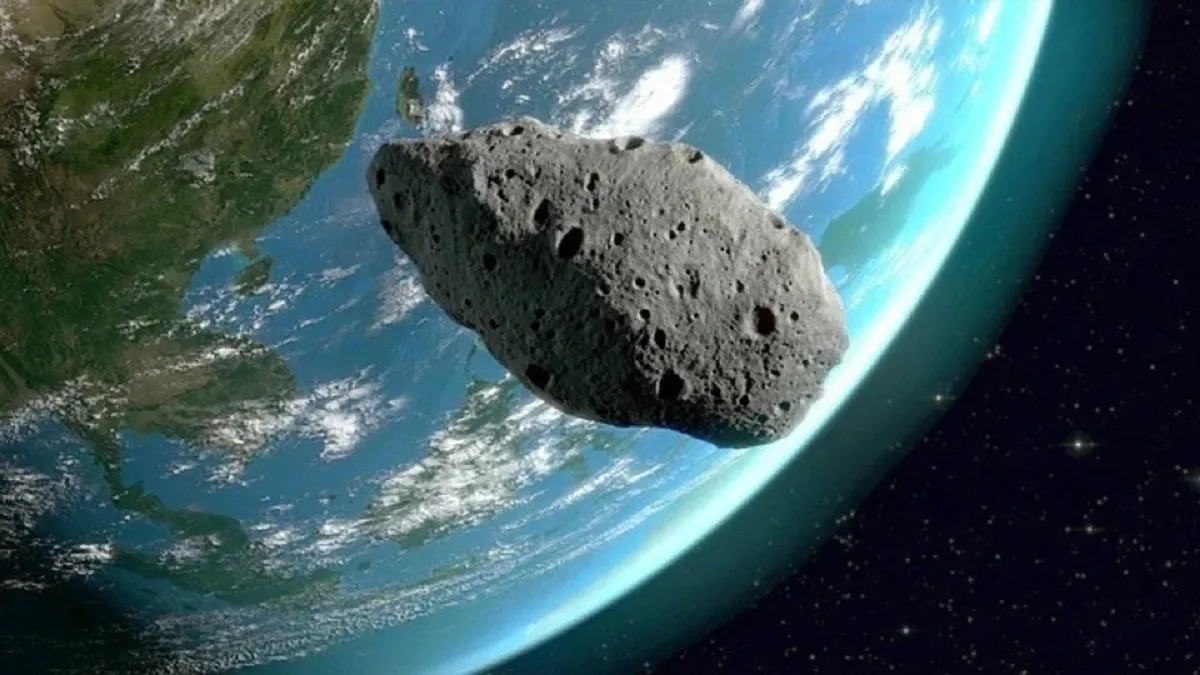
Asteroid impacts may not only have caused destruction, but also created conditions conducive to the emergence of life on Earth.
This is reported by Science Alert.
A group of scientists from South Korea discovered traces of stromatolites—layered structures formed by microorganisms and considered among the oldest evidence of life on the planet—beneath an ancient impact crater.
The researchers suggest that the heat generated by the asteroid impact created a long-lasting hydrothermal environment, similar to hot springs, where microbial communities could have existed.
This refers to a crater in South Korea that formed approximately 42,000 years ago. Radiocarbon analysis showed that the stromatolites found formed between 23,400 and 14,600 years ago, indicating the existence of a hydrothermal lake for tens of thousands of years.
According to scientists, such impact craters could have served as temporary habitats for early life forms during periods of intense asteroid bombardment of Earth.
Researchers also do not rule out that similar conditions could have existed on Mars.
Previously, the Japanese probe Hayabusa-2 delivered organic compounds from the asteroid Ryugu. And NASA researchers have detected organic compounds, including sugar molecules, in samples brought back from the asteroid Bennu.
The Curiosity rover has identified more than 20 types of organic molecules, including a nitrogen-containing compound structurally similar to the building blocks of DNA.


