
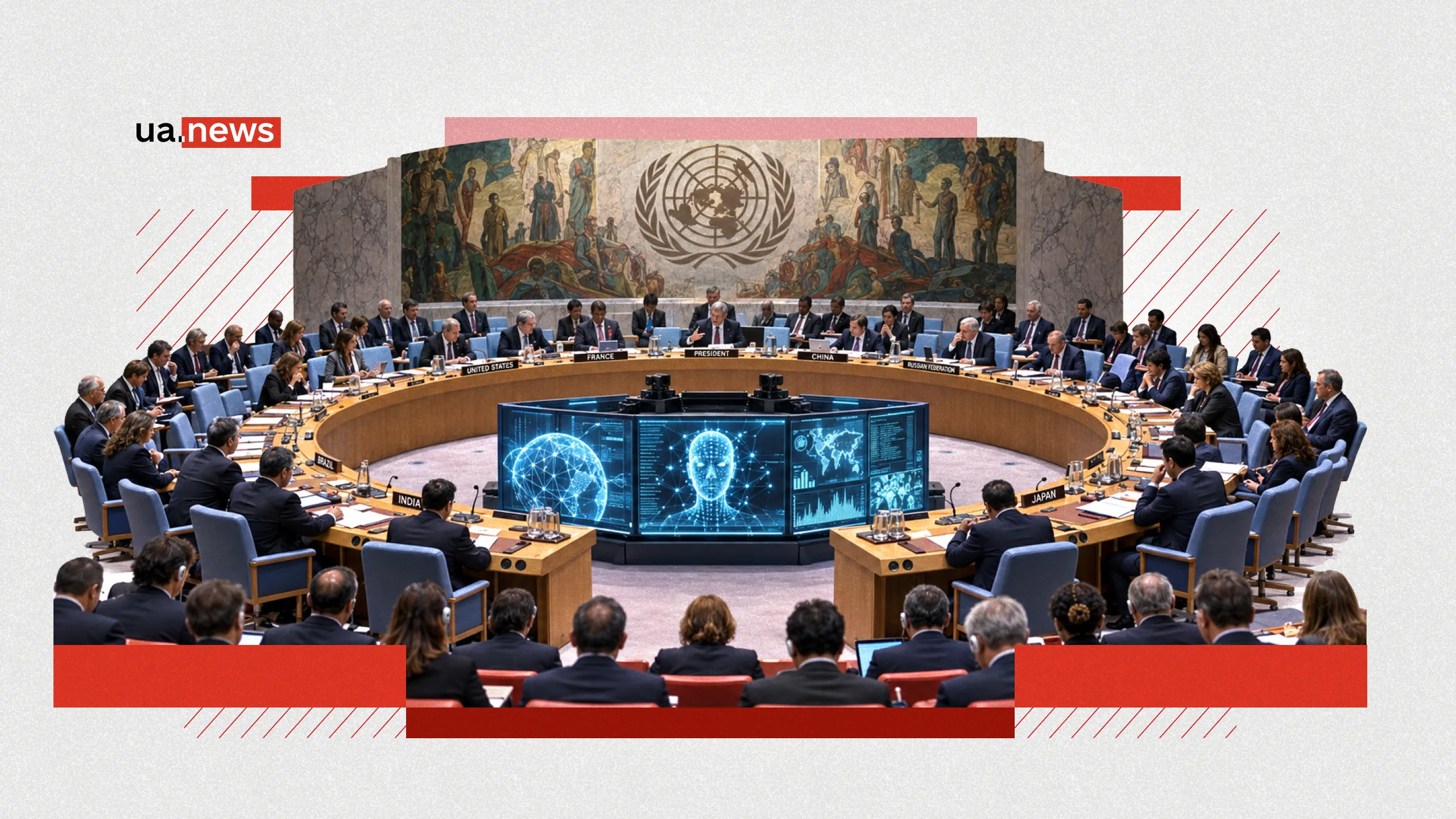
AI Is Already Being Discussed at the UN Security Council: Why Artificial Intelligence Is Becoming a New Factor in Global Security
29 September 2026 09:24Just a few years ago, the main debates surrounding artificial intelligence centered on jobs, education, and automation. People discussed which professions might disappear, whether ChatGPT would replace some office workers, and how quickly generative systems would become part of everyday life.
Now the discussion extends far beyond the tech industry. AI is increasingly being mentioned alongside concepts traditionally associated with international security: war, cyberattacks, disinformation, strategic deterrence, and global competition among states.
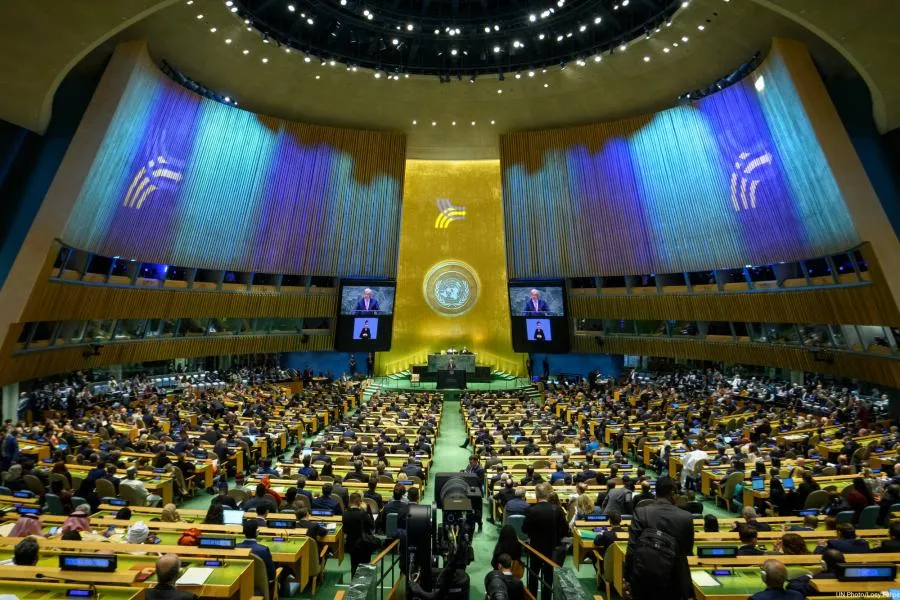
On September 23, the UN Security Council held a special session dedicated to artificial intelligence and international security. The very fact that this topic made it onto the agenda of a body whose primary mission is to maintain international peace clearly demonstrates how much attitudes toward the technology have changed.
The discussion involved more than just diplomats. Among the invitees were one of the most renowned researchers in machine learning, Yoshua Bengio, and executives from leading companies that develop modern AI systems. In other words, the future of artificial intelligence is now being discussed alongside issues of war, conflict, and strategic risks.
UA.News explains why AI is no longer viewed merely as just another technological revolution, how it is changing perceptions of war and security, and why the world is having to create new rules for it practically from scratch.
The UN Security Council is no longer discussing AI as merely a technological experiment
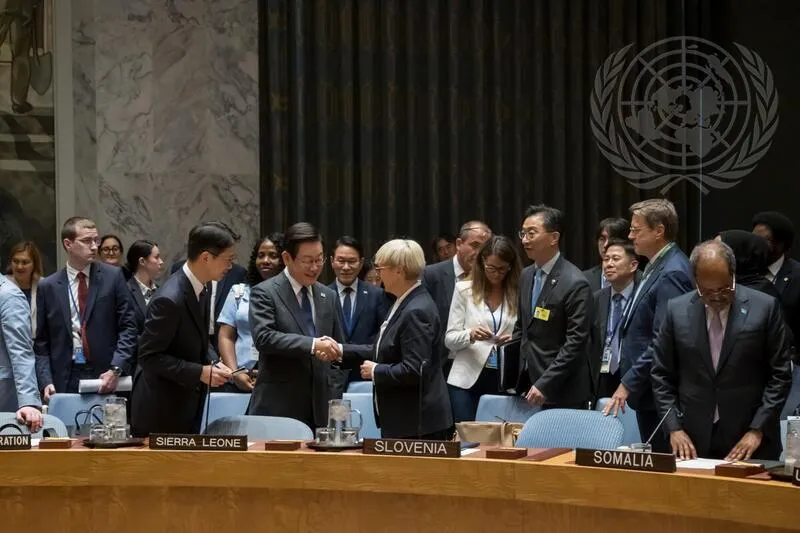
Artificial intelligence is not on the Security Council’s agenda for the first time.
The first official UN Security Council meeting dedicated to artificial intelligence took place on July 18, 2023. Even then, UN Secretary-General António Guterres emphasized that the development of this technology could bring significant benefits to humanity, but at the same time create entirely new risks.
In his official statement to the Security Council, he spoke about the potential for AI to be used in cyberattacks, the spread of disinformation, criminal activity, and military operations.
At the time, many such scenarios were still viewed as warnings about the future. Over the following years, the capabilities of these models have grown substantially. They are better at working with code, analyzing images and videos, processing vast amounts of data, and can perform entire sequences of tasks.
That is precisely why the conversation has gradually shifted. The question is no longer just what AI will be capable of someday. It is far more important to understand how to use the capabilities that already exist and where they begin to pose a risk—not just to an individual user, but to an entire nation.
The same AI can serve both business and the military
One of the key characteristics of artificial intelligence is that it is extremely difficult to draw a clear line between its civilian and military applications.
A missile or a tank has an obvious purpose. With software, it’s a different story. The same model can help an entrepreneur prepare a presentation, a programmer write code, a student understand a complex topic, or a researcher analyze data. But those same capabilities can be used to process intelligence, manage military logistics, or analyze satellite imagery.
That is precisely why AI is becoming a classic dual-use technology. It cannot simply be banned in the same way as certain types of weapons, since the vast majority of its capabilities have entirely peaceful applications. At the same time, the more powerful the models become, the broader the range of tasks that can be applied to defense.
This poses a serious challenge for regulators. Restrictions must mitigate risks without stifling the vast number of useful civilian applications.
AI is changing warfare in ways beyond just autonomous weapons
The most obvious image of military AI is an autonomous drone that independently locates a target and attacks it without an operator’s command. But the technology’s real impact is much broader.
Modern warfare generates colossal amounts of information every day: drone footage, satellite imagery, radar data, radio intercepts, coordinates, open-source reports, and information on the movement of military equipment.
A human cannot quickly review all of this manually. An algorithm can. AI can identify specific objects across hundreds of images, compare data from different time periods, track changes, identify patterns, and help the military piece together the big picture more quickly.
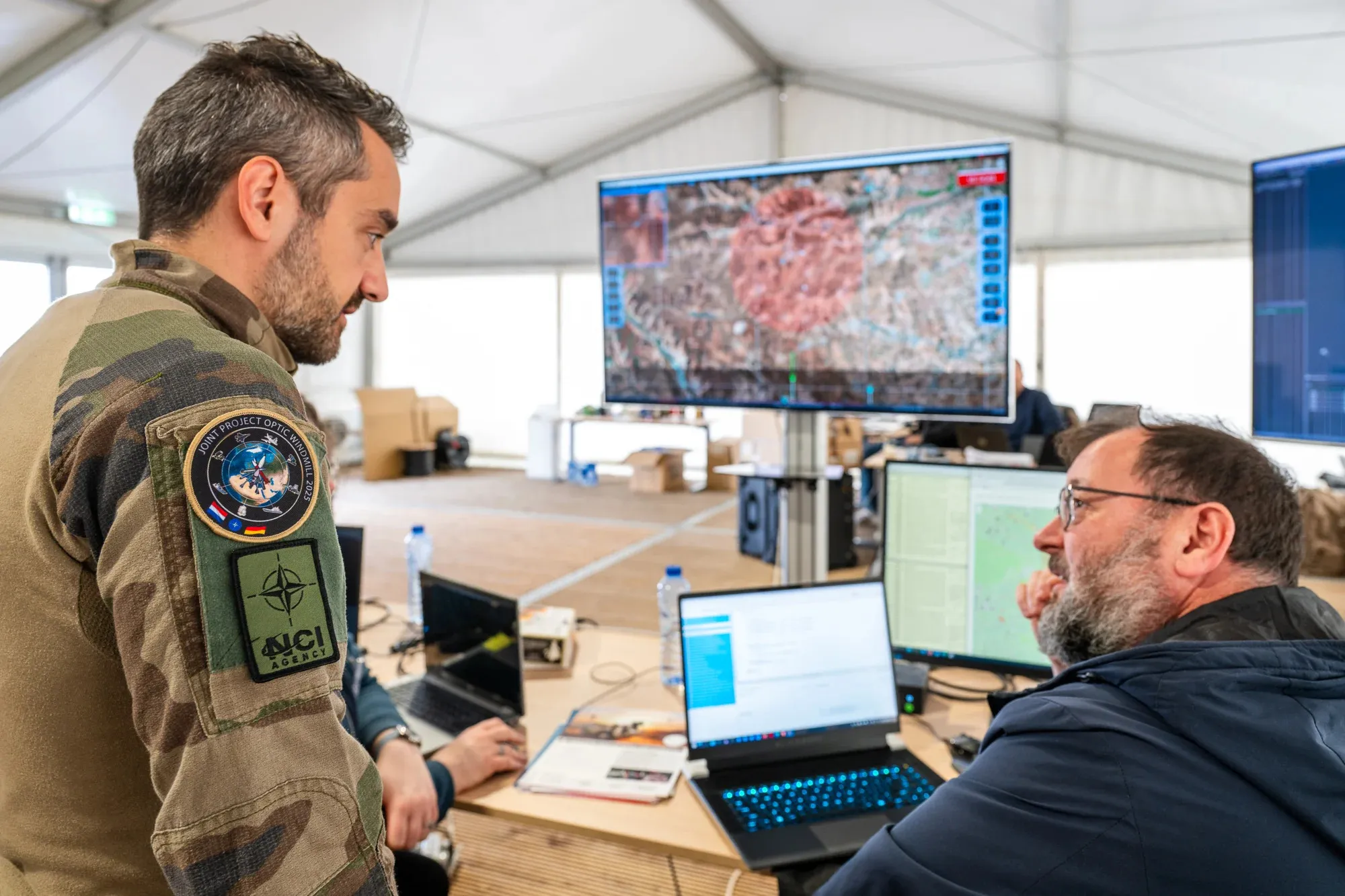
Therefore, one of the key changes concerns not the weapons themselves, but speed. Whereas it used to take hours between receiving information and making a decision, modern systems can potentially reduce this time to minutes. And the side that processes information faster than the enemy gains a significant advantage.
This is precisely what could gradually spark a new arms race—not just over the number of tanks, missiles, or drones, but over the speed of data processing and decision-making.
If AI makes a mistake, the question arises: who is responsible?
There is an issue that becomes particularly complex in the military sphere: accountability. The traditional chain of command is relatively straightforward. There is the person who gave the order, the one who carried it out, and it is possible to determine at what level a specific decision was made.
With an algorithm, things are much more complicated. If the system misidentified a target, misclassified a threat, or gave the wrong recommendation, who is responsible?
The developer who created the model? The company that supplied it? The commander who received the recommendation? The operator who pressed the button? Or the state that authorized the use of such a system?
The problem of model unreliability exists even in ordinary chatbots. The reasons why large language models continue to generate convincing but incorrect answers remain a challenge for developers.
In a civilian service, an error might mean an incorrect answer or financial losses. In a military system, the consequences can be incomparably more serious. That is why the issue of AI in the security sector concerns not only what the technology is capable of doing, but also how to determine responsibility for its decisions and errors.
Disinformation can now be produced on an almost industrial scale
A specific risk that Guterres highlighted even during the Security Council’s first meeting on AI is information manipulation.

Generative systems have drastically reduced the cost of creating text, images, voices, and videos. Previously, a large-scale information campaign required a team of writers, designers, translators, editors, and administrators managing hundreds of accounts. Now, a significant portion of this work can be automated.
And it’s not just about deepfakes. AI makes it possible to create thousands of variations of the same message, translate them into dozens of languages, adjust the tone, and tailor the content to different audiences.
As a result, an information operation can scale roughly the same way as software. This becomes particularly dangerous during crises.
If, at the height of a sharp escalation between nations, a realistic fake video of a president, defense minister, or military commander appears, even a swift rebuttal will not necessarily stop the fallout.
Within minutes, the information can be picked up by social media, the news, financial markets, and other countries. The fake content can be removed or debunked. But decisions made under its influence are much harder to reverse.
Cyberattacks are reaching a new level of automation
Another area where AI can have a direct impact on international security is cyberspace.
During the Security Council’s first discussion, a specific warning was issued regarding threats to digital systems and critical infrastructure. AI has a dual effect here.
For defenders, it can analyze network traffic, detect anomalies, identify suspicious activity, and help address vulnerabilities. For attackers, those same tools can simplify the preparation of attacks.
The development of AI agents—systems capable not only of responding to a single request but also of independently executing a sequence of actions—is becoming particularly important. In the future, such programs may automate part of the vulnerability scanning process, test various methods of intrusion, and adapt their actions based on the results of previous attempts.
This does not mean that anyone will automatically become a high-level cybercriminal. But AI can reduce the amount of knowledge, resources, and time required to perform complex technical tasks.
This is particularly important for modern states, as the energy sector, banking, communications, transportation, hospitals, and government administration are becoming increasingly dependent on digital systems.
The development of AI is gradually turning into yet another race among nations
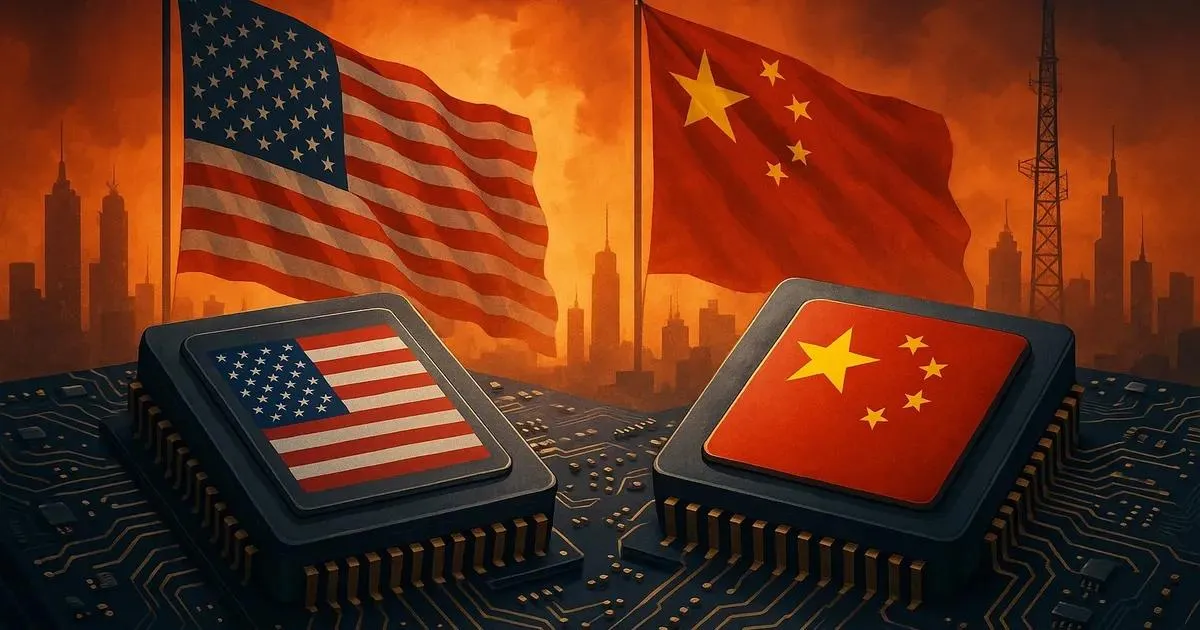
Even if countries recognize the risks posed by new models, this does not mean they are willing to voluntarily slow down their development. The reason is simple: falling behind technologically can also be a threat.
If one country significantly restricts its most powerful AI systems, it must be confident that its competitors will do the same. Otherwise, caution could turn into a strategic disadvantage.
Therefore, a dynamic familiar from other technological races is gradually emerging around AI. The most powerful models require massive data centers, cutting-edge semiconductors, cheap electricity, capital, and a large number of highly skilled engineers.
As a result, competition in the field of AI automatically intersects with the struggle for chip production, energy resources, and technology supply chains. This is precisely why leadership in AI is increasingly likely to be perceived by nations not merely as commercial success, but as a strategic advantage.
AI also differs from traditional weapons in that it is developed by private companies
There is another factor that makes regulating artificial intelligence unusually complex. Nuclear weapons, strategic missiles, and military aircraft are primarily controlled by governments.
In the case of AI, a significant portion of technological progress occurs in the private sector. It is companies that build the largest data centers, train new models, attract the best researchers, and decide when to release new systems.
This means that technology with the potential to impact global security is not subject to the same direct government control as traditional strategic weapons.
As a result, governments are faced with questions that were virtually nonexistent in the past. Who should review the most powerful models before they are deployed? Should companies notify governments about the dangerous capabilities of these systems? Is it possible to restrict public access to certain features? What should be done if a model is created in one country, the computing infrastructure is located in another, and it is used all over the world?
Conventional national regulations may prove insufficient for such a market.
The world is trying to establish rules for a technology that is evolving faster than diplomacy
This is where a certain parallel with the nuclear age emerges. It is not entirely accurate to directly compare AI to nuclear weapons. Artificial intelligence is a universal technology that can be used in medicine, education, programming, science, and business.
But after the advent of nuclear weapons, the international community also had to create entirely new control mechanisms: treaties, inspections, nonproliferation rules, and emergency communication channels.
In the case of AI, this process has already begun. In September 2024, UN member states adopted the Global Digital Compact, which provides for international cooperation in the field of AI governance.
In 2025, the General Assembly also established the operational mechanisms for the Independent International Scientific Panel on AI and the Global Dialogue on AI Governance.
However, the international system faces a fundamental problem here. Diplomacy takes years. Technology cycles take months. By the time countries agree on the wording of a new document, the industry may have released several generations of models with entirely different capabilities.
Therefore, future regulation will likely need to establish not only rules for specific technologies but also broader principles that will remain relevant even after new systems emerge.
The main debate will not be about how intelligent AI will become
Against this backdrop, the question of whether a machine will one day become “smarter than a human” is gradually moving away from a purely practical discussion. For international security, something else is far more important: what role AI will play within critical systems.
In some cases, an algorithm will remain a standard tool. In others, it will serve as an assistant offering several possible solutions. And in still others, the technology may gain such a high degree of autonomy that human involvement becomes minimal.
It is precisely the limits of such autonomy that are likely to become one of the main subjects of international debate. States will have to determine where the use of AI remains ordinary automation, and where it already poses an unacceptable risk.
And that is precisely why a special session of the UN Security Council on artificial intelligence seems only natural. AI no longer concerns only technology companies, programmers, or chatbot users. It is gradually becoming part of economic competition, defense, cybersecurity, information policy, and international relations.
Therefore, in the coming years, the main question may not be how powerful the new models will be.
Rather, it will be whether countries can agree on rules for their use before these systems become so commonplace that setting limits will be much more difficult.




