
The Institute of National Remembrance has called the initiative to move the Bulgakov monument to Poltava a provocation
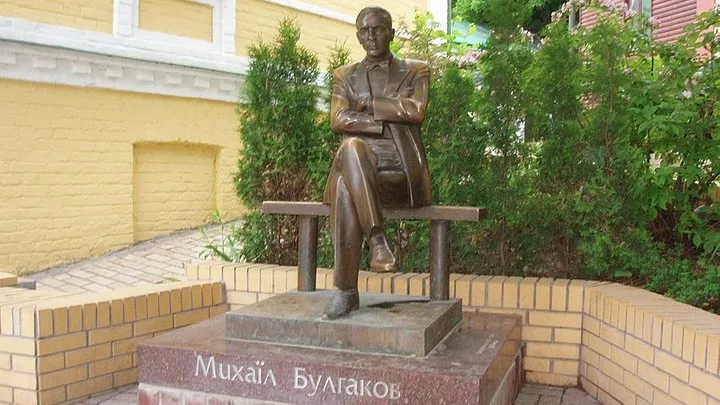
The Ukrainian Institute of National Remembrance reacted strongly to the proposal to move the monument to Mikhail Bulgakov to Poltava, calling it provocative. The institute believes that such initiatives could cause social tension and contradict the current policy of decommunization and decolonization of public space.
Institute representative Oleg Pustovgar commented on the previously announced initiative by Poltava museum curator Viktor Bazhan to purchase the monument and relocate it to Poltava.
Viktor Bazhan announced a fundraiser for this on Facebook:
“What is the goal of our fundraiser? To purchase the monument directly from the sculptor’s family (the creator of this monument). To transport and install it in the courtyard of the Bazhan Museum. To preserve this artistic artifact for future generations in a safe place. Why the Bazhan Museum specifically? It is my private property. In my private museum, there is no political censorship or external editorial policy. Here, the language of art, history, and respect for culture reigns supreme. As a military doctor, I know what it means to save lives, and as a patron of the arts, I strive to save culture.”
A representative of the UIPN, commenting on this publication, emphasized that Bulgakov has been officially recognized by the UIPN’s Expert Commission as a symbol of Russian imperial policy. In 1919–1920, the writer served in Denikin’s White Guard Volunteer Army, which sought to destroy the Ukrainian People’s Republic. In his works, particularly in the novel *The White Guard* and the short stories “On the Night of the 3rd” and “I Killed,” Bulgakov deliberately denigrated Ukrainian military leaders, Hetman Pavlo Skoropadskyi, and Symon Petliura.
In addition, Pustovgar noted that Bulgakov glorified Soviet dictator Joseph Stalin by writing the laudatory play “Batumi” in 1939. According to the UIPN representative, such initiatives directly contradict the Law of Ukraine “On the Principles of State Policy on the National Memory of the Ukrainian People” and fall under the definition of “historical anti-Ukrainian propaganda.”
“I urge law enforcement to investigate the publications regarding Mr. Bazhan’s attempt to relocate the Russian hostile imperial monument to Bulgakov to Poltava for signs of the aforementioned propaganda. I advise Mr. Bazhan to raise funds to send the monument glorifying the Russian scoundrel Bulgakov to Moscow, and in return, let the Russians return the iconic artifacts of the Hetmanate stolen from the Hermitage, including Ivan Mazepa. Moving it to Poltava could spark protests and destabilize the city. Do we really need that? Enough with the provocations!” Pustovgar concluded, according to Ukrinform.
Read also: A monument to Russian actor and poet Vysotsky was demolished in Odesa


