
“Global expansion begins not with technology, but with trust”: an exclusive interview with Alona Shevtsova after the first day of the Global Blockchain Show in Riyadh
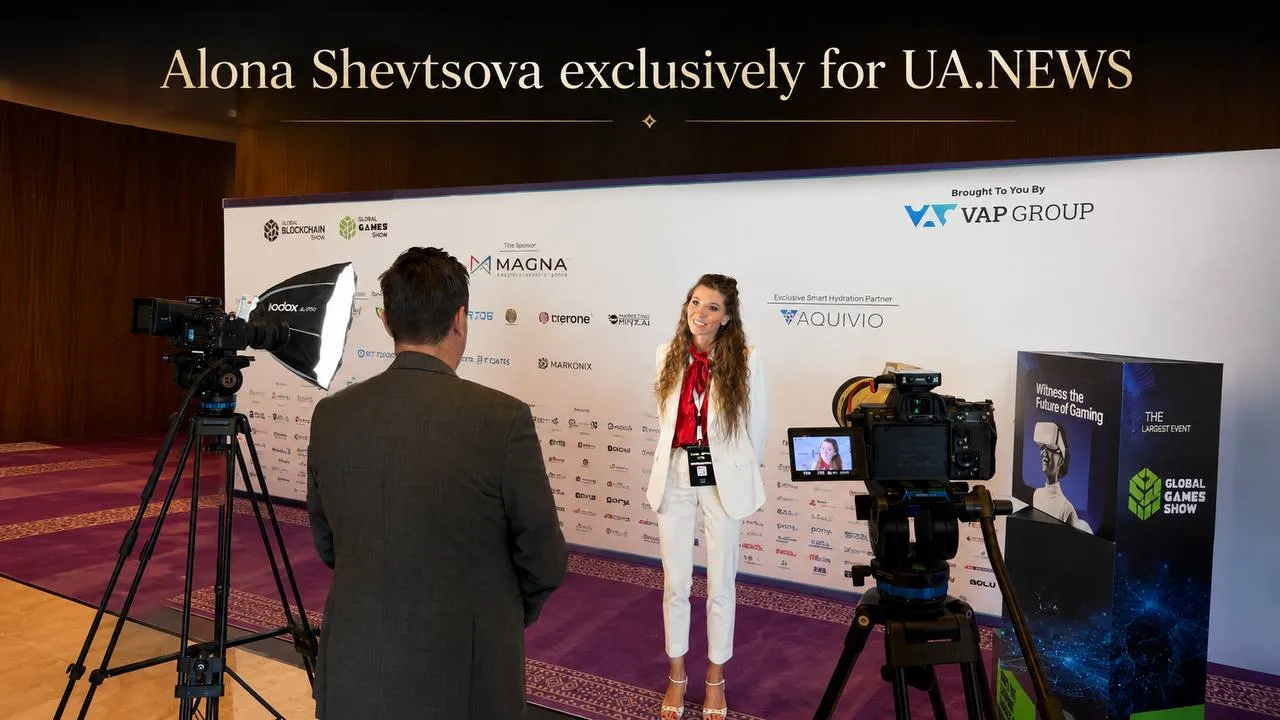
RIYADH — exclusively for UA.NEWS
The first day of the Global Blockchain Show in the Saudi Arabian capital brought together thousands of representatives from the global fintech, blockchain, AI, and gaming industries. One of the program’s key discussions was the panel “Global Gaming Expansion: Lessons from Untapped Markets,” dedicated to international companies’ entry into new markets, the development of digital ecosystems, and the future of global gaming.
The panel was moderated by Alona Shevtsova, CEO of the international fintech company Sends. After the first day of the conference, a UA.NEWS journalist spoke with her about the main takeaways from the discussion, the prospects for the MENA market, the role of modern financial technologies, and why trust is becoming a key asset for international business.
The discussion focused on new opportunities for the global development of the gaming industry, the investment potential of MENA markets, international partnerships, and the role of modern financial technologies in the development of the digital economy.
“Technology is no longer a competitive advantage”
— Ms. Alono, the world today is talking about AI, blockchain, and Web3. What, in your opinion, will actually determine the winners in the coming years?
— Until very recently, technology itself could be a company’s main advantage. Today, that’s no longer enough.
Virtually any technological solution can be replicated, improved, or replaced with an alternative. But there are things that cannot be copied in a matter of months—namely, reputation, partnerships, and user trust.
“Global expansion begins not with technology, but with trust. If people don’t trust a platform, service, or brand, no amount of innovation will ensure long-term success.”
That is why today, more and more international companies are investing not only in their products but also in the transparency of business processes, the responsible use of data, and open communication with users.
Why Financial Infrastructure Determines the Success of Global Business
During the discussion in Riyadh, special attention was paid to the role of financial technologies in the development of the international gaming industry.
A modern digital platform can no longer exist without fast international payments, secure user identification, effective risk management, and compliance with the requirements of various jurisdictions.
According to Alona Shevtsova, it is the financial infrastructure that often remains “invisible,” even though it is precisely this infrastructure that powers the global digital economy.
“Users see a beautiful interface for a game or digital service. But behind it lies a vast system of international payments, compliance, cybersecurity, and risk management. It is this infrastructure that makes global expansion possible.”
She emphasizes that companies entering new markets must consider not only marketing aspects but also the specifics of local financial systems, regulatory requirements, and users’ payment habits.
MENA: A Region That Can No Longer Be Ignored
Just a few years ago, most international companies viewed the Middle East as a promising region, but not a key one.
Today, the situation has changed dramatically.
Saudi Arabia, the UAE, and other countries in the region are actively investing in digital technologies, artificial intelligence, esports, and the development of an innovative economy.
That is why an increasing number of international conferences are being held here.
According to Alona Shevtsova, this is a natural process.
“Today, the Middle East isn’t just catching up to global leaders. It is actively participating in shaping the new digital economy. And this is clearly evident during international events such as the Global Blockchain Show.”
She notes that the region’s main advantage is its willingness to think strategically and invest in long-term projects.
Local partners are becoming a key asset
During the panel discussion, the topic of international expansion came up repeatedly.
Many companies traditionally view entering a new market as opening an office or launching an advertising campaign.
However, modern practice paints a very different picture.
Alona Shevtsova is convinced that successful expansion begins with strong local partnerships.
“No international company knows the local market better than those who work in it every day. That is why partnerships are no longer just an added advantage—they have become a prerequisite for sustainable growth.”
Such partnerships help adapt products more quickly, better understand user needs, and operate more effectively in a new regulatory environment.
AI, Blockchain, and People
For the past two years, the world has been buzzing with excitement about the possibilities of artificial intelligence.
However, as Alona Shevtsova notes, technology must remain a tool, not an end in itself.
“AI can significantly accelerate business growth, blockchain can ensure process transparency, and modern financial technologies can make international transactions more accessible. But all these tools must serve people, not the other way around.”
According to her, it is the human factor that will determine companies’ competitiveness in the coming years.
This refers to the quality of the team, management culture, the ability to listen to users, and the responsible implementation of new technologies.
Why International Conferences Remain Indispensable
Despite the rapid development of online communication, global forums continue to play an important role in business development.
The Global Blockchain Show brought together representatives from the financial sector, gaming, artificial intelligence, the blockchain industry, investment funds, and government agencies from dozens of countries.
According to Alona Shevtsova, it is precisely such events that help identify points of intersection between different industries more quickly.
“Very often, the most interesting ideas aren’t born during the panel itself, but on the sidelines—during personal conversations, networking, and discussions. That’s where partnerships emerge that can later grow into large-scale international projects.”
Ukraine in the Global Technology Landscape
Despite the complex challenges of recent years, Ukrainian entrepreneurs continue to actively participate in international forums and demonstrate a high level of expertise.
According to Alona Shevtsova, this is of strategic importance for the future of Ukrainian business.
“Ukrainian companies have long proven that they are capable of creating competitive, world-class products. The next step is to integrate even more actively into international ecosystems, seek partnerships, and operate in the global market.”
She is convinced that international cooperation is what opens up new opportunities for Ukrainian tech companies, fintech firms, and startups.
Another day of discussions and new partnerships lies ahead
The first day of the Global Blockchain Show confirmed that the global digital economy is changing rapidly, and the Middle East is increasingly cementing its status as one of the leading hubs for technological innovation.
Meanwhile, the conference is still underway. Tomorrow, participants can look forward to new panel discussions, presentations, meetings with investors, and discussions on the future of fintech, blockchain, artificial intelligence, and the digital economy.
As Alona Shevtsova notes, it is precisely such international platforms that help businesses not only exchange experiences but also form partnerships that will shape the industry’s development in the coming years.
UA.NEWS continues to report directly from Riyadh and will continue to cover the most important events of the second day of the Global Blockchain Show, exclusive comments from participants, and the key trends shaping the future of the global digital economy.


