
G7 countries will coordinate measures to stabilize the energy market in light of the war in Iran
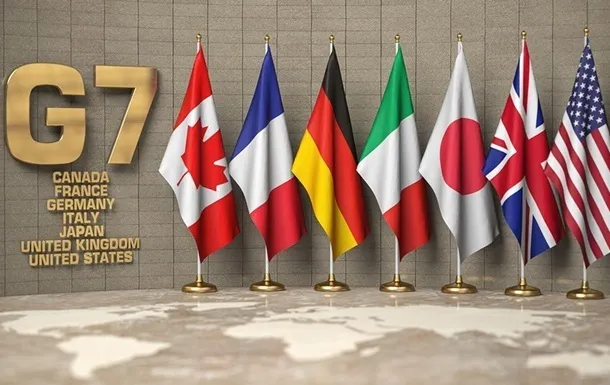
For the first time in 50 years, the finance and energy ministers of the G7 countries held an emergency meeting with central bank governors to address the economic consequences of the war in the Middle East.
In a joint statement dated March 30, 2026, representatives from the United States, Canada, Japan, the United Kingdom, France, Germany, and Italy announced their readiness to take all necessary measures to stabilize oil prices, Reuters reports. The main goal of this coordination is to maintain the stability of the energy market amid the rapid rise in energy prices.
Earlier, 32 members of the International Energy Agency agreed to release a record 400 million barrels of oil from strategic reserves to combat rising global prices. The G7 supported these efforts and considered options for managing demand based on each country’s national circumstances. The meeting participants also called on the international community to refrain from imposing unjustified export restrictions on oil, gas, and related products. In this way, the world’s leading economies aim to ensure an uninterrupted energy supply and minimize the impact of the Iranian conflict on global stability.
The U.S. plans to gradually regain control of the Strait of Hormuz—one of the key routes for global oil. Officials in Washington say they want to guarantee free navigation, even with military escorts.
The Bank of Israel has downgraded its economic growth forecast due to the war with Iran and the tense situation in the region. At the same time, the key interest rate was left unchanged at 4%.
U.S. Senator Marco Rubio spoke about internal “fissures” within the Iranian leadership. According to him, certain groups in Iran may be ready to take a new path, although the details of the negotiations are being kept secret.
Israel has resumed bombing the southern suburbs of Beirut and continues airstrikes in southern Lebanon. One of the strikes hit an army checkpoint, killing a soldier.
Lebanese President Joseph Aoun also warned that any attempts to destabilize the country will be decisively stopped. The authorities are prepared to act decisively, including through arrests and the seizure of weapons. Aoun emphasized that no one in Lebanon wants a civil war, and those who try to take advantage of the situation will fail.
Iran has left the country without stable internet access for the second month in a row. The country’s authorities continue to block access to all social media platforms and many websites, leaving citizens with almost no online connectivity.
Today, the United Arab Emirates reported the successful interception of 27 drones and 11 ballistic missiles launched from Iran.
A military analyst warns that a possible U.S. attack on Kharg Island, Iran’s key oil hub, could result in serious losses. The expert believes that Iranian forces are ready to fight back, and diplomatic attempts to negotiate peace now appear premature. The island controls 90% of Tehran’s oil exports, and its defenses have been strengthened in recent weeks.
Iran has accused Israel of attacks on a desalination plant in Kuwait. In a statement, the Iranian military called Israel’s actions “brutal and despicable.”
Spain has banned U.S. military aircraft participating in strikes against Iran from using its airspace. The decision also applies to access to joint bases.
Northern Israel came under fresh fire from Iran and Hezbollah. Two people were wounded, one of whom is in serious condition. Several towns in the north of the country were hit.
Israel has recorded an increase in attacks and pressure on Christians and church properties. Over the past year, there have been at least 155 incidents—ranging from verbal abuse to physical attacks. Researchers say the problem is becoming systemic and affecting the lives of entire communities.
In Haifa, a fire broke out at an oil refinery following a rocket attack by Iran and the Hezbollah group. The fire was captured on video, which was broadcast on Israeli television. It is currently unknown whether the rocket struck the facility directly.
The small island of Kharg is key to Iran’s economy. About 90% of all Iranian oil exports pass through it. Any strike on this location could drastically escalate the situation and affect not only Iran but also the global market.
Currently, the number of U.S. troops in the Middle East already exceeds 50,000, which is 10,000 more than usual. Typically, there are about 40,000 U.S. troops stationed at bases and aboard ships in the region—including Saudi Arabia, Bahrain, Iraq, Syria, Jordan, Qatar, the UAE, and Kuwait.
The United States is stepping up pressure on Tehran, forcing the Iranian leadership to seek avenues for negotiations on Washington’s terms.
As a reminder, Trump stated that Iran had offered him the position of supreme leader.
Trump also mentioned the possibility of seizing Iranian oil and the island of Kharg.
