
NATO has confirmed the withdrawal of thousands of U.S. troops
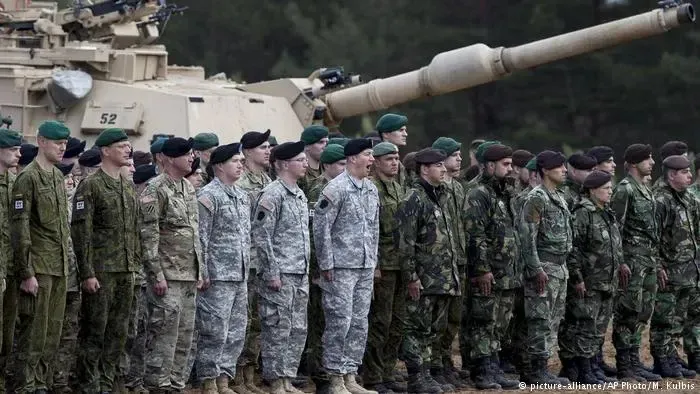
The United States is beginning to reduce its military presence in Europe by withdrawing approximately 5,000 troops, a decision that has already been confirmed by NATO leadership. At the same time, the Alliance emphasizes that these changes do not weaken the region’s defense or affect support for Ukraine, as European allies have significantly strengthened their own armies in recent years. This is reported by The Guardian.
The U.S. plans to withdraw about 5,000 troops from Europe as part of a gradual review of its military presence on the continent, and this decision has already been confirmed by General Aleksas Grinkevičius, Supreme Allied Commander Europe, as reported by The Guardian.
According to him, the reduction will affect specific units, including an armored brigade returning from Germany, and will also partially impact the previously planned deployment of a long-range artillery battalion in Poland, which has caused some concern among European partners. “A significant number of troops will be withdrawn from the armored brigade returning from Germany,” Grinkevich noted, confirming the scale of changes in the deployment of U.S. forces.
At the same time, NATO is trying to reassure its allies, explaining that this is not a drastic reduction but part of a long-term strategy linked to the fact that European countries have significantly increased their own defense capabilities in recent years and can now assume a greater share of responsibility for the region’s security.
Grinkevych emphasized that the Baltic states and Poland have significantly strengthened their ground forces, and the current level of defense capabilities in the region is much higher than before, so allies within the Alliance feel more confident about the gradual redeployment of U.S. troops. “There are significantly more capabilities on the ground than there were before,” he said, highlighting the shift in the balance of power within NATO.
He also added that the U.S. may continue to gradually reduce its presence in Europe in the future, but this will depend on the pace at which European countries themselves build up their defense capabilities and fulfill their NATO alliance obligations. “We should expect the redeployment of U.S. troops over time as allies build up their capabilities,” Grinkevich emphasized.
According to him, the process could take several years and will not have drastic consequences for regional security, as all key NATO defense plans remain in effect and coordination among allies remains at a high level.
Separately, the Alliance emphasizes that support for Ukraine remains stable, and all agreed-upon deliveries continue to arrive, despite periodic reports of possible delays arising from logistical and production constraints in supplier countries.
Trump announced further troop reductions in Germany.
As a reminder, the Pentagon has decided to withdraw approximately 5,000 U.S. troops from Germany. The process is planned to be carried out over the next six to twelve months. This is part of a review of U.S. force deployments in Europe.
Berlin acknowledges that the continent will have to strengthen its own defense more quickly and more seriously to compensate for the gradual reduction of the American presence.


