
Biographer Daniel Okrent examines Stephen Sondheim’s Jewish identity — Jerusalem Post
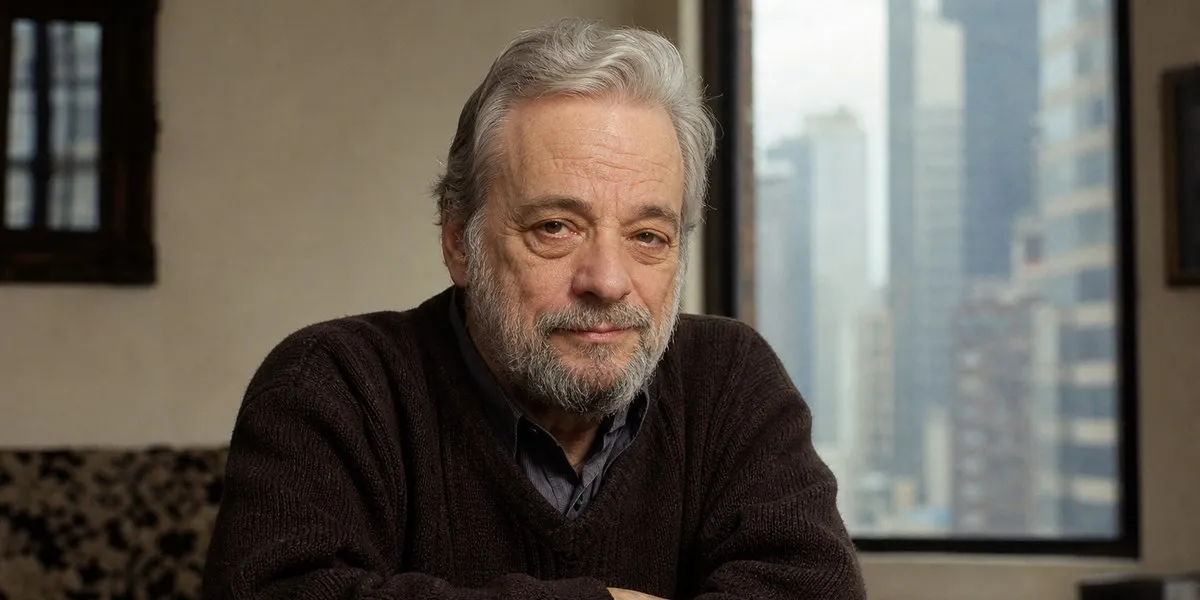
In the United States, journalist and writer Daniel Okrent examined the Jewish identity of composer and lyricist Stephen Sondheim in the biography “Stephen Sondheim: Art Isn’t Easy.” As the Jerusalem Post reports, Okrent considers Sondheim unquestionably Jewish, although he was not a practicing Jew and did not make Jewish themes central to his work.
Okrent wrote the book for the Yale Jewish Lives series. According to him, he initially warned the publishers that Sondheim was not a practicing Jew. After submitting the manuscript, the editors asked him to add more material about the Jewish aspect of the composer’s life.
Jewish identity
In Okrent’s view, Sondheim’s Jewishness was expressed in his character, worldview, and sense of humor as a form of Americanized Yiddishkeit. Sondheim himself, in a conversation with journalist Abigail Pogrebin for the 2005 book “Stars of David,” called his Jewish identity very deep. He explained this by saying that many of the artists he admired were Jewish, while art was the closest thing to religion for him.
Sondheim grew up on Manhattan’s Upper West Side in New York. His parents, Herbert and Etta, known as Foxy, belonged to the Reform synagogue Temple Emanu-El. After his parents divorced, when Sondheim was 10 years old, he moved with his mother to a Pennsylvania suburb near Oscar Hammerstein. Lyricist Hammerstein became his mentor and effectively replaced his father.
More current news is available on the UA.News Telegram channel Telegram.
Creative work and professional circle
Sondheim wrote the lyrics for “West Side Story” and “Gypsy,” as well as the music and lyrics for “Company,” “A Little Night Music,” “Sweeney Todd,” and “Sunday in the Park with George.” Okrent concluded that the artist’s life and work were closely connected, and that many of his musicals had autobiographical features. Sondheim died in 2023 at the age of 91.
Sondheim’s professional circle included many Jewish artists. He worked on “West Side Story” with Leonard Bernstein, Arthur Laurents, and Jerome Robbins. His other collaborators included Hal Prince, Jule Styne, John Weidman, James Lapine, and Larry Gelbart.
In a 2022 work, theater scholar Gabrielle Hoyt traced Jewish motifs in Sondheim’s works, including the themes of revenge and justice in “Sweeney Todd,” the boundaries of community in “Company,” and the isolation of a prophet in “Anyone Can Whistle.” Okrent also writes about Sondheim’s mentorship of young authors, including Jonathan Larson, Adam Guettel, Lin-Manuel Miranda, Trey Parker, and Matt Stone.




