
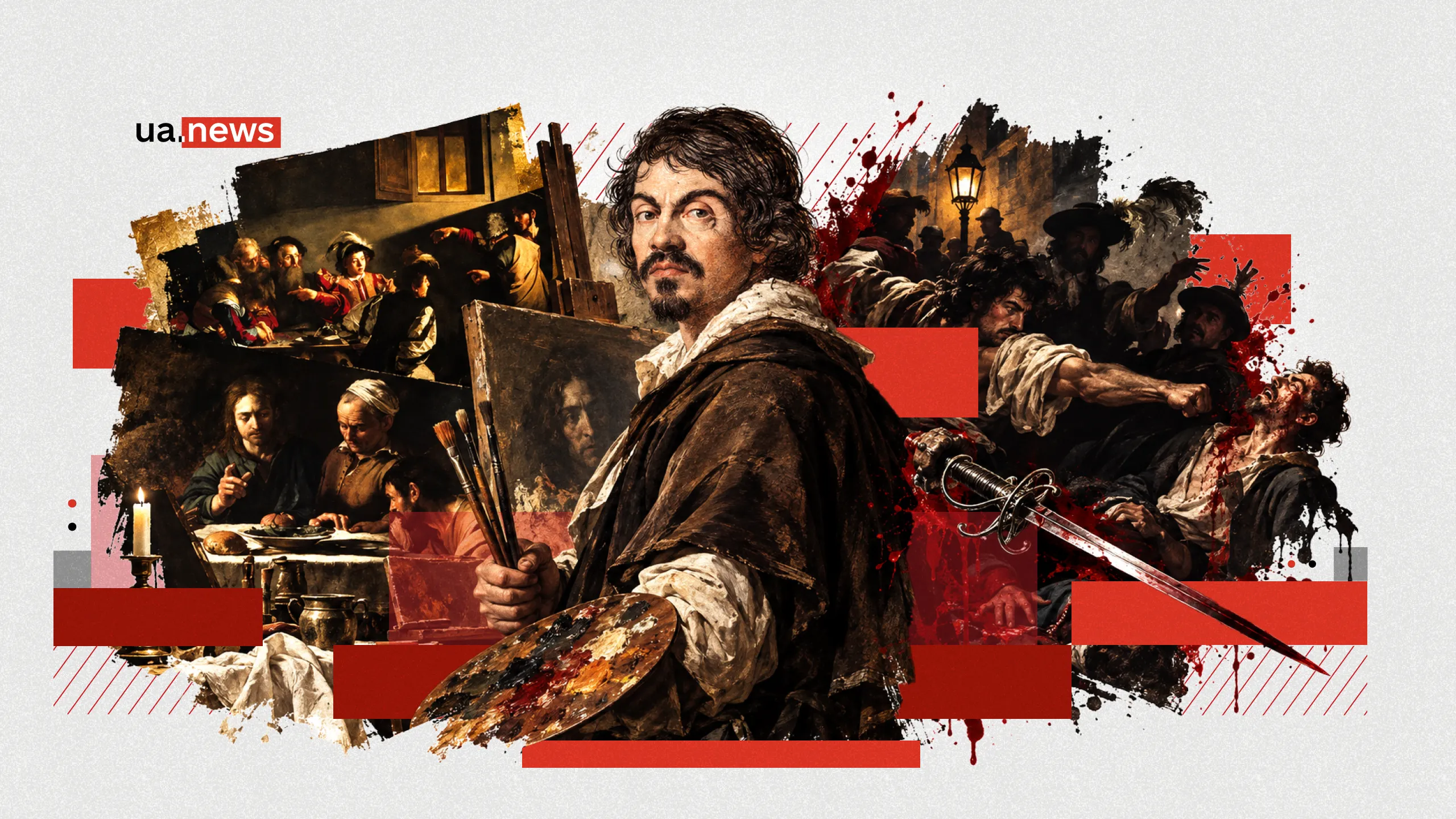
September 29 marks the 455th anniversary of the birth of Michelangelo Merisi, known to the world as Caravaggio. Today, his works are housed in Europe’s greatest museums; his use of light has been emulated by generations of artists; and the techniques he employed over 400 years ago are easily recognizable even in modern cinema and photography.
However, Caravaggio’s biography bears no resemblance to the quiet life of a great master who worked for decades in his own studio. If he had lived in the 21st century, his name would likely have appeared just as often in the crime reports as in the arts section. Illegal possession of weapons, constant quarrels, fights, assaults, trials, imprisonment, escape, and ultimately a man’s death following a duel—all of these are very real episodes from his life, some of which have been preserved in court records.
A particular paradox lies in the fact that around the same time Caravaggio was regularly dealing with the police, his paintings were being commissioned by cardinals, aristocrats, and Catholic churches. An artist who might spend an evening in a brawl would, the very next day, be working on a biblical scene that would later go down in the history of world art.
UA.News tells not so much the story of Caravaggio’s life as the story of a man who lived on the edge between great art and the criminal underworld—and it was precisely because of this life that he became one of the artists who transformed European painting as a whole.
From an Unknown Artist to the Darling of Roman Patrons
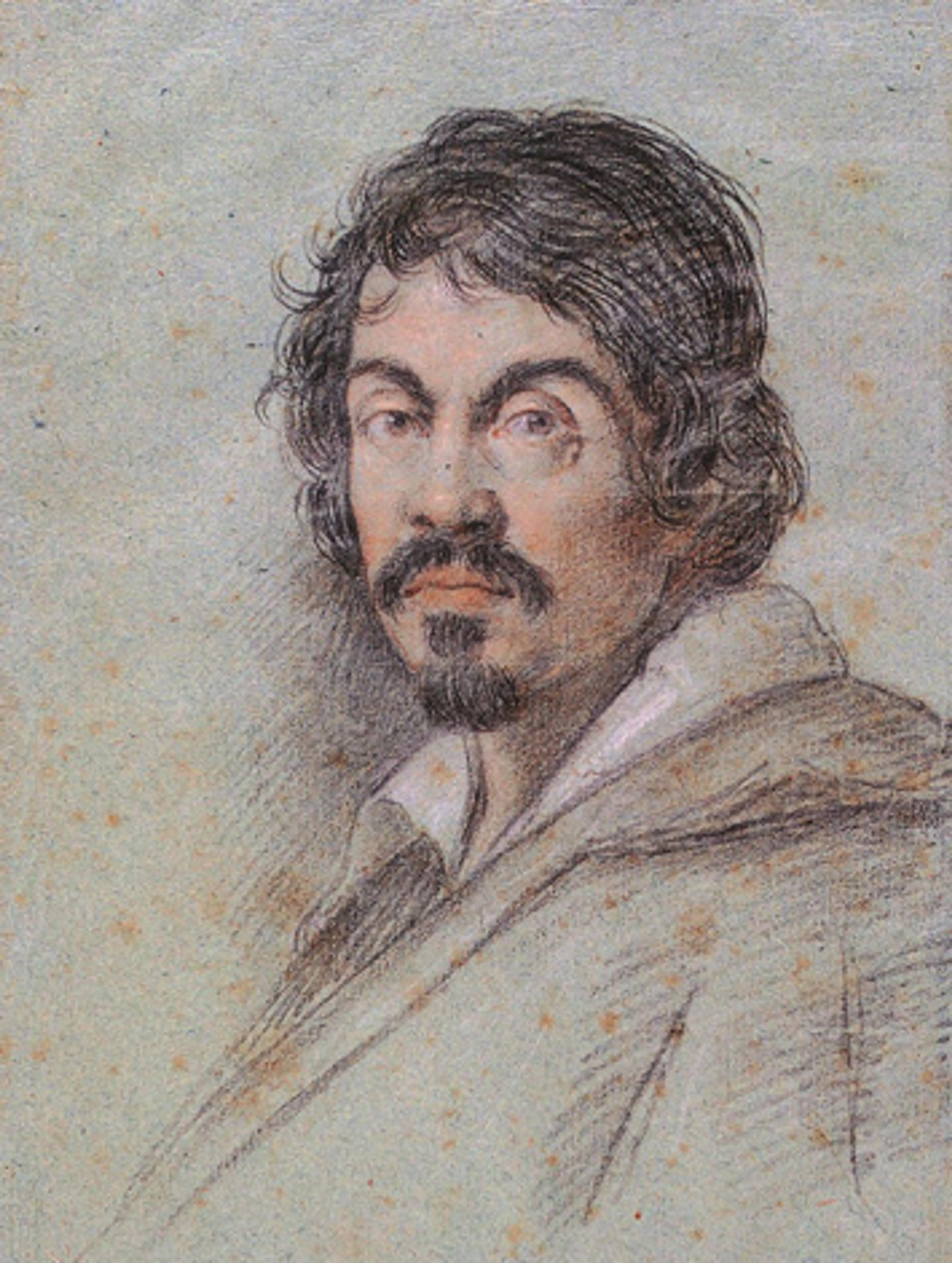
The artist’s real name was Michelangelo Merisi. He was born on September 29, 1571, in Milan, and earned the nickname Caravaggio from the name of a small town in Lombardy with which his family was connected.
The future artist’s childhood was far from carefree. Northern Italy was in the grip of a plague epidemic; his family lost several loved ones, and Michelangelo himself lost his father at a very young age. Later, he studied under the artist Simone Peterzano in Milan, but the main part of his career began after he moved to Rome.
It is here that the image of the world-famous Caravaggio diverges sharply from the reality of his early years in the capital of the Catholic world. He did not arrive in Rome as a famous master, eagerly awaited by wealthy clients. At first, he was a young artist without a steady income or a solid standing, working in other artists’ studios and trying to sell small paintings.
Gradually, however, something emerged in his works that was impossible to overlook.
Caravaggio began to capture on canvas the people and situations he saw around him. For example, in *The Card Players*, the viewer witnesses a common card-shuffling scam: professional card players are about to cheat an inexperienced young man. In *The Fortune Teller*, the scene similarly resembles a scene one might have witnessed right on a Roman street.
It was *The Card Players* that ultimately helped change his fortunes. According to the Metropolitan Museum of Art, the painting was purchased by the influential Cardinal Francesco Maria del Monte. He housed the artist in his palace, introduced him to Rome’s wealthy circles, and helped him secure his first major commissions from the Church.
Thus, in just a few years, Caravaggio went from the precarious life of a little-known artist to working for some of Rome’s most influential people.
Caravaggio made the saints look like people you might meet on the street
One of the main reasons Caravaggio became so important to art history lies not only in the famous darkness of his paintings. Far more radical for that time was the artist’s attitude toward the very people he depicted.
In religious art, heroes were often idealized. Saints were supposed to be majestic, beautiful, and seemingly detached from the everyday world. Caravaggio systematically broke down this distance.
In his paintings, an apostle might look like an elderly laborer. People had wrinkles, rough hands, tired faces, and dirty feet. Their clothing did not always look ceremonial, and a biblical event might take place in a setting that resembled an ordinary dark room or tavern more than a conventional heavenly realm.
The artist used ordinary working people as models—people with uneven, rough, and very distinctive faces. For critics of the time, such realism was at times almost offensive: saints, according to their logic, were not supposed to look so mundane. One of the best illustrations of this approach is *The Death of the Virgin*. Instead of a majestic Virgin Mary, Caravaggio depicted a dead woman surrounded by people experiencing genuine human grief. There is no attempt here to hide the physicality of death behind a beautiful composition.

This was the power of his paintings. Caravaggio seemed to take a biblical story from the distant past and bring it right before the viewer’s eyes.
The Metropolitan Museum explains that working directly with live models contradicted many of the idealized principles of Renaissance art. Caravaggio was, in fact, proposing a different rule: if a biblical event was to take place with real people, then they should look real on the canvas as well.
Caravaggio’s use of light worked almost like a modern filmmaker’s camera
Even someone who has never specifically studied Caravaggio’s work will most likely recognize his paintings by one technique alone. The surroundings may be in near-total darkness, and then a strong beam of light illuminates the faces, hands, or several main characters.
Today, it’s easy to imagine such a scene in a crime thriller or historical drama. For early 17th-century painting, such an aggressive use of light was far more unusual.
At the same time, Caravaggio did not use light merely for aesthetic effect. It actually served as a director’s tool. In *The Calling of Saint Matthew*, the light guides the viewer’s gaze across the entire composition toward the pivotal moment of the scene. People are seated at a table in a room that could be an ordinary Roman tavern, and suddenly light literally bursts into the space.

This technique later became so recognizable that Caravaggio came to be closely associated with the development of tenebrism—a style in which darkness occupies a significant portion of the space, while lighting is concentrated solely on key details.
While the cardinals were commissioning paintings from him, Caravaggio regularly found himself in court
By the turn of the 16th and 17th centuries, he had already become one of Rome’s most prominent artists. His works for the Contarelli Chapel—“The Calling of Saint Matthew” and “The Martyrdom of Saint Matthew”—brought him widespread fame. New clients, money, and influential patrons began to appear.
And around the same time, Caravaggio was constantly in trouble with the law. According to researchers, between October 1600 and September 1605 alone, Caravaggio appeared in court at least 11 times.
The reasons were varied and sometimes seem almost absurd. The artist carried a sword, even though a permit was required to do so. He was detained following altercations. He quarreled, threatened people, and could escalate an argument into physical violence.
One of the most famous incidents actually began with a plate of artichokes. The artist got into an argument with a waiter over which artichokes were cooked in butter and which in olive oil, after which he threw the plate at him.
In another instance, Caravaggio was accused of assaulting a man. There were also problems stemming from his insults toward authorities and his carrying of weapons.
His contemporaries also left behind some rather telling accounts. According to one description, Caravaggio could work on a painting nonstop for several weeks, and then leave his studio for a long time, wander around the city armed with a sword, and constantly get into one conflict after another.
In 1606, yet another brawl ended in a man’s death
For several years, Caravaggio managed to continue living this way. His reputation as a great artist, his connections with aristocrats, and his influential patrons provided him with some protection.
But on May 28, 1606, an event occurred after which it was no longer possible to return to normal life. Caravaggio was involved in a confrontation with Ranuccio Tomassoni. The conflict escalated into a sword duel, during which Tommasoni sustained a fatal wound.

Historians cannot definitively determine what exactly sparked the conflict. There were theories about a debt, a woman, and an argument after a game. Caravaggio wounded his opponent, and the man died. After that, the artist fled Rome.
Thus, at the age of 34, one of the city’s most sought-after artists became a fugitive facing an extremely severe punishment. It is particularly surprising that his career did not end there.
While on the run from the law, Caravaggio continued to receive major commissions
After leaving Rome, Caravaggio headed south to Italy and ended up in Naples. And there, something very interesting became clear: the criminal case had made him a fugitive, but it had not tarnished his reputation as an artist.
By this point, Caravaggio’s name had effectively become a brand. In Naples, he quickly found commissions, after which he moved to Malta. There, his story took yet another almost unbelievable turn—the man who had fled after a deadly duel decided to become a knight of the Order of Malta.
The reason was entirely practical. Such a status could significantly improve his situation and help him obtain a papal pardon. In Malta, Caravaggio created one of his most ambitious and famous works—*The Beheading of Saint John the Baptist*. He did indeed become a knight of the Order.
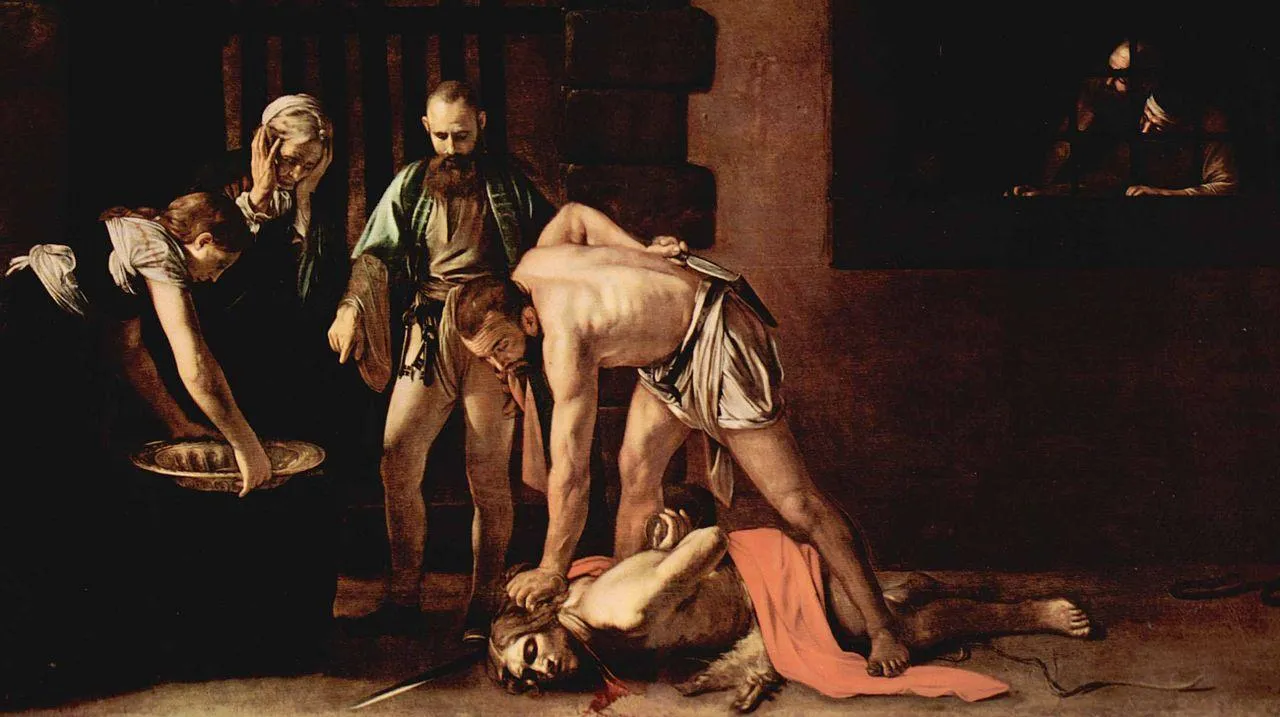
It seemed as though things were beginning to turn around. But then Caravaggio got into another fight. Following a conflict with another knight, the artist was arrested. He managed to escape from prison, after which he was expelled from the Order. Caravaggio then traveled to Sicily and later returned to Naples.
In fact, the last years of his life became a constant journey between cities, a search for protection, and an attempt to secure permission to return to Rome. And all the while, he continued to paint.
Caravaggio transformed himself into the severed head of Goliath
One of the most famous stories about the late Caravaggio is connected with the painting *David with the Head of Goliath*. The plot itself is well known: the young David has defeated Goliath and is holding his severed head before him.
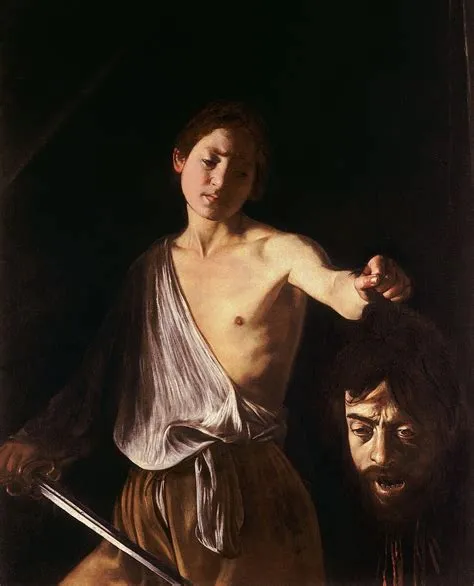
But Caravaggio added a personal element to the story. Goliath’s face bears the artist’s own features. In other words, a man who at that moment was living under the threat of punishment and seeking a pardon literally depicted himself as defeated and beheaded.
It is precisely for this reason that the painting is often viewed as a possible form of repentance or a symbolic plea for mercy. In general, Caravaggio’s later paintings became increasingly somber.
There was more darkness, fewer characters, and the main theme was increasingly not external movement but psychological tension. And here, his art seems to begin to catch up with his own life.
Caravaggio’s final years were marked by escapes, assaults, and attempts to return to Rome
After fleeing Malta, Caravaggio moved to Sicily, where he continued to work and receive commissions, despite his status as a man effectively on the run from the law. He visited Syracuse, Messina, and Palermo, and later returned to Naples. However, even there, the artist was unable to lead a more peaceful life.
In 1609, Caravaggio was attacked near one of Naples’ establishments. The beating was so brutal that his face was seriously injured, and rumors of the artist’s death even spread in Rome. He survived, but this incident only intensified the sense of danger that had accompanied the final years of his life.
At the same time, Caravaggio did not give up hope of returning to Rome. His influential patrons tried to negotiate a papal pardon, and by 1610, the situation seemed to be turning in his favor. After several years on the run, the possibility of returning to the city where he had become famous—and from which he had been forced to flee after the death of Ranuccio Tomassoni—became a very real prospect.
In the summer of 1610, the artist set out for the north. The events of this journey remain one of the most confusing parts of his biography. Caravaggio was carrying paintings with him that could likely have helped him negotiate with influential people in Rome. However, he was detained along the way, while the ship carrying his belongings and canvases continued on without him.
After his release, the artist tried to catch up with the ship. By this time, his condition had deteriorated sharply. On July 18, 1610, Caravaggio died in the Porto Ercole area at the age of only 38.
Even the artist’s death left questions unanswered. Historians have put forward various theories—ranging from a severe infection and malaria to complications from previous injuries. There is still no definitive answer today.
Caravaggio lived only 38 years, but an entire European school of art emerged in his wake
If we set aside the criminal aspects of his life, the main question remains: why did a man who lived only 38 years become so important to the history of art?
The answer lies in the fact that Caravaggio broke several rules at once. He showed that a great religious subject doesn’t necessarily require idealized figures. That darkness can occupy most of the canvas and still make the scene more powerful. That a biblical story can look as if it’s taking place not two thousand years ago, but right now in the next room. That the viewer doesn’t have to simply gaze calmly at the painting—they can be almost physically drawn into the action.
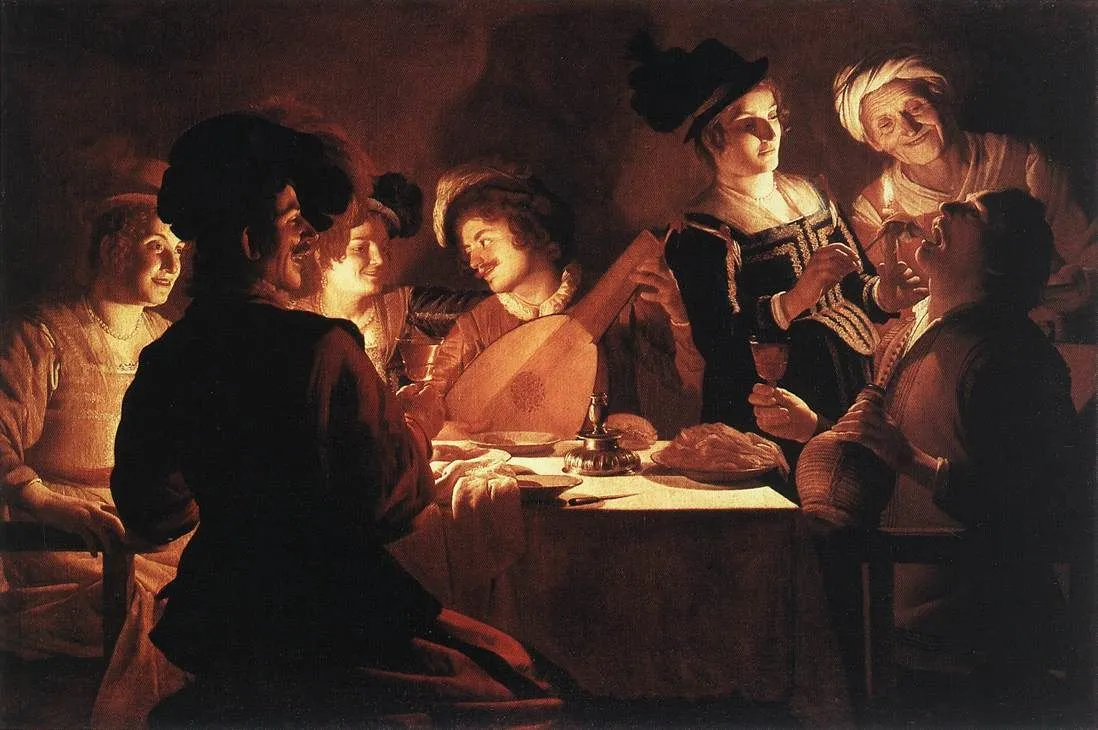
After Caravaggio, these techniques began to spread far beyond Italy’s borders. Artists emerged who are today referred to as Caravaggists. His influence was particularly strong among foreign artists who worked in Rome and then brought this style back to their home countries.
The Metropolitan Museum of Art explicitly refers to Caravaggism as an international movement and one of the important foundations of Baroque painting. Among the artists who developed his approach were the Dutchmen Gerrit van Gonthorst and Hendrik Ter Brugghen, the Frenchman Valentin de Boulogne, the Spaniard José de Ribera, and others.
Caravaggio left behind much more than the story of a scandalous artist
Caravaggio’s story can easily be turned into a beautiful myth about a “dangerous genius”—an artist who fought, carried a sword, fled from justice, and at the same time created masterpieces. But such a version oversimplifies his character. His aggression and constant conflicts did not help his career; on the contrary, they forced him to leave cities, lose stability, and work under conditions in which most artists would hardly have been able to continue creating at all.
What is far more interesting is this: Caravaggio brought the world he knew into great art. He did not try to make a person more beautiful simply because they happened to be in a biblical scene. His characters could be exhausted, frightened, old, or physically imperfect. They experienced pain, death, and fear not as conventional heroes of ancient history, but as living people.
That is precisely why his paintings outlasted the scandals surrounding their creator. Centuries later, Caravaggio’s legal cases remain an important part of his biography, but they did not determine his place in history. Far more important was how he learned to guide the viewer’s gaze through the use of light, how closely he brought biblical characters to life, and how profoundly he influenced artists of subsequent generations.
Perhaps this is the main paradox of Caravaggio. During his lifetime, he constantly found himself outside the bounds of accepted norms, but in art he was able to offer such a powerful alternative to the old rules that, after his death, others began to emulate them.




