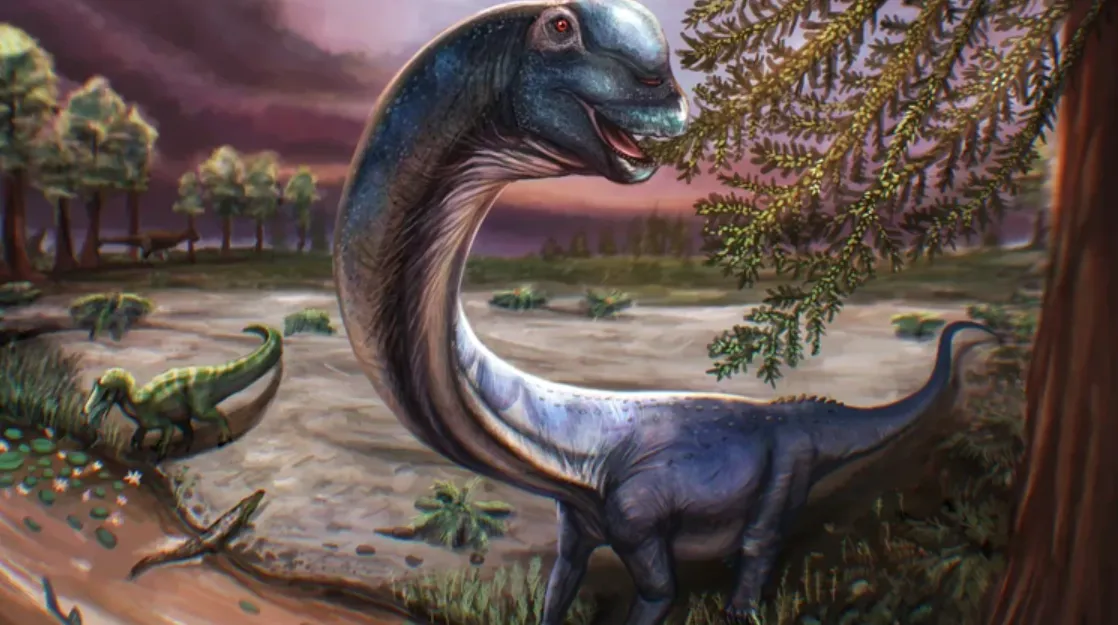
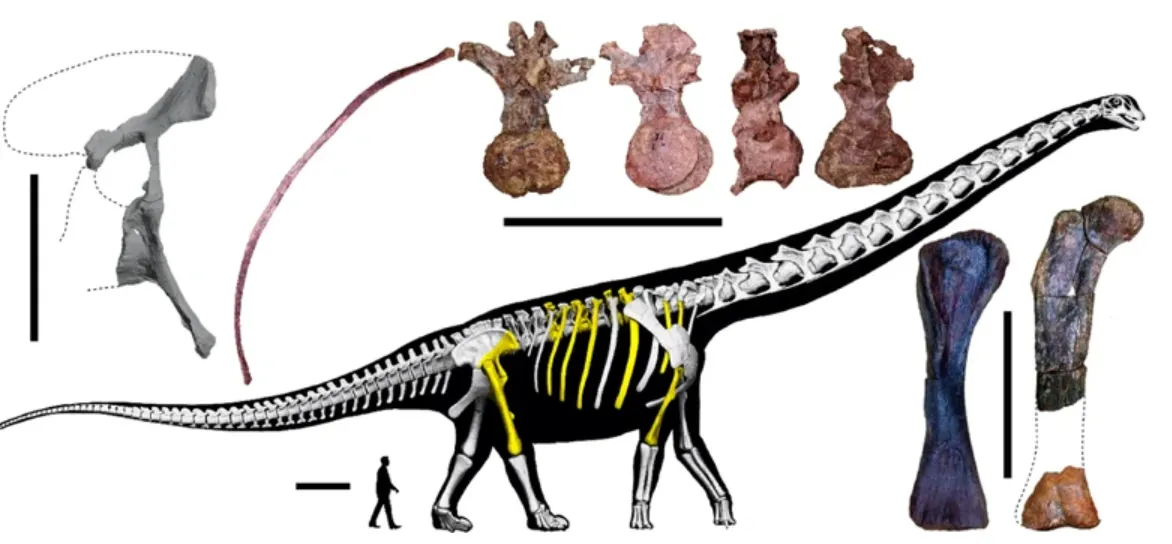
In Thailand, scientists have described a new species of giant herbivorous dinosaur—Nagatitan chaiyaphumensis—which lived about 100–120 million years ago.
This is reported in a study published in Scientific Reports.
The dinosaur’s remains were discovered about 10 years ago in northeastern Thailand. Paleontologists found the spine, ribs, pelvis, and limb bones of a previously unknown species.
According to scientists’ estimates, the dinosaur was about 27 meters long and weighed approximately 27 tons—more than the combined weight of nine modern Asian elephants.
Nagatitan chaiyaphumensis belonged to the sauropods—large, long-necked, herbivorous dinosaurs with long tails.
Scientists note that this is the largest dinosaur ever found in Southeast Asia. According to the researchers, it may also be one of the last large sauropods in the region before the area was covered by a shallow sea.
We previously reported that the recent discovery of two skeletons, both mutilated in the same way, suggests that limb amputation was used as a punishment during the Eastern Zhou Dynasty in China, over 2,000 years ago.
We also recall that during excavations in the ancient city of Laodicea in the Turkish province of Denizli, which is included on UNESCO’s tentative list of World Heritage Sites, a statue of Asclepius, the god of medicine in Greek and Roman mythology, and the head of a statue of his daughter Hygieia were discovered.