
Scientists have explained why the Pyramid of Cheops has stood for over 4,500 years
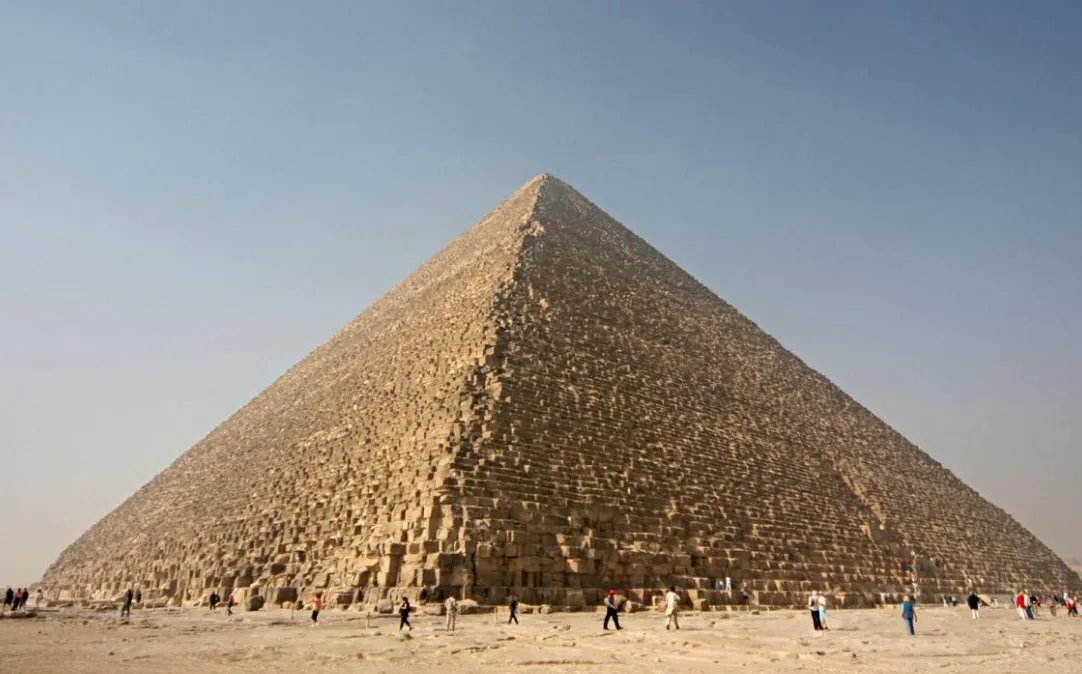
An international team of researchers from Egypt and Japan has identified the features that have helped the Great Pyramid of Giza survive for over 4,500 years, withstanding earthquakes, sandstorms, and other natural forces.
During the study, scientists installed sensors at 37 points inside and around the structure to study its response to external loads and vibrations.
The results showed that the pyramid and the ground beneath it have different natural frequencies. Thanks to this, the structure does not enter into dangerous resonance with seismic waves, which significantly reduces the risk of collapse during earthquakes.
Researchers also noted the architectural features of the Great Pyramid. Its shape concentrates the bulk of the mass near the foundation, and the symmetrical design distributes the load evenly.
Special cavities above the King’s Chamber play an additional role, potentially helping to reduce pressure from seismic vibrations in the upper part of the structure.
Scientists believe that the limestone from which the pyramid is built, as well as the bedrock beneath it, contribute to the effective dissipation of vibrations.
One example of the structure’s resilience was the 1992 earthquake in Cairo with a magnitude of 5.9. Despite significant tremors, the pyramid sustained only minimal damage.
At the same time, the study’s authors emphasize that there is currently no evidence that ancient Egyptian builders intentionally designed the pyramid as a seismic-resistant structure.
Source: Scientific Reports.
We previously reported that the recent discovery of two skeletons, mutilated in the same way, suggests that limb amputation was used as a punishment during the Eastern Zhou Dynasty in China, over 2,000 years ago.
We also recall that during excavations in the ancient city of Laodicea in the Turkish province of Denizli, which is included on UNESCO’s tentative list of World Heritage Sites, a statue of Asclepius, the god of medicine in Greek and Roman mythology, and the head of a statue of his daughter Hygieia were discovered.


