
South Africa’s Central Energy Fund proposes R117 billion for Sapref refinery — Daily Maverick
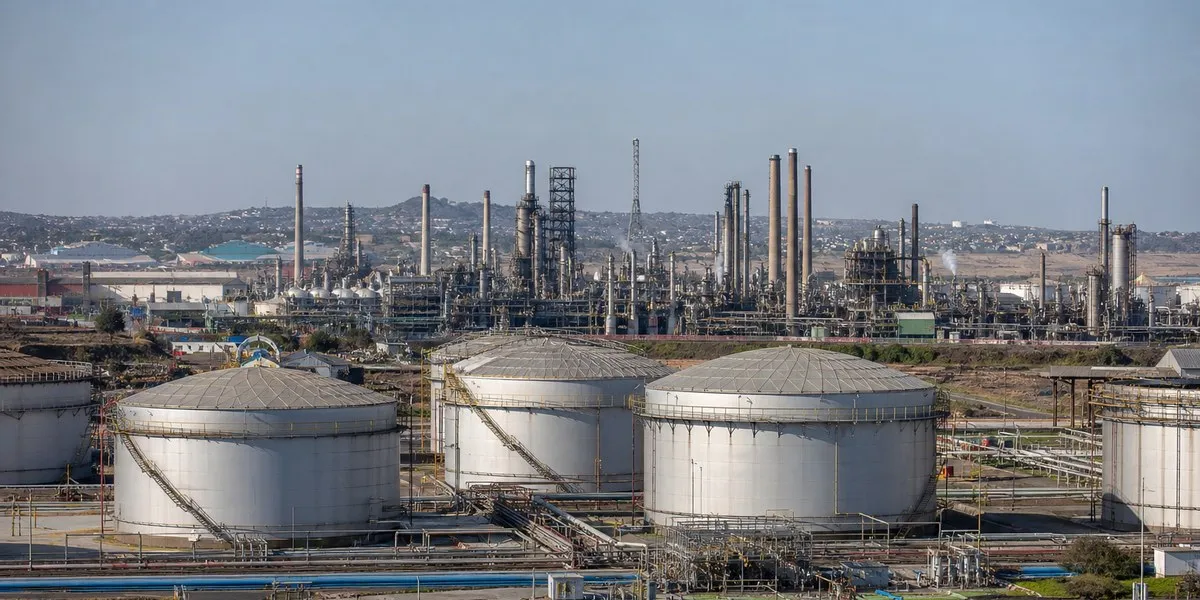
In Durban, South Africa, the state-owned Central Energy Fund is proposing to invest R117 billion, mostly public funds, in restoring and expanding the mothballed Sapref oil refinery. The facility, now called the South African National Petroleum Company refinery, was acquired by the fund for one rand in 2024, Daily Maverick reports.
Under the plan, backed by Minister of Mineral and Petroleum Resources Gwede Mantashe, the refinery is to be restarted in three stages. Its capacity is expected to be increased to about 400,000 and later to 650,000 barrels per day. Before it was shut down, the facility processed up to 180,000 barrels daily.
The plant has been idle since 2022
Sapref, jointly operated by Shell and BP since 1963, ceased operations in April 2022 after floods. Water inundated the facility’s grounds and toppled some fuel tanks. At the same time, the plant’s owners had signalled their intention to close the ageing facility even before the floods.
More current news is available on the UA.News Telegram channel Telegram.
The Central Energy Fund says the reconstruction must be commercially prudent, technically sound and financially sustainable. However, Dave Wright, director of the South African National Energy Association, believes that operating the old plant could cost taxpayers more than it delivers in benefits, while in 10–15 years the asset risks losing its economic value.
Communities demand a risk assessment
The environmental organisation South Durban Community Environmental Alliance fears that restoring and expanding production will worsen air pollution in South Durban’s industrial area, near the suburbs of Merebank, Wentworth, Umlazi, Bluff and Isipingo. The organisation’s representative, Bongani Mthembu, referred to a 2007 study by the University of KwaZulu-Natal and the University of Michigan, which found higher asthma rates among children living near Sapref and another refinery, Engen, than in northern Durban.
South Africa’s Department of Forestry, Fisheries and the Environment confirmed that the refinery site has been entered into the national register of contaminated land. The department said that site remediation began before 2014, while pollution monitoring and management continue. The fund must also conduct an environmental impact assessment for activities related to the refinery’s reconstruction and expansion. The community organisation insists on an independent comprehensive assessment of environmental and health consequences, including soil and groundwater contamination.




