
"Dynasty" on Antibiotics: How Chervonenko's Pharmaceutical Business May Have Funded the Construction of Residences for Chernyshov and Yermak
14 May 2026 19:02An unexpected player has emerged in the NABU and SAPO investigation into the “Dynasty” cottage community in Kozin: the Ukrainian pharmaceutical industry. Not that it made a big splash, but rather—it was mentioned in passing. The investigators’ focus is entirely on corruption at “Energoatom,” while the role of pharmaceutical companies, through which funds were “laundered” for the country’s top officials, remains unfairly overlooked.
During the release of the “Mindichgate” materials (the case regarding construction in Kozin funded by Timur Mindich’s criminal organization), NABU briefly mentioned the money-laundering scheme via the so-called “Form-1.” And in vain. After all, it is precisely this “conditionally white” financing channel that explains a great deal about how the real sector of the economy became integrated into the corrupt ecosystem of Oleksiy Chernyshov, Andriy Yermak, and Timur Mindich.
A pharmaceutical “front” for millions in corruption
According to the investigation, the “Sunny Beach” housing and construction cooperative was created to finance the construction of the “R” residences. It acted as the formal client, creating the appearance of the funds’ legitimate origin. The sources of funding for this cooperative appear highly suspicious.
Detectives established that individuals under the control of Oleksiy Chernyshov received funds for allegedly “services rendered” from two types of entities: firms with signs of being fictitious (“shell companies”) and legal entities in the pharmaceutical industry.
The involvement of pharmaceutical companies is a key indicator. While a shell company is merely a disposable tool, a major pharmaceutical firm represents reputation, licenses, and vast working capital. The fact that these pharmaceutical giants paid for fictitious services to Chernyshov’s entities effectively means their direct involvement in the laundering of dirty money.
10% “clean” money as a cover for criminal activity
Although the share of such “pharmaceutical” funding amounted to about 10% of the total volume (the remaining 90% went as “black” cash through intermediaries), its role was strategic. It was precisely this money that was supposed to create a “facade” of legality for banks and financial regulators.
Without this 10%, backed by the authority of pharmaceutical companies, the entire “Dynasty” would have looked like a typical self-built project funded by stolen cash. Instead, the pharmaceutical industry’s involvement allowed the project’s participants to do many things. Namely: to mask the real sources of millions of dollars, to give the construction the appearance of an official investment project, and to funnel corrupt funds from “Energoatom” through legal contracts for “services.”
Why is NABU silent?
Currently, law enforcement officials are not naming specific pharmaceutical companies involved in the scheme, limiting themselves to the general term “industry.” However, a question arises: what compelled the pharmaceutical business—one of the most profitable sectors during the war—to become a “laundromat” for Oleksiy Chernyshov and Andriy Yermak?
Or perhaps the answer lies not in coercion, but in the long-standing and close friendship between “Carlson” (Timur Mindich) and Igor Chervonenko—the man who effectively holds the keys to thousands of pharmacies across Ukraine.
Igor Chervonenko’s Pharmaceutical Empire
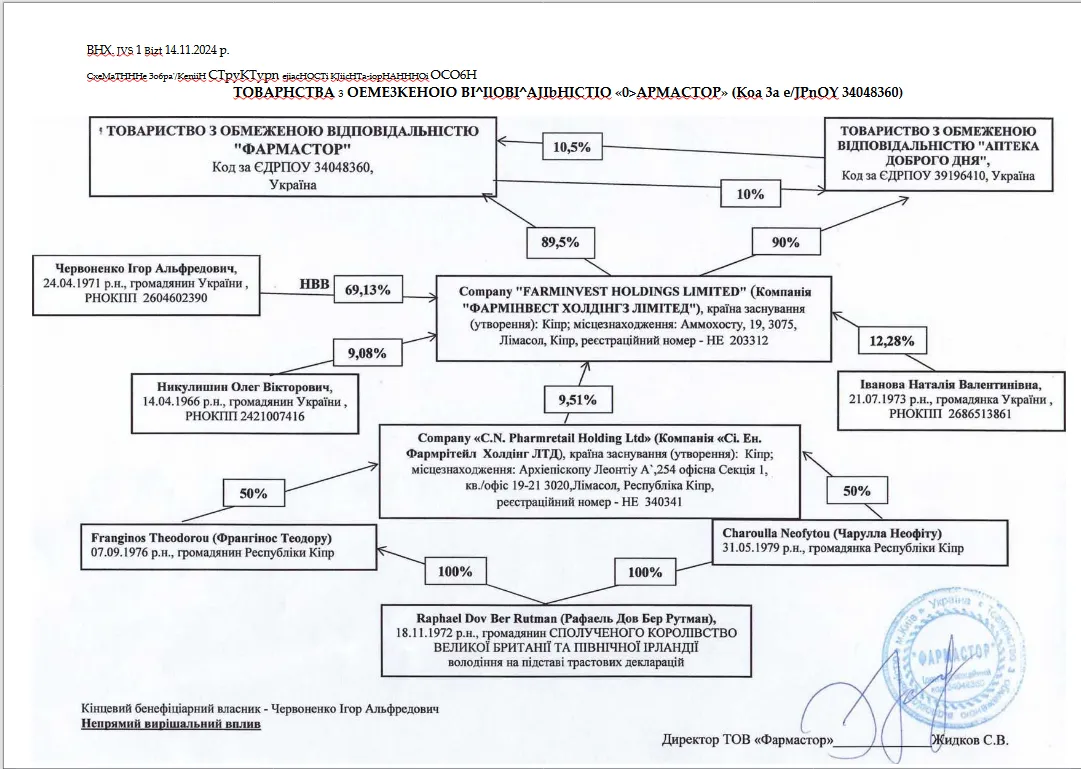
Igor Chervonenko is not just a businessman, but the founder and ultimate beneficiary of a group centered around LLC “FARMASTOR.” The ownership structure of this company likely resembles a capital-hiding scheme: while Chervonenko holds a 69.13% stake, the main contribution to the authorized capital (over 64 million UAH) comes from the Cypriot company “Farminvest Holdings Limited.”
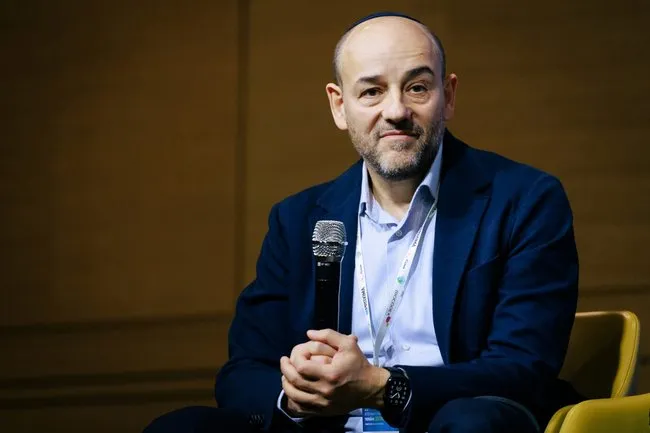
This Cypriot holding company is the parent structure for a dozen enterprises with billions in turnover, which, according to the investigation’s logic, could have served as ideal sources for “conditionally white” financing of the cottages in Kozin:
- APTEKA DOBROGO DNYA LLC: a brand known to every Ukrainian. In 2024 alone, the company’s gross revenue reached 1.438 billion hryvnias. Over 600 retail outlets operate under this brand in Ukraine.
- ZIRKA PHARMACEUTICALS LLC: a structure fully controlled by “Pharmastor” with revenue of 571 million hryvnias last year.
- The medical company “IRIS” and RAM RUAN LLC: firms with common beneficiaries (Chervonenko and Chekan), which together generated over 1 billion hryvnias in revenue in 2024.
“Dormant” assets for special assignments
In the context of “Mindichgate,” Chervonenko’s companies—which are not officially engaged in active operations but are burdened with peculiar assets and debts—deserve special attention. For example, DIAMED SERVICE LLC (assets — 54 million UAH, liabilities — 61 million UAH) and AS PHARMA KYIV LLC. Such entities could be used in schemes as “transit hubs” for funneling funds that lack an obvious economic basis.
In total, hundreds of pharmacies across the country are under Igor Chervonenko’s control. The list includes approximately 1,000 retail locations, accounting for both official and unofficial franchise schemes. In addition to the flagship network of “Apteka Dobrogo Dnya” LLC, which has over 600 branches, Chervonenko’s pharmaceutical empire includes dozens of other companies whose names are familiar to every resident of Ukraine.
In particular, through a complex ownership network, the beneficiary controls:
- The “Apteka Dobrogo Dnya — Kyiv” chain and the large logistics hub “Biokon JSC” (34 pharmacies);
- The “Apteka 7,” “Budte Zdorovi,” “Apteka No. 418,” and “Apteka Aronia” chains;
- Regional and specialized outlets, such as “Pharmacy No. 1 Transpharm,” “Astoria-Pharm,” “Pharmacy Mirra,” “Pharma-City,” and “Pharmabene.”
More than 15 other legal entities operate smaller chains or individual retail outlets, allowing the “FARMASTOR” group to dominate the market. Every year, these pharmacies officially earn billions of hryvnias, creating a powerful financial flow that may also have a “shadow” component.
It is precisely these billions that may have served as the foundation for “Form-1”—the very “white” financing that fueled construction in Kozin for years. When NABU mentions “legal entities in the pharmaceutical industry,” it is likely referring to a massive industry where one in six pharmacies in the country is, in one way or another, linked to a beneficiary whose “old friendship” with Timur Mindich has proven so costly to Ukrainian society.
The Cypriot “hub” and offshore captains
According to insider sources at UA.NEWS, the foundation of Chervonenko’s pharmacy empire was laid far beyond Ukraine’s borders—in Cyprus. It is there that the founding companies controlling Ukrainian assets are registered: “FARMINVEST HOLDINGS LIMITED,” “CHEMNETWORK HOLDINGS LIMITED,” and “C.N. Pharmretail Holding Ltd.”
Although Igor Chervonenko himself is highly likely to remain the ultimate beneficiary of these structures, the existence of such a multi-layered offshore “matryoshka” allows not only for tax minimization but also for the concealment of actual financial flows circulating between Kyiv and Limassol.
However, the most interesting part begins where the pharmaceutical magnate’s interests intersect with those of people whose names are usually whispered in closed circles. In this context, it is worth mentioning Rafael Rutman.
In fact, we are dealing not simply with “friendly financing,” but with what is likely a professionally structured offshore hub. Through it, money earned from drugs in Ukraine could pass through a Cypriot “filter” and return to the country as “clean” investments in the “Sunny Beach” housing cooperative for the construction of the “Dynasty” residences. This scheme perfectly explains how Andriy Yermak (R2) and Oleksiy Chernyshov (R4) could count on uninterrupted financing for their Kozin castles even during the darkest days of the war.
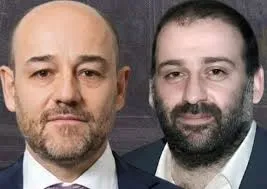
According to our sources, it was Rafael Rutman who introduced the Chervonenko brothers to Timur Mindich. The purpose of this meeting was far from medicine or charity: the brothers needed a powerful “umbrella” to protect their business from pressure by law enforcement. In addition, the agenda included the issue of removing Yevhen Chervonenko (Igor’s older brother) from the sanctions lists.
It is likely that it was for resolving these sensitive issues that Mindich received his “share” in the pharmaceutical business of the “FARMASTOR” group. Thus, every package of medicine sold in the “Apteka Dobrogo Dnya” chain likely began to generate profits for a select group of individuals, providing the financial resources for the future “Dynasty.”
The Zuckerman Brothers
The final link in this chain was provided by brothers Oleksandr and Mykhailo Tsukerman. Their connection with Ihor Chervonenko is not merely a business relationship, but a long-standing friendship. Evidence of this can be found in archival photos from as early as 2011 of elite “red carpet parties,” where they posed together long before the major corruption scandals.
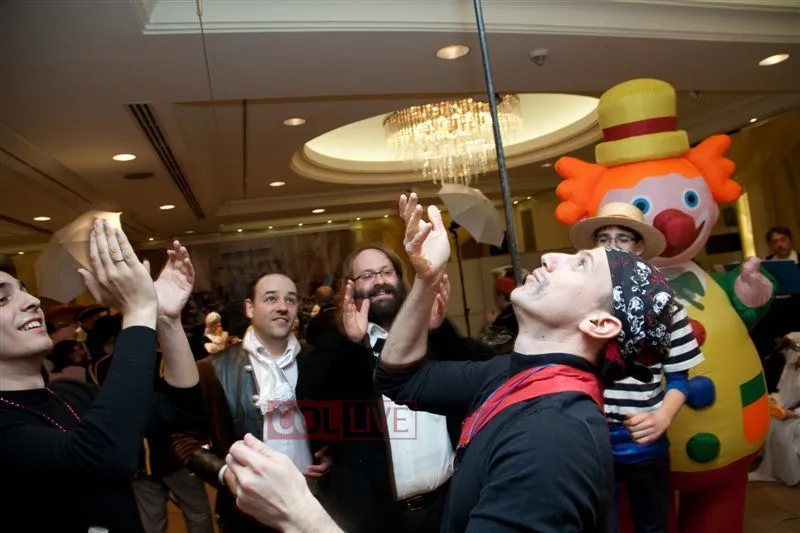
The Zuckerman brothers, who specialize in real estate, investments, and public projects, became Chervonenko’s “guides” into the world of Kyiv’s influential Jewish business elite. It was precisely this foundation of connections that later made it possible to bring in the then-minister and former head of the Kyiv Regional State Administration, Oleksiy Chernyshov, to the “Dynasty” project, forming a closed club where political influence was converted into elite square footage in Kozin.
A scheme worth billions
The “Apteka Dobrogo Dnya” chain not only supplies Ukrainians with medicines but likely serves as a tool for complex financial maneuvers. In May 2025, the Pechersk District Prosecutor’s Office opened criminal proceedings under Part 3 of Article 209 of the Criminal Code of Ukraine regarding the legalization of property obtained by criminal means. Law enforcement authorities focused on FARMA STOR LLC, which is suspected of illegally transferring 2 billion hryvnias out of Ukraine through the representative offices of foreign companies SKILL TRADE SP. Z O.O. and KVIK VENT OÜ.
According to investigators, the scheme operated through fictitious payments of “royalties” and other licensing fees for the use of intellectual property. Prosecutors believe that there were no actual rights underlying these transactions, and the scheme itself was merely a channel for capital flight.
Why Timur Mindich’s name is still missing from “Mindichgate”
Timur Mindich’s circle of “friends” is steadily growing and expanding, encompassing not only officials but also media personalities. A striking example is the “Mindichgate” website, which recently added a new section—“OP Bloggers.” According to MP Yaroslav Zheleznyak, 21 public figures have already been added to this list, including Serhiy Ivanov, Volodymyr Petrov, Nataliya Moseychuk, Dmytro Korchynskyi, and Yevhen Karas. The project’s authors accuse these individuals of publicly defending Mindich and discrediting the work of NABU and SAPO.
However, while public attention is focused on TV hosts and political strategists, the true foundation of this system remains in the shadows. Pharmacy magnate Ihor Chervonenko—a man through whose business billions linked to Timur Mindich likely flow—has yet to appear on any of the published lists.
Despite the fact that in the investigation of the “Midas” case, more and more threads lead from the main figures in anti-corruption cases to Igor Chervonenko—for some reason, none of the official investigators dare to ask a direct question out loud.
That is why only Timur Mindich himself and the journalists at UA.NEWS know the answer. And we can ask what “political expediency” prevents others from asking:
“Igor Alfredovich, where were you on the night of September 19? And wasn’t the sea breeze in Herzliya during Timur Mindich’s birthday celebration too expensive for the Ukrainian budget?”
In fact, UA.News journalists sent an official inquiry to Igor Chervonenko with a list of questions to clarify the details of Mindich’s stake in the pharmacy business and the nature of their relationship. Among other things, they also asked whether Chervonenko had traveled to Herzliya (Israel), to the DAN ACCADIA HERZLIYA hotel, to celebrate Timur Mindich’s birthday on September 19.
A few days later, the editorial office received a response from Igor Chervonenko’s representative, attorney Iryna Kostenko. Ms. Kostenko described the UА.News inquiry as an “information hodgepodge” intended to discredit her client.
Specifically, relying exclusively on the article “Mindich and Chervonenko’s Pharmacy Empire: A Sensational Inside Look at Yet Another Partnership of the ‘President’s Friend,’” she called it “negative and discrediting information that has a devastating impact on his (Chervonenko — ed.), business reputation and causes significant financial damage.”


