
Traces of a lost planet the size of the Moon may have been found in the Solar System
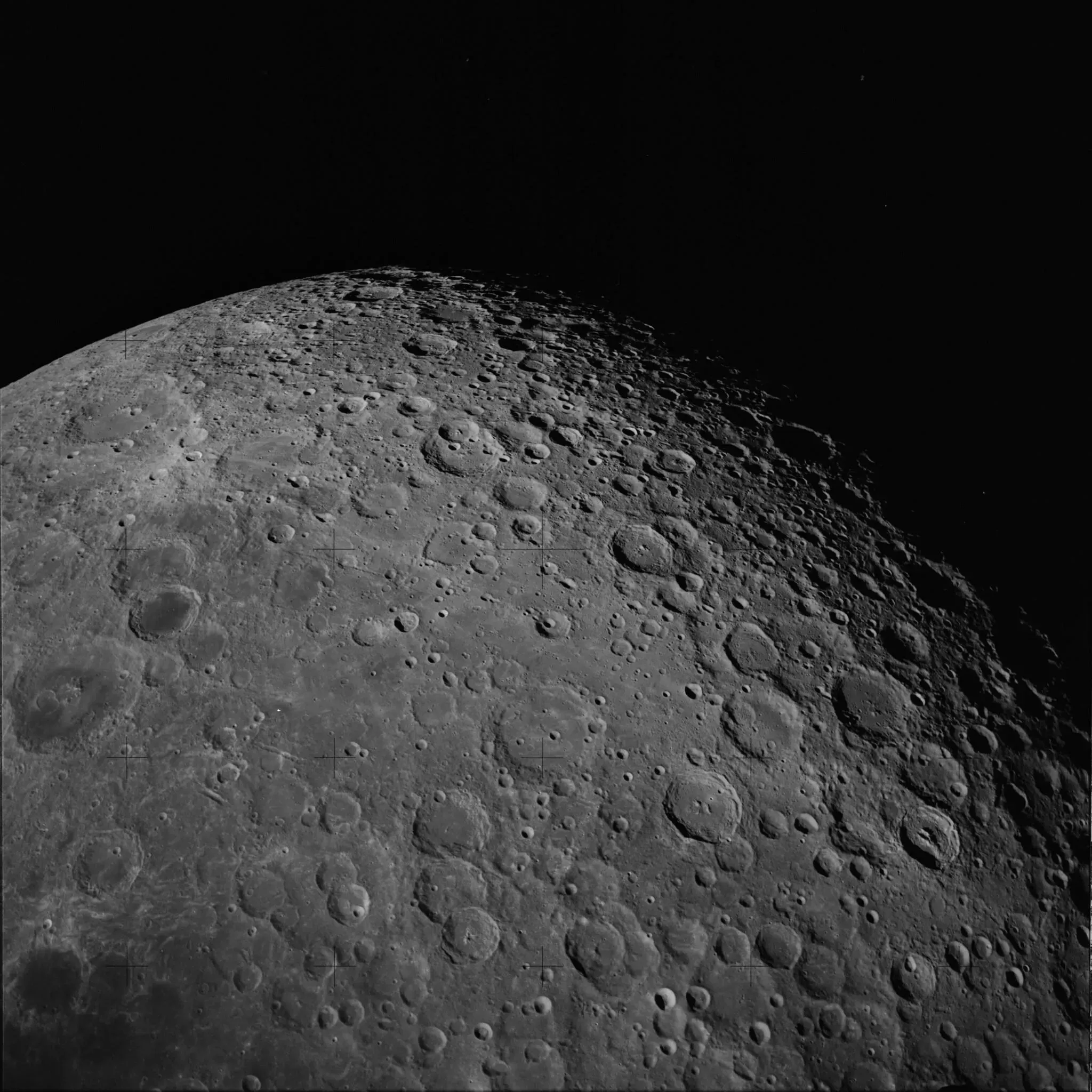
A rare meteorite discovered in the Sahara Desert may contain the first direct evidence of the existence of an ancient planetary body that may have disappeared during the early stages of the Solar System’s formation.
The meteorite in question is NWA 12774, an angrite-type meteorite that belongs to the oldest volcanic rocks in the Solar System. Scientists believe it is a fragment of a protoplanet—a large celestial body that existed more than 4.5 billion years ago and was destroyed as a result of a massive collision.
Analysis of the minerals in the sample revealed the presence of clinopyroxene with an abnormally high aluminum content. Such characteristics form only under conditions of extremely high pressure, far exceeding what small asteroids can generate.
According to the researchers’ calculations, the formation of these minerals requires a pressure of at least 17.5 kilobars. This indicates that the parent body must have been significantly larger than previously thought—with a radius of at least about 1,000 km.
Additional data suggest that this protoplanet could have been even larger—up to 1,800 km in radius, comparable to the size of the Moon. Some estimates place it on a scale similar to that of Mars.
The preserved crystals also indicate that they formed relatively close to the surface, allowing for a more accurate reconstruction of the ancient celestial body’s structure.
Scientists speculate that the planet may have been destroyed during a massive collision in the chaotic early Solar System. The debris may have subsequently become part of other planets, including Earth, according to ScienceDaily.
Previously, scientists reported that our planet differs from others in the Solar System. And this applies not only to the gas giants but also to the rocky celestial bodies near us. For example, just like on our planet, solar eclipses are observed on Mars.
And a group of scientists from the University of Warwick, in collaboration with the European Space Agency (ESA), the Georgia Institute of Technology, and the Microgravity Center in Germany, has achieved a breakthrough in the creation of light-driven energy, which could be the key to the future colonization of Mars.
By the end of the decade, NASA plans to establish a lunar outpost on Mars. This must be accomplished before humans begin exploring the planet.


