
Instagram Turns 16: How a Photo-Sharing App Became a Global Money-Making Machine
06 October 2026 14:07On October 6, Instagram turns 16. Back in 2010, it was a very simple mobile app built around a single idea: take a photo with your phone, apply a filter, crop it to a square, and share it with others. There were no Reels, Stories, shops, professional bloggers, or complex advertising systems back then.
Since then, Instagram has changed so much that photos have essentially ceased to be the platform’s main product. Today, it functions simultaneously as a social network, an advertising platform, a video service, a showcase for brands, a sales channel, and a marketplace where some companies buy attention, others sell products, and bloggers turn their audience into a profession.
The scale of this transformation is best seen through the lens of money. Meta does not disclose separately exactly what portion of its revenue comes from Instagram, but its business remains almost entirely built on advertising. In 2025 alone, advertising revenue for the Family of Apps—which includes Facebook, Instagram, Messenger, and WhatsApp—reached $196.2 billion. In the second quarter of 2026, Meta as a whole generated an additional $60.8 billion in revenue over three months.
UA.News explains how Instagram went from a small startup to one of Meta’s most important commercial assets, how an entire economy of bloggers sprang up around it, and why human attention has effectively become the platform’s main commodity today.
On its first day, Instagram gained 25,000 users
Instagram’s story didn’t begin with a large corporation or even a fully-fledged social network. Kevin Systrom initially worked on an app called Burbn, which had several features—geolocation, meeting plans, photos, and other social capabilities. Later, together with Mike Krieger, he streamlined the product as much as possible and focused it entirely on photos.

On October 6, 2010, Instagram appeared in the App Store. The result exceeded even the founders’ expectations. As Instagram co-founder Mike Krieger recalled five years later, on the eve of the launch, he and Systrom argued about how many people would download the app on the first day. Systrom estimated 2,500, while Krieger estimated 25,000. In the end, it was the latter prediction that proved correct.
Within three months, the number of users reached one million. For the team, this created a problem almost opposite to what is typical for startups: rather than having to convince people to use the product, they urgently needed to build infrastructure capable of keeping up with the pace of growth.
The timing of the launch also proved crucial. Smartphone cameras were getting better, mobile internet was becoming more accessible, and photography was gradually transforming from a one-off event into an everyday form of communication. Instagram offered the shortest possible path from the moment a person saw something to the moment their friends saw it.
It was this simplicity that was initially Instagram’s main value. However, within just a few years, it became clear that an audience that voluntarily shares where they are, what they eat, where they travel, what they wear, and who they follow on a daily basis could be extremely valuable not only to friends but also to advertisers.
Facebook paid $1 billion for Instagram even before the advertising machine took off
The year 2012 was a turning point for Instagram. The service wasn’t even two years old when Mark Zuckerberg decided to buy it.
On April 9, 2012, Facebook officially announced an agreement to acquire Instagram for approximately $1 billion in cash and stock. For a young mobile service, this was a colossal valuation, especially considering that Instagram did not yet have the monetization system that would later make it so valuable.
Facebook was essentially buying not current profits, but future control over a rapidly growing mobile audience. In the early 2010s, this was particularly important: users were increasingly shifting from computers to smartphones, and Instagram had been designed from the very beginning specifically as a mobile product.
Zuckerberg emphasized at the time that Instagram would continue to develop as a standalone service. After the deal was finalized, Facebook did indeed state that it would preserve Instagram’s independence while giving it access to its engineering team and infrastructure.
The formal value of the completed deal in the financial statements turned out to be lower than the initially announced $1 billion due to changes in the value of Facebook’s shares. The company’s annual report to the SEC listed the acquisition price as $521 million, including $300 million in cash and stock.
However, the strategic significance of the deal was not determined by this figure at all. Facebook gained a platform that allowed the company to retain its younger mobile audience and subsequently build yet another massive advertising sales channel.
Advertising Turned a Popular App into a Major Business
In its early years, Instagram made almost no effort to monetize its users. This allowed the company to focus on growth, but the platform could not survive indefinitely without monetization.
In 2013, the model began to change. Instagram announced the launch of its first sponsored posts in the U.S. Among the first partners were major brands such as Lexus, General Electric, and PayPal. Advertised photos and videos were labeled “sponsored,” but they looked as much like regular feed posts as possible.

This became a key distinction between Instagram and traditional advertising. A newspaper ad, a TV commercial, or a website banner is usually easy to distinguish from the main content. On Instagram, ads appeared right among photos from friends, celebrities, and accounts that users had chosen to follow themselves.
Over time, Instagram was integrated into Facebook’s much more powerful advertising infrastructure. Businesses gained the ability to tailor campaigns by age, location, interests, behavior, and a wide range of other signals, while Meta’s algorithms began automatically determining exactly who should see a particular ad.
The results of this approach are evident in the parent company’s financial reports. By the end of 2025, Meta had generated $196.175 billion in advertising revenue alone. Total revenue for the Family of Apps was $198.759 billion. In other words, the vast majority of the Facebook and Instagram ecosystem’s revenue still comes from advertisers.
Meta does not disclose Instagram’s revenue separately, so it is impossible to determine the exact amount the social network earns each year based on official reports. But the very structure of the business clearly explains why every additional minute a person spends on the feed or Reels has economic value. More time means more opportunities to show ads, more information about a user’s interests, and a better chance of finding an ad that will resonate with them.
Instagram has created a market where people have begun to sell their own popularity
However, the biggest change didn’t happen only within Meta itself. Instagram helped create a separate economy centered around people who don’t even own the platform.
Advertising through celebrities existed long before social media. But Instagram drastically lowered the barrier to entry. To advertise cosmetics, clothing, a restaurant, or a hotel, it was no longer necessary to be a Hollywood actress or a world-class athlete. All you had to do was build an audience interested in your life or expertise.
This is how the large influencer market emerged. People effectively gained the ability to turn their own profiles into media outlets, and the number and quality of their followers into a commercial asset.
At first, most of these deals took place off-platform: a brand would find a blogger, negotiate payment with them, and the blogger would post an advertisement. Later, Instagram began building the infrastructure for this market itself. Meta created the Instagram Creator Marketplace, where brands can find creators for advertising campaigns, view their profiles, and propose collaborations.
In fact, algorithms are now even used to match brands with creators: Instagram has tested machine learning that recommends creators to brands whose audiences and content are the best fit for a specific advertising campaign.
Alongside advertising, direct monetization methods have emerged. Instagram has launched paid subscriptions to creators, exclusive content, rewards programs, and other tools. Back in 2023, Meta reported that the number of active creator subscriptions on Instagram had exceeded one million.
In effect, a dual market has emerged. Instagram sells advertisers access to users’ attention, while creators with large followings sell brands access to their followers’ trust.
That’s why, for some people, the number of views, reach, and engagement have long ceased to be mere indicators of popularity. They directly determine the cost of advertising and, consequently, revenue.
Instagram has gradually turned a product photo into a full-fledged storefront
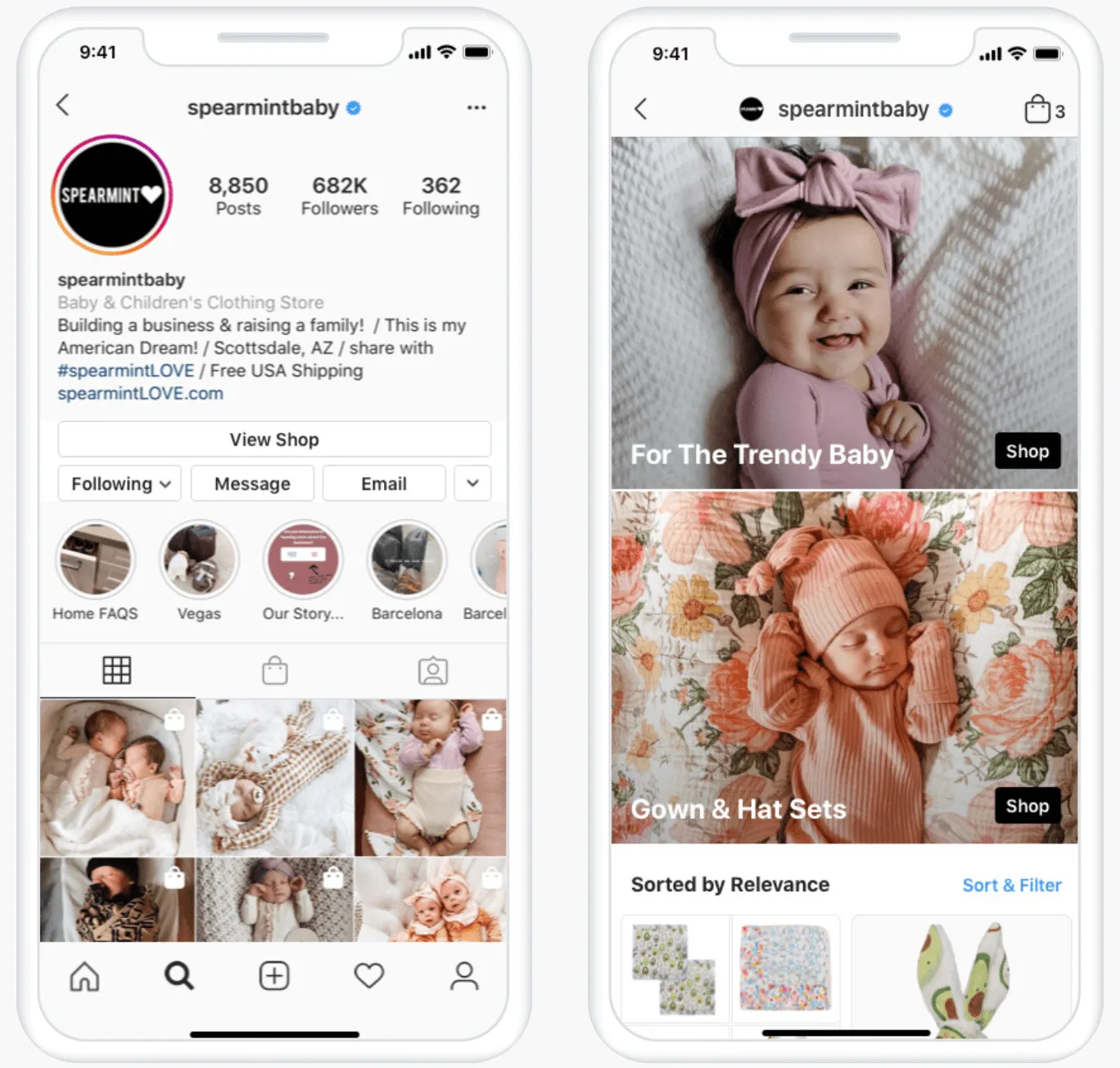
The next logical step was to bridge the gap between advertising and the actual purchase. Initially, a user might see a dress, sneakers, or cosmetics in a post, remember the brand, then separately find its website, and only place an order there. Instagram gradually began to eliminate these extra steps.
In 2017, the platform launched Shopping in the U.S. and later expanded the ability to tag products directly in posts. Next to an item in a photo, users could see its name and price, view detailed information, and from there—proceed to purchase.
The logic was simple: to turn the moment a person saw an attractive photo into the start of a purchase. In 2020, this initiative evolved into a standalone Instagram Shop, and Meta began expanding its checkout and Shops features. The company explicitly described its goal as simplifying the journey from discovering a new product to purchasing it.
This is how Instagram began competing not only for advertising budgets but also for a place between the seller and the buyer. This became particularly important for small businesses. Launching sales no longer always requires an expensive website, owned media, or a large advertising budget. A small clothing brand, salon, restaurant, or store can use a single profile simultaneously as a catalog, an advertising channel, a customer support service via Direct, and a way to find new customers.
Even when a purchase ultimately takes place on a third-party website, Instagram often remains the place where a person first sees a product and decides to take an interest in it.
Stories and Reels weren’t just new features—they increased the amount of attention that could be monetized
At a certain point, photos were no longer enough. Competitors began to shift audience behavior, and Instagram had to adapt its own product. In August 2016, Instagram introduced Stories—photos and videos that disappear after 24 hours. The format clearly resembled Snapchat, which was rapidly gaining popularity at the time.
From a business perspective, Stories solved a very important problem. People no longer had to decide whether a photo was important enough to be permanently posted on their profile. They could share dozens of small moments throughout the day.
This meant more content, more views, and new opportunities for advertising. The next major challenge came from TikTok. Short vertical videos changed the way content was consumed, especially among younger audiences. Instagram responded by launching Reels. In August 2020, Meta introduced a short-form video format featuring music, effects, and a dedicated recommendation algorithm.
Within a few months, Instagram had shifted so significantly in this direction that it moved Reels into a separate tab. For Meta as a business, this wasn’t a matter of following a trend, but a battle for user time. If a person spends an hour watching TikTok, they aren’t spending that hour on Instagram, and Meta can’t sell their attention to advertisers.
That’s why Instagram’s history is also a history of constantly borrowing formats that begin to draw away its audience. Stories helped counter Snapchat, Reels countered TikTok, and algorithmic recommendations gradually pushed the original model—where the feed consisted mainly of posts from people the user had followed—into the background.
The algorithm became Instagram’s main selling point
The more content appeared on the platform, the less significant the standard chronological order became. For the advertising business, a different model became far more valuable: Instagram itself decides what the user will see next.
This applies not only to videos and photos but also to ads. Meta’s current advertising system attempts to predict which ad will be most relevant to a specific person and most likely to elicit the action the advertiser wants.
In 2026, artificial intelligence became an even more prominent part of this system. In January, Meta announced the use of new AI models for content and ad recommendations. The company noted that in the U.S. alone, 75% of Instagram’s recommendations were already generated from original posts, and improvements to ranking systems were being used to increase the amount of time people spend in the apps.
The advertising figures are even more telling. According to the results for the second quarter of 2026, the number of ad impressions across the Family of Apps increased by 14% compared to the previous year. At the same time, the average price per ad rose by another 12%.
This is a significant combination. Meta wasn’t just showing more ads—advertisers were, on average, willing to pay more for them. In that same quarter, the Family of Apps was used by an average of 3.6 billion people daily. Instagram isn’t singled out separately in these statistics, but it is precisely the massive scale of the ecosystem that allows Meta to train more complex recommendation models, better predict user behavior, and automate ad campaigns.
As a result, the algorithm acts simultaneously as an editor, a salesperson, and a middleman. It decides which user to show a blogger’s video to, who to introduce to a new brand, and who to show a specific ad to.
Over the past 16 years, Instagram’s main commodity has become not photography, but attention
In 2010, Instagram’s value was easy to explain: it was a beautiful and convenient way to share photos from a smartphone. Sixteen years later, its business model is much more complex.
Brands pay the platform for the opportunity to reach the right users. Bloggers earn money by building trust with their audience. Stores use Instagram as a storefront. Algorithms determine which content will get millions of views and which will go virtually unseen. Artificial intelligence is becoming increasingly accurate at predicting what will catch a person’s eye and which ad might convince them to make a purchase.
At the same time, the battle for this resource is becoming increasingly fierce. TikTok, YouTube Shorts, Snapchat, and other platforms are all vying for the same hours of the day. For Instagram, every minute a user spends on a competitor’s platform potentially means fewer ad views and less data about their interests.
That’s why changes on Instagram may often seem chaotic—but only from the user’s perspective. From a business standpoint, the logic is much simpler: the platform is trying to create as many reasons as possible for users not to close the app.
That’s exactly why Instagram’s biggest transformation didn’t happen in its design, Stories, or Reels. The platform has learned to transform what initially seemed like mere social activity—photos, likes, follows, and views—into one of the most valuable assets in the digital economy: human attention.




