
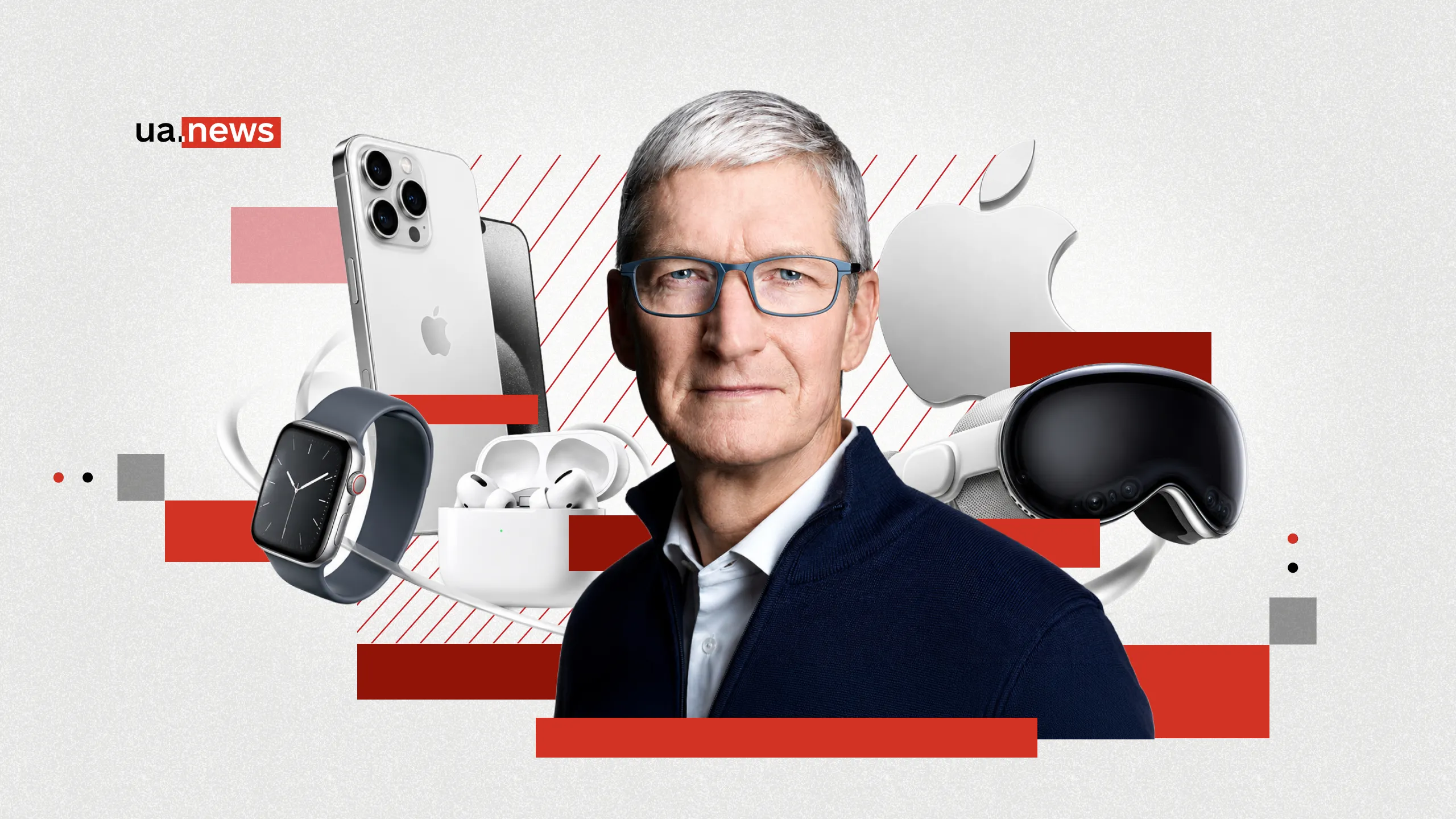
The End of the Tim Cook Era: How Apple Has Changed in the 15 Years Since Steve Jobs' Passing
31 August 2026 17:54August 31 marks the end of one of the longest and most successful leadership eras in the modern technology industry. Tim Cook is spending his final day as Apple’s CEO after 15 years at the helm of the company. On September 1, he will be succeeded by John Ternus, Apple’s longtime head of hardware.
The company officially announced the leadership change back on April 20. And this isn’t exactly a traditional resignation: Cook isn’t leaving Apple. He will become executive chairman of the board of directors and will continue to participate in the company’s operations, particularly in engaging with governments and policymakers around the world.
But for Apple itself, the change is still historic. Cook took the helm of the company on August 24, 2011, when Steve Jobs stepped down due to health issues. Over the past 15 years, Apple has nearly quadrupled its annual revenue, and its market capitalization has grown from approximately $350 billion to trillions of dollars.
Under his leadership, the company introduced the Apple Watch, AirPods, Apple Pay, Apple Music, Apple TV+, its own Apple Silicon processors, and Vision Pro. And Apple’s business has gradually evolved from simply selling iPhones into a vast ecosystem of devices, services, and subscriptions.
UA.News explains what kind of company Cook inherited from Steve Jobs, how he transformed it over 15 years, and why the leadership transition is happening right now.
Apple After Steve Jobs: The Company Tim Cook Inherited in 2011
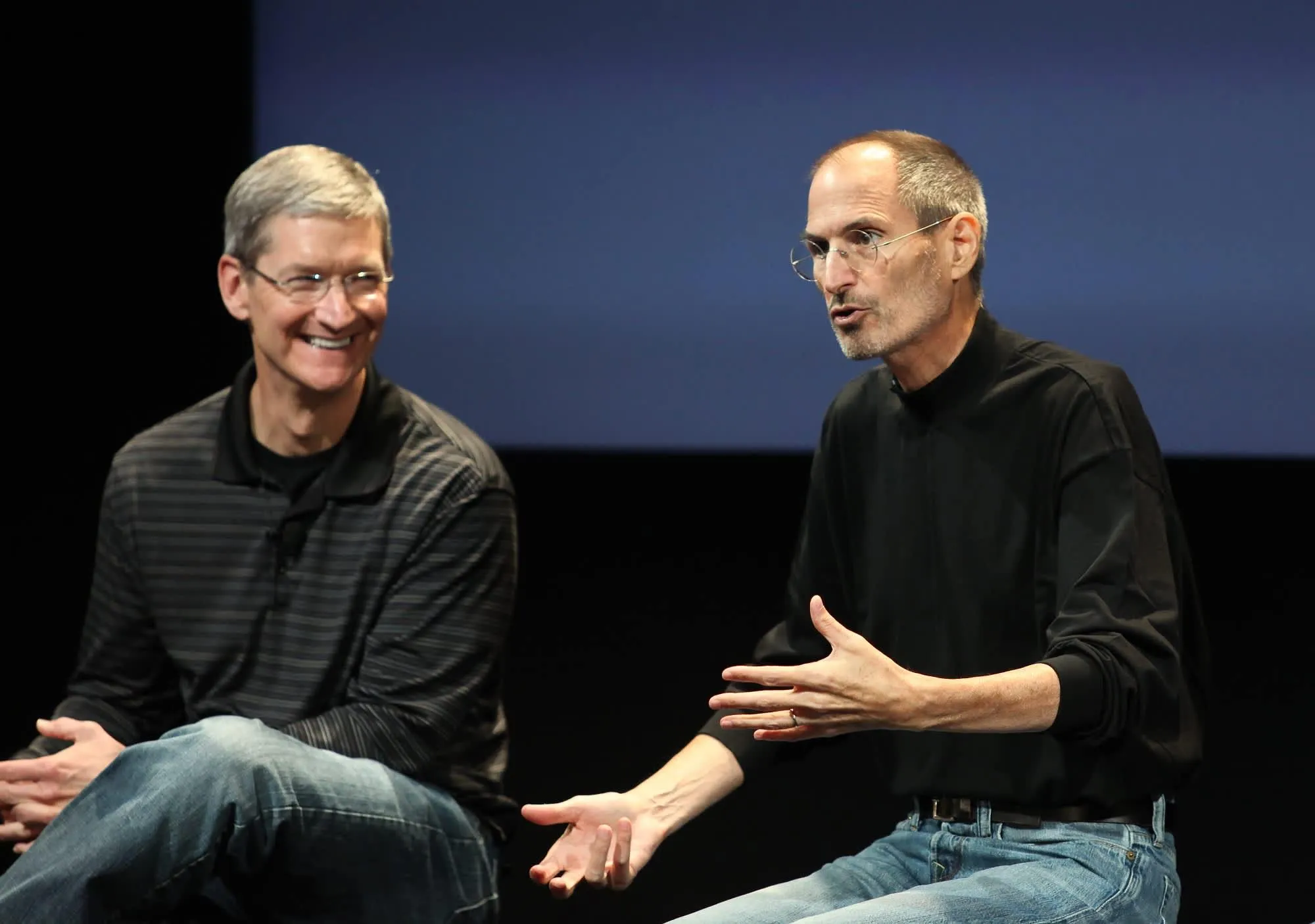
On August 24, 2011, Steve Jobs wrote a letter to Apple’s board of directors. In it, he announced that he could no longer serve as CEO and explicitly recommended Tim Cook as his successor. The original letter is still available on Apple’s website. That same day, the board of directors officially appointed Cook as CEO.
On the one hand, Cook had an almost ideal starting position. Apple was no longer the company on the brink of survival that Jobs had returned to lead in the 1990s. By that point, it had already created the iPod, iPhone, App Store, and iPad and had effectively transformed several markets at once—music, smartphones, mobile apps, and tablets.
By 2011, the iPhone was already the main driver of the business. According to Apple’s SEC filings, sales of the iPhone and related products and services brought in about $47 billion—roughly 43% of total revenue. The iPad, which had been on the market for just over a year, generated more than $20 billion. The Mac generated about $21.8 billion.
Apple’s total revenue for fiscal year 2011 was approximately $108.2 billion.
Even by today’s standards, that’s a massive business. But Apple was a much smaller company back then than it is now. Its market capitalization at the time of Cook’s arrival was approximately $350 billion—a figure Apple itself cites in a report on the leadership transition in 2026.
The company’s main asset wasn’t just its hardware. Jobs left Cook with one of the strongest technology ecosystems in the world: the iPhone drove users to the App Store, the Mac worked in tandem with the iPhone, the iPad created a new category of devices, and iTunes was the hub for digital content.
Even iCloud—one of the future cornerstones of today’s Apple—was introduced by Jobs himself. In June 2011, Apple announced a service designed to automatically sync photos, documents, contacts, music, and other content across devices.
So Cook’s challenge was very different from Jobs’s. He didn’t need to save Apple.
What he had to do was much more difficult in another sense: to prove that Apple could remain Apple without its founder, its chief showman, and the man with whom nearly all of its most famous products were associated.
In Cook’s early years, one question was constantly on everyone’s lips: where is the next iPhone? Investors and the tech press expected him to deliver a product that would change the world as radically as the iPod, iPhone, or iPad.
Cook took a different path. Instead of trying to become a second Steve Jobs, he began scaling up the system that had already been built. And that, ultimately, became the defining feature of his era.
From $108 billion to $416 billion: How Apple Grew Under Tim Cook
The easiest way to assess Cook’s 15 years is to look at the numbers. In 2011, Apple generated approximately $108 billion in annual revenue. In fiscal year 2025, that figure reached $416 billion—roughly 3.8 times as much.
Moreover, Apple reported the $416 billion figure in its own financial report, calling 2025 a record fiscal year.
The company’s market value has changed even more dramatically. Apple explicitly states that under Cook’s leadership, its market capitalization has grown from approximately $350 billion to $4 trillion. That’s more than a tenfold increase.
Moreover, Cook is handing the company over to his successor not during a financial crisis. On the contrary, the last full quarter under his leadership was a record-breaking one.
In the third quarter of fiscal year 2026, Apple generated $109.4 billion in revenue—16% more than a year earlier. It was the strongest June quarter in the company’s history. The iPhone, Mac, and Services divisions set records for this period.
In other words, Cook is not leaving because the business is falling apart or because Apple urgently needs a crisis manager. One of his main achievements is precisely that he has made Apple significantly less dependent on the launch of any single new device.
The iPhone remains the central product of the ecosystem, but dozens of other revenue streams have grown up around it: the App Store, iCloud, Apple Music, Apple Pay, AppleCare, Apple TV, advertising, subscriptions, and other services.
Apple itself has estimated the annual scale of its services business at more than $100 billion. For comparison, that’s a standalone company on par with one of the largest American corporations.
Services have given Apple another important advantage—recurring revenue. A smartphone is sold only once. A subscription to iCloud or Apple Music can generate revenue every month for years.
In January 2026, Apple declared 2025 a record year for its services. According to the company, the App Store had over 850 million weekly active users, Apple Music set records for the number of listeners and new subscribers, and Apple Pay was already operating in 89 countries and markets.
This is where the difference between Jobs and Cook was most evident. Jobs created products that opened up new markets.
Cook learned to turn those products into a global machine that makes money not just when a box of a new iPhone is sold, but for as long as a person remains within the Apple ecosystem.
Apple Watch, AirPods, and Services: What Was Actually Created Under Cook
The claim that Apple stopped creating new products after Jobs’ death is often made, but it doesn’t quite match reality.
True, under Cook, the company hasn’t released a device with the same impact as the first iPhone.
But it was during his tenure that several product categories emerged that are now integral to modern Apple.
In September 2014, the company introduced the Apple Watch—the first major new category of hardware products since Jobs’ death. Initially, the watch was largely positioned as a fashion accessory and an extension of the iPhone, but Apple gradually shifted its focus to health and fitness.
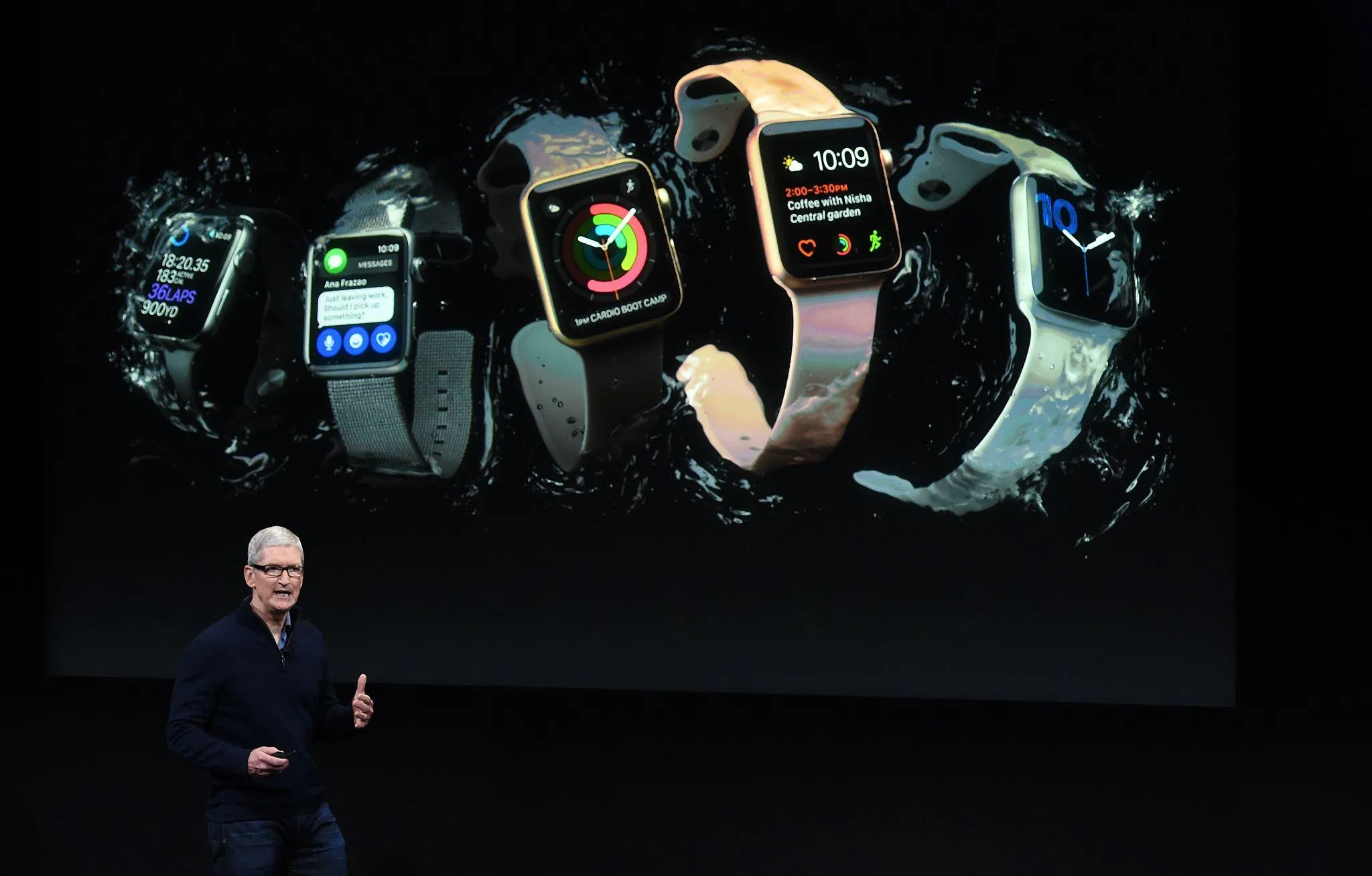
Today, the Apple Watch itself is the cornerstone of an entire segment focused on health monitoring, physical activity, and safety features.
Two years later, the AirPods were introduced. In 2016, Apple unveiled the first generation of wireless earbuds. At first, they were even mocked for their appearance, but over time, the AirPods became one of Apple’s most recognizable products.
At the same time, the company began rapidly expanding its financial and digital services.
In 2014, Apple launched Apple Pay, turning the iPhone and Apple Watch into payment tools. A year later, the company introduced Apple Music, entering a new battle for the music streaming market.
Later, Apple TV+, Apple Arcade, Fitness+, and other products were added to the mix.
However, perhaps the most fundamental technological change of the Cook era did not occur in watches or even in services. Apple began to move away from its reliance on third-party processors.
In 2020, the company introduced the M1—the first processor in the Apple Silicon family, designed specifically for the Mac. Along with it came new MacBook Air, MacBook Pro, and Mac mini models.
Prior to this, Macs had run on Intel processors for years. The transition to in-house chips allowed Apple to exercise much deeper control over both the hardware and software aspects of its computers.
Apple Silicon itself became one of the most important examples of Cook’s model: it’s not necessary to create a new category of devices if you can rebuild the foundation of an existing one. And the riskiest new product of his recent years has been the Vision Pro.
In early 2024, the headset went on sale in the U.S. Apple called it a “spatial computer” and even created a separate operating system, visionOS.
Vision Pro hasn’t yet become Apple’s next iPhone. But it has shown that the company is still willing to spend years and billions of dollars trying to create fundamentally new platforms.
Cook’s flagship product isn’t the iPhone—it’s the Apple ecosystem
If you were to look for a single product that has most defined the Cook era, it might not be the Apple Watch, AirPods, or even Apple Silicon. That product is Apple itself.
Under Jobs, the company built individual revolutionary devices that gradually connected with one another. Under Cook, the connection between them has become a central part of the business model.
Today, buying an iPhone often means a potential purchase of AirPods. Then an Apple Watch. Then iCloud subscriptions. Perhaps a Mac or an iPad. Payments via Apple Pay. Apple Music or Apple TV.
From the user’s perspective, this is an ecosystem. From a business perspective, it’s one of the most powerful customer retention mechanisms in the tech industry.
Apple does not disclose the exact number of devices sold over the years in each category, but the company regularly reports that its installed base of active devices continues to set new records. In July 2026, Apple’s CFO Kevan Parekh reiterated that the number of active devices had reached a new all-time high across all major product categories and geographic segments.
This is critically important for Apple.
The more active iPhones, Macs, Watches, and iPads there are in the world, the more potential users the App Store, iCloud, Music, TV, and other services have. That is why it is not entirely accurate to evaluate Cook solely based on the number of “revolutionary products.”
He was, first and foremost, an operations manager. Even before becoming CEO, Cook was responsible for Apple’s operations for many years.
And under his leadership, the company learned to manufacture hundreds of millions of extremely complex devices, coordinate a global network of suppliers, sell products virtually all over the world, and simultaneously maintain a single software ecosystem.
This system does have its weaknesses. Apple remains dependent on global supply chains, faces antitrust pressure and new regulations for the App Store, and competition in the field of artificial intelligence has forced the company to revamp its software products much more quickly.
But it is telling that Cook is stepping down from day-to-day management at a time when the machine itself continues to run.
Artificial Intelligence and the New Tech Race: What Cook Is Leaving for His Successor at Apple
There is another reason why 2026 seems like a logical point for a leadership change. The tech industry is entering a new cycle.
In the 2000s, that cycle was driven by smartphones. In the 2010s, it was mobile ecosystems, cloud services, and wearable electronics. Now, the main battle is centered on artificial intelligence.
For Apple, this is both an opportunity and a risk.
The company has a massive user base, its own processors, operating systems, app stores, and devices through which AI can be delivered to hundreds of millions of people.
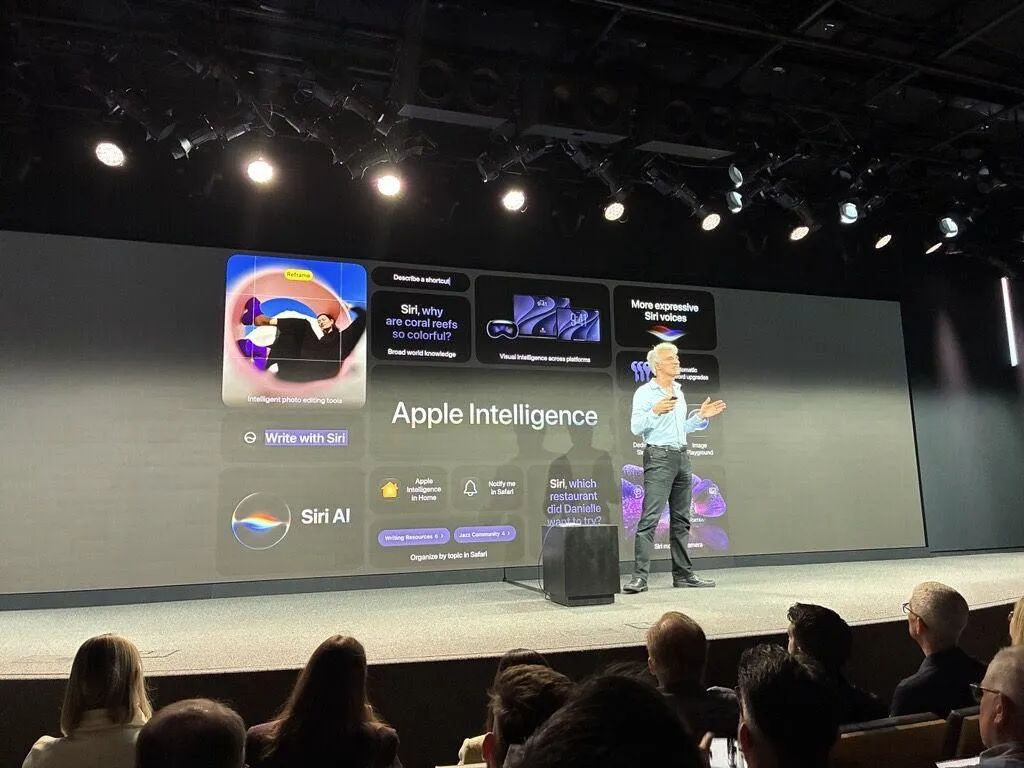
In June 2026, Apple unveiled a new Siri AI, built on Apple Intelligence. The assistant gained the ability to better understand the user’s personal context and on-screen information, work with data from messages, photos, and email, and answer a wider range of questions.
In this sense, the CEO transition seems even more symbolic. Cook took the helm at Apple at the beginning of an era when the company needed to transform the iPhone revolution into a stable global business.
His successor faces a different challenge: defining Apple’s place in the age of AI. And here, the choice of John Ternus also seems significant.
Turnus has worked at Apple for nearly a quarter of a century and has led Hardware Engineering for many years. It was his team that was responsible for the hardware of many of Apple’s core products.
Before the leadership transition, the company even restructured its hardware leadership separately: in April 2026, Apple appointed Jony Srouji as Chief Hardware Officer, transferring to him some of the areas previously managed by Turnus.
In other words, this was not a sudden decision made in a matter of weeks. Apple had been preparing its organizational structure for the CEO transition well in advance.
Why is Tim Cook stepping down right now, and what will happen to Apple after he leaves?
Apple’s official explanation is as calm as possible: the change is the result of long-term succession planning.
The company explicitly stated that the board of directors’ decision was unanimous, and that Cook had been working alongside Ternus throughout the summer to ensure a smooth transition of responsibilities. And that’s an important detail.
Cook did not announce his departure following a disastrous quarter, a conflict with the board of directors, or a sales slump. On the contrary, he is stepping down at the peak of Apple’s success. The company is worth trillions of dollars. Annual revenue exceeds $400 billion. The services business generates over $100 billion a year. The Apple Watch and AirPods have created major new product categories. The Mac has transitioned to in-house processors. And the most recent fiscal quarter was a record-breaker.
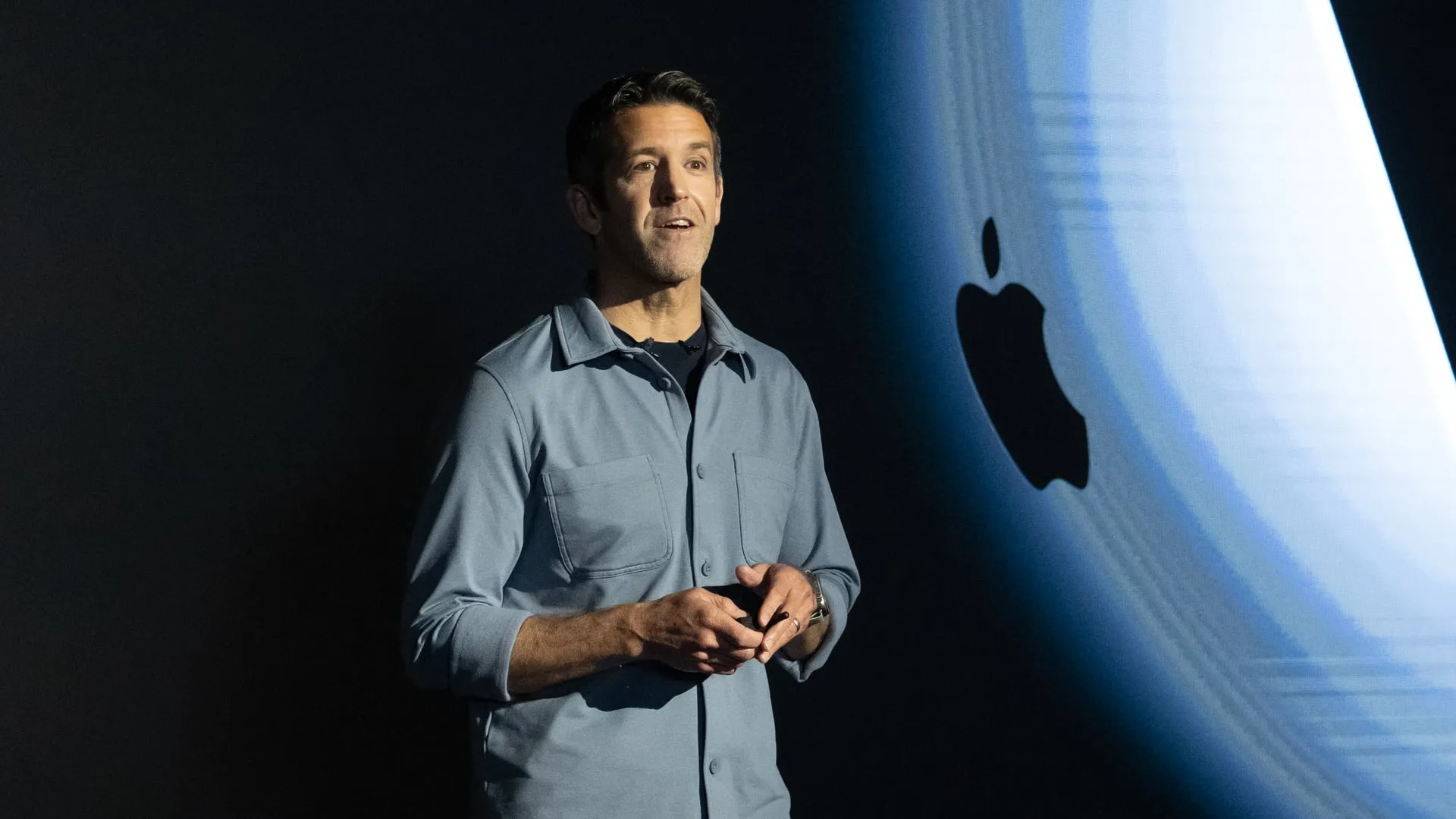
Furthermore, Cook isn’t actually leaving the company. Starting September 1, he will become executive chairman of Apple’s board of directors.
Apple specifically notes that in this role, he will continue to assist the company, including in its relations with policymakers and governments. For a corporation of Apple’s scale, this is particularly important amid antitrust investigations, trade disputes, and increasingly stringent regulation of technology platforms.
This arrangement resembles not so much a traditional retirement as a gradual transfer of power. Ternus will take over day-to-day management of the business and products. Cook will remain close by and retain strategic influence.
Cook himself called leading Apple “the greatest privilege” of his life and said that Turnus is the right person for the company’s next phase of development. For Apple’s history, this transition may prove no less significant than the change in 2011.
Back then, the main question was: Can Apple survive without Steve Jobs? Fifteen years later, the answer is clear. During that time, the company has grown from a market capitalization of approximately $350 billion to a trillion-dollar corporation, nearly quadrupled its revenue, and built one of the world’s largest technology ecosystems around the iPhone.
Now the question is different: Can Apple transform itself once again to such an extent that it remains the leading technology company in the age of artificial intelligence?
That’s a question Tim Cook will no longer be answering. Starting September 1, it will be John Turnus’s job.


