
Chinese satellite successfully performs refuelling test in low Earth orbit
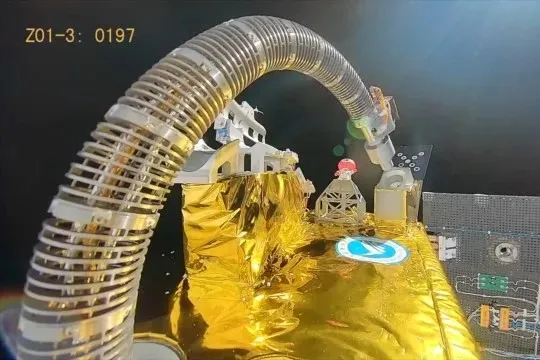
Last week, the Chinese commercial satellite Hukeda-2 conducted a successful refuelling test in low Earth orbit using a flexible robotic arm resembling octopus tentacles. The satellite was launched from the Jiuquan Satellite Launch Center.
Source cmp
The manipulator, developed by Shenzhen International Graduate School of Tsinghua University, is capable of bending, twisting, and grasping, enabling precise connection to fuel ports within tight spaces.
Developers liken the docking process to “threading a needle,” since satellites travel at speeds around 27,000 km/h and even the slightest deviation can jeopardise the operation.
Orbital refuelling technology is considered essential for extending the lifespan of spacecraft and reducing the costs associated with removing space debris.
This milestone test opens new opportunities for advancing commercial space infrastructure, making orbital missions more flexible and cost-effective.
Further advancements in such technologies are expected to improve satellite utilisation efficiency and decrease the proliferation of defunct objects in orbit.




