
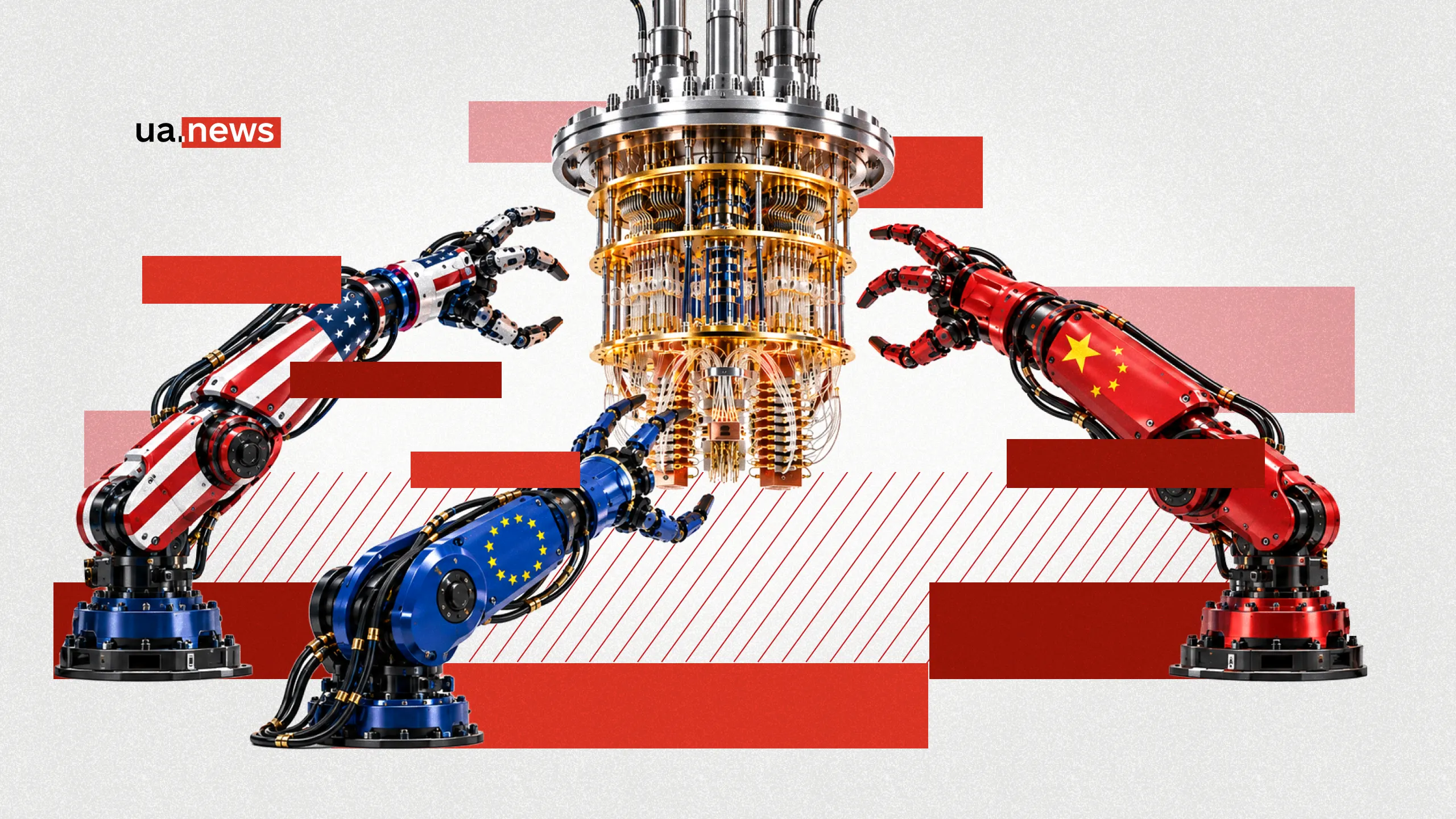
The quantum race has already begun: who is competing to build a computer capable of changing the world?
18 September 2026 13:37Just a few years ago, quantum computers were mostly expensive laboratory setups that scientists used to conduct experiments, making them virtually unusable for real-world business applications. Now, the situation is gradually changing. The U.S., China, and Europe are spending billions of dollars on the technology, while IBM, Google, Microsoft, Quantinuum, and dozens of startups are racing to be the first to create a machine capable of solving practical problems better than even the most powerful traditional supercomputers.
On September 17, France took a new step in this race. The French Atomic Energy and Alternative Energies Commission (CEA) and the quantum startup Alice & Bob announced a joint effort to develop software that will enable quantum processors to be used alongside classical supercomputers.
It is precisely this model that the industry is increasingly viewing as one of the most realistic scenarios for the development of quantum computing. Quantum machines are unlikely to replace laptops or ordinary servers. Instead, they could become specialized accelerators within large computing complexes—much like how GPUs have become critical to artificial intelligence today.
UA.News explains who is currently among the leaders in the quantum race, why governments and corporations are investing billions of dollars in it, and what might change if quantum computers finally make the leap from laboratories to practical use.
France Wants to Combine a Quantum Computer with a Supercomputer
The Alice & Bob project and the CEA clearly demonstrate the direction in which the quantum industry is currently heading. Instead of the idea of creating a universal quantum computer that will one day simply replace traditional machines, more and more developers are talking about a hybrid model.

A classical supercomputer can take on a complex task, break it down into parts, and independently handle the parts that CPUs or GPUs excel at. The specific part of the task for which a quantum algorithm is potentially more efficient will be passed to the quantum processor. Afterward, the result will be sent back to the classical system.
IBM is developing a similar concept. In the company’s quantum roadmap, classical high-performance computing and quantum processors are gradually being integrated into unified workflows. In the immediate future, IBM plans to use quantum hardware alongside HPC—high-performance computing—to identify the first practical examples of quantum advantage.
The French project is also interesting because the CEA and Alice & Bob are attempting to create an alternative software ecosystem for such systems. Today, a significant portion of the AI industry relies on the NVIDIA ecosystem and its CUDA platform. In the quantum sphere, NVIDIA is also developing CUDA-Q for hybrid quantum-classical computing.
CEA, on the other hand, will work on developing Qaptiva—a software platform created by the French supercomputer manufacturer Bull. As Reuters explains, the French side wants there to be several competing software platforms on the market so that the new industry does not become dependent on a single supplier.
The CEA has already integrated quantum machines from the French companies Quandela and Pasqal, and plans to install the Alice & Bob computer at the center in 2027. The first area of testing will focus on problems in materials physics.
There is no clear winner in the quantum race yet
It is practically impossible to name a single country or company as the absolute leader in quantum computing at this time. The reason is simple: unlike conventional processors, where performance can be compared using relatively straightforward metrics, the sheer number of qubits in a quantum machine does not, in itself, indicate how useful it is.
A system with a thousand highly unstable qubits may perform worse than a machine with fewer qubits but a significantly lower error rate. Therefore, companies are simultaneously competing in terms of the number of qubits, the accuracy of operations, the duration of quantum state preservation, the speed of operations, and, most importantly, the ability to detect and correct errors.
IBM remains one of the biggest players. In June 2026, the company announced an investment of over $10 billion in quantum computing over the next five years. The funds will go toward research, manufacturing, infrastructure scaling, partnerships, and acquisitions.
The year 2029 is set to be a key milestone on IBM’s roadmap. That is when the company plans to launch the Starling system, designed for 200 logical qubits and approximately 100 million quantum operations. Later, the Blue Jay system is expected to scale up to approximately 2,000 qubits and one billion operations. However, IBM itself emphasizes that the roadmap reflects the company’s current goals and is subject to change.
In August, IBM took another important engineering step—it combined two large cryogenic systems into a single environment for the first time. Future large-scale quantum machines will likely need to be scaled not by relying on a single giant processor, but by connecting multiple modules.
Google is placing a strong emphasis on another challenge—quantum error correction. Even with the Willow processor, the company sought to demonstrate that as a quantum system grows, errors—under certain conditions—can be not only prevented from accumulating but also suppressed with increasing efficiency.
This is fundamentally important. Qubits are extremely sensitive to their external environment, and errors quickly disrupt computations. Without a scalable error correction system, building a large, universal quantum computer is practically impossible.
In 2025, Google presented another result. According to the company, its Quantum Echoes algorithm on Willow performed a specialized computation approximately 13,000 times faster than the best classical algorithm on one of the most powerful supercomputers.
Importantly, Google called this result “verified quantum advantage”: the algorithm’s result can be replicated and verified. The company has also experimented with using this approach to study molecular structures.
Another major player is Quantinuum. Its Helios system has 98 fully entangled physical qubits, and the company demonstrates various operating modes with logical qubits, including 50 error-detected logical qubits. Quantinuum places particular emphasis not on a record number of physical qubits, but on the precision and quality of operations.
Microsoft, for its part, has chosen one of the most unconventional paths in the industry—topological qubits. The company believes they have the potential to be more resistant to external noise and easier to scale. Its long-term quantum roadmap calls for a transition from unstable physical qubits to reliable logical qubits, and then to a full-fledged quantum supercomputer.
But all these systems are at different stages of development and use different physical approaches. That is precisely why comparisons along the lines of “whoever has more qubits wins” make virtually no sense.
China has already demonstrated that it can compete with the U.S. on the level of the machines themselves
China’s quantum program is less transparent than the U.S. corporate ecosystem, but its results make it impossible to view the country merely as a player trying to catch up.
In 2025, a team from the University of Science and Technology of China unveiled Zuchongzhi 3.0—a superconducting quantum processor with 105 qubits and 182 interconnects between them.
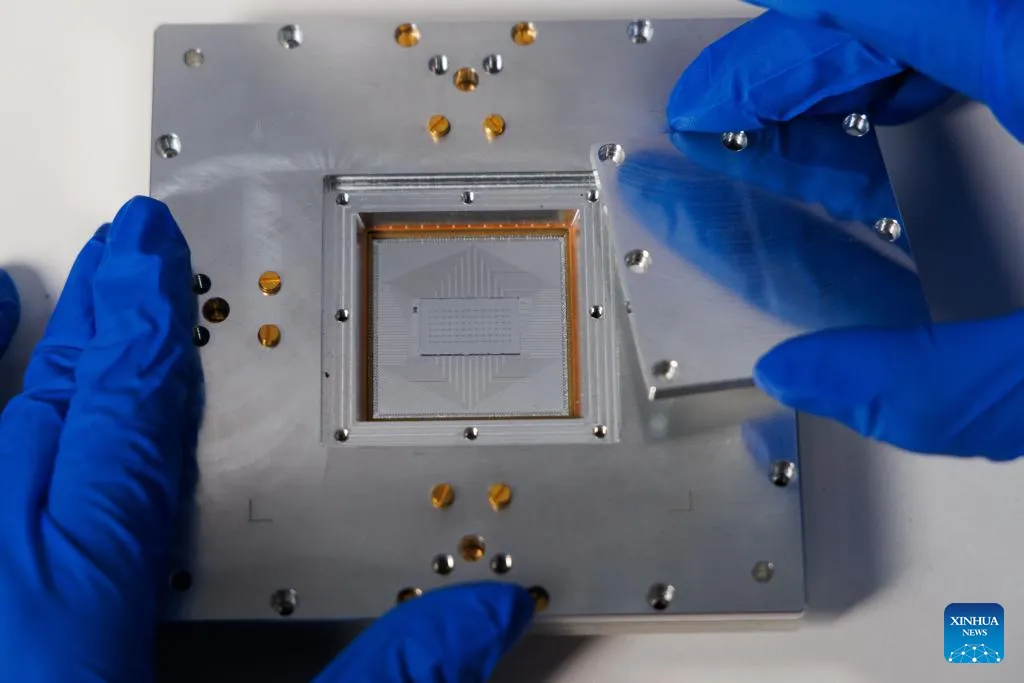
During a special “random circuit sampling” experiment, the researchers used 83 qubits. The Chinese Academy of Sciences reported that for a classical supercomputer, a similar task would be extremely difficult and would require many orders of magnitude more time.
This does not mean that the Chinese quantum computer is billions or trillions of times faster than a conventional supercomputer for everyday tasks. Random circuit sampling is a specially designed test that researchers use to evaluate the capabilities of quantum hardware.
It can demonstrate the advantages of the new architecture, but this does not imply that Zuchongzhi will be able to train a language model, predict the weather, or perform any other arbitrary computation millions of times faster.
However, such experiments demonstrate something else: China already has its own competitive school of superconducting quantum processors and is simultaneously working on other areas of quantum technology.
Countries are investing billions in quantum technologies not just for the sake of a faster computer
The main reason for the quantum race is that the technology’s potential value extends far beyond the computer market. According to McKinsey’s estimates, the economic value that quantum computing could potentially generate by 2035 could amount to approximately $1.3–2.7 trillion.
Analysts see the greatest potential in the global energy and materials sectors, the financial sector, transportation and logistics, pharmaceuticals, and high-tech industries.
This, of course, is a forecast, not a guaranteed outcome. Its realization depends primarily on whether it will be possible to build quantum machines that not only function in the laboratory but can consistently solve economically valuable problems better than classical systems.
But governments do not want to wait for that to happen. Back in 2018, the European Union launched the Quantum Technologies Flagship—a ten-year program with an expected budget of approximately €1 billion. It covers quantum computing, simulation, communications, sensors, fundamental science, and the training of specialists.
France separately launched a national quantum strategy worth €1.8 billion, of which approximately €1 billion was to be provided directly by the government. The U.S. is also allocating hundreds of millions of dollars to government programs. In 2025, the Department of Energy announced $625 million for five National Quantum Information Science Research Centers.
And in August 2026, the National Science Foundation allocated more than $290 million to eight quantum research institutes. These centers focus, among other things, on error correction, quantum networks, new materials, and training specialists. Private investments are added to this. IBM alone plans to spend over $10 billion over five years.
For governments, this is not just another promising technology sector like the next generation of smartphones. The country that is the first to develop a truly scalable and practically useful quantum computer could potentially gain an advantage simultaneously in materials science, chemistry, pharmaceuticals, the optimization of complex systems, and cryptography.
That is precisely why quantum technologies are gradually entering the same category as semiconductors and artificial intelligence: they are simultaneously a business, fundamental science, and a matter of technological autonomy.
A true revolution may begin with new materials and medicines, rather than with artificial intelligence
When people talk about a quantum computer, it’s easy to imagine it simply as an extremely fast version of a conventional one. But this is a flawed analogy. A quantum machine doesn’t have to be faster at everything. For most everyday tasks, a laptop, smartphone, or conventional server will remain significantly cheaper and more convenient.
The potential power of a quantum computer lies in specific classes of problems where the number of possible states grows so rapidly that it is very difficult for a classical machine to model them accurately.
One of the most obvious examples is nature itself. At the most fundamental level, molecules and materials are governed by quantum mechanics. The more complex a system becomes, the harder it is for a classical computer to accurately model all the interactions between its particles.
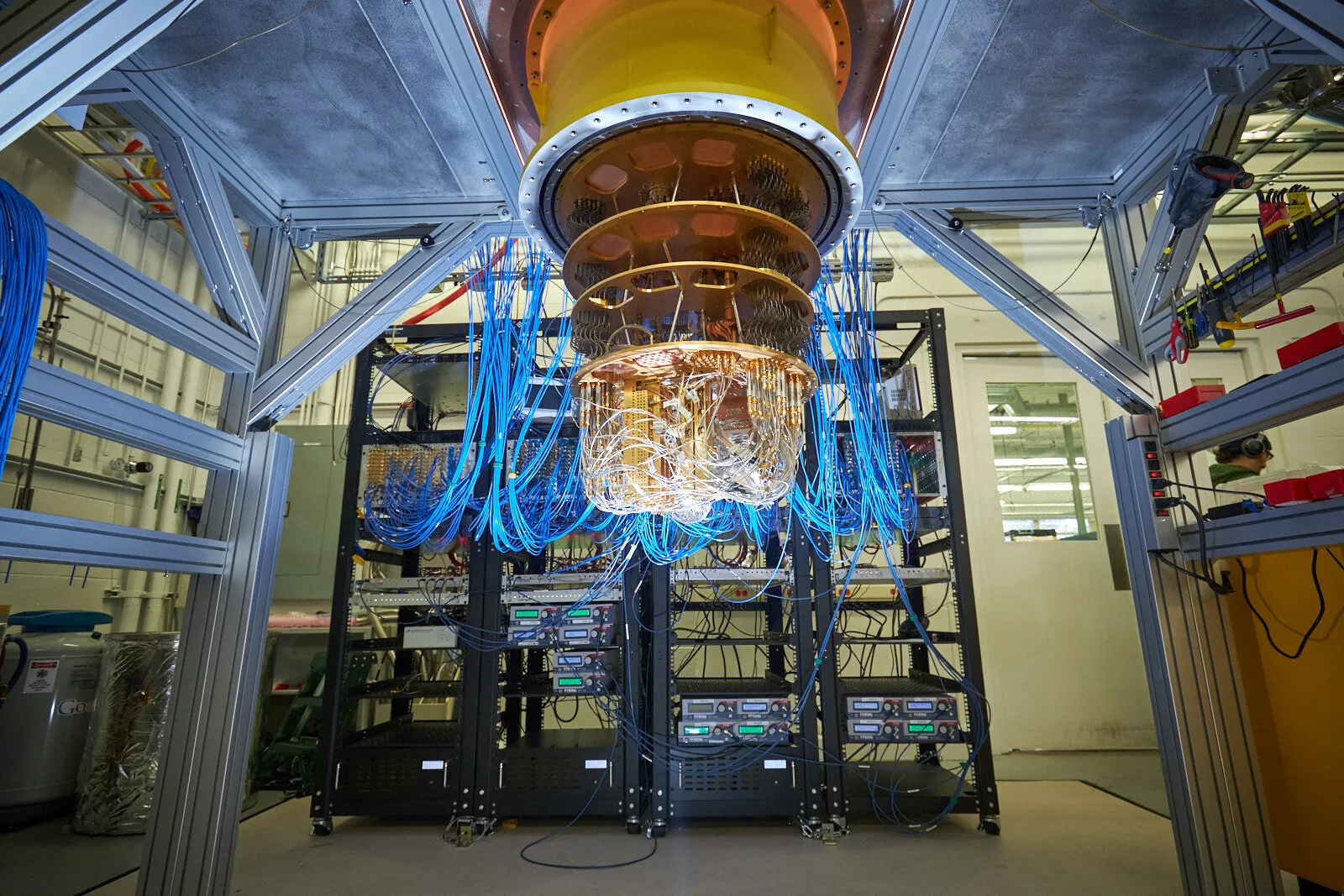
Since a quantum computer itself utilizes quantum effects, researchers have for many years considered the modeling of molecules and materials to be one of the most promising areas for its practical application.
In the future, this could help in the search for new materials with specific properties, more efficient batteries, catalysts, fertilizers, or molecules for future medications.
Instead of physically synthesizing a vast number of possible compounds and testing each one in the lab, researchers will potentially be able to eliminate a significant portion of the options through computation.
It is telling that materials physics will be one of the first fields where the CEA and Alice & Bob intend to test their hybrid system. Another major area is optimization.
The modern economy is rife with problems involving a vast number of possible combinations: transportation routes, cargo distribution, power grid operations, production schedules, and financial models.
Quantum algorithms may prove useful for some of these problems. But in this area in particular, it is especially important to distinguish between potential and marketing hype: a convincing practical advantage over the best classical methods for a wide range of real-world industry problems has yet to be demonstrated.
Therefore, a realistic future does not look like “a quantum computer will solve everything,” but rather like the emergence of yet another specialized computing resource. Just as a program today can offload a specific task from the CPU to the GPU, in the future, individual calculations may be automatically sent to a QPU—a quantum processing unit.
We may experience one of the first consequences of the quantum era even before the advent of a powerful quantum computer
Paradoxically, one of the biggest changes associated with future quantum computers has already begun. And that is cryptography. A significant portion of the modern digital world is protected by algorithms whose security relies on the fact that certain mathematical problems are extremely difficult to solve on classical computers.
A sufficiently large, fault-tolerant quantum computer, using Shor’s algorithm, could theoretically solve some of these problems much more efficiently and thus compromise current public-key cryptography systems.
No such quantum machine exists today. But the problem lies elsewhere: encrypted data can be intercepted now and stored for many years. If a computer capable of decrypting it appears in the future, some of that information may still be valuable.
This threat is often referred to as “harvest now, decrypt later.” That is precisely why technology companies and government agencies are already transitioning to post-quantum cryptography—classical cryptographic algorithms designed with the future threat from quantum computers in mind.
In March 2026, Google announced 2029 as the target date for its migration to post-quantum cryptography. The company attributed the accelerated timeline to advances in quantum hardware, error correction, and quantum factoring methods.
In other words, a computer capable of mass-breaking current encryption does not yet exist, but the very prospect of its emergence is already forcing a shift in the global cybersecurity system.
A mass-market quantum computer is unlikely to ever end up on our desks
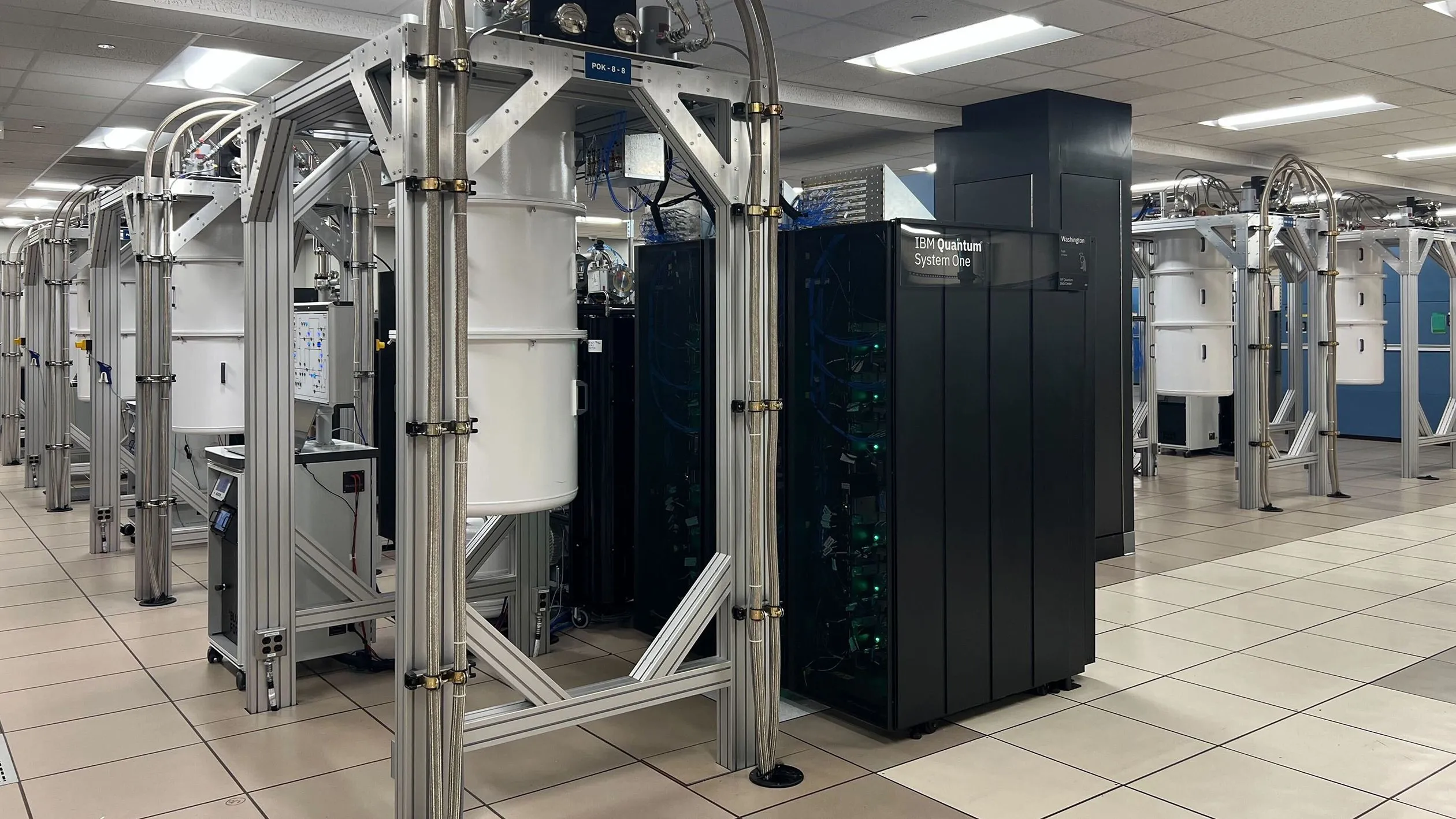
Most likely, the quantum revolution will look nothing like the personal computer revolution. A quantum processor is unlikely to simply appear in the next smartphone or laptop.
Many modern quantum systems require extremely complex infrastructure. Superconducting qubits, for example, operate at temperatures very close to absolute zero.
In IBM’s new modular system, the quantum equipment is cooled to below 15 millikelvins. That’s colder than the natural background temperature of outer space. Therefore, a much more realistic scenario involves large quantum computing centers that companies, universities, and government agencies will access remotely—much like how they currently use cloud data centers and supercomputers.
At the same time, the end user may not even know that part of their task was performed by a quantum processor. The program will send one part of the calculation to the CPU, another to the GPU, and a specific task—where it makes sense—to the QPU.
That is precisely why today’s partnership between Alice & Bob and the CEA may be more indicative of the industry’s future than yet another record for the number of qubits.
The quantum race is gradually shifting from the question “who will build the largest experimental machine” to a much more complex one: who will be able to create an entire ecosystem where quantum processors are stable, programmable, and affordable enough to become a standard part of existing computing infrastructure.
And this is precisely where the outcome is still far from certain. The U.S. has IBM, Google, Microsoft, Quantinuum, and a large private technology ecosystem. China has already demonstrated its ability to build world-class quantum systems and is actively developing related quantum technologies. Europe is trying to leverage its strong fundamental science, supercomputing centers, and its own companies—such as Alice & Bob, Pasqal, and Quandela—to avoid becoming dependent on someone else’s technology platform.
Therefore, the main quantum race is really just beginning. The winner will not necessarily be the one who is first to demonstrate the largest number of qubits or the most impressive advantage in a specially designed test. It will be far more important to create a machine that operates with sufficient stability, solves useful problems better than classical systems, and can be seamlessly integrated into existing digital infrastructure.
Only then will quantum computers cease to be primarily impressive laboratory experiments—and become a real technology.


