
Sun unleashes M6.9 flare and coronal mass ejection toward Earth
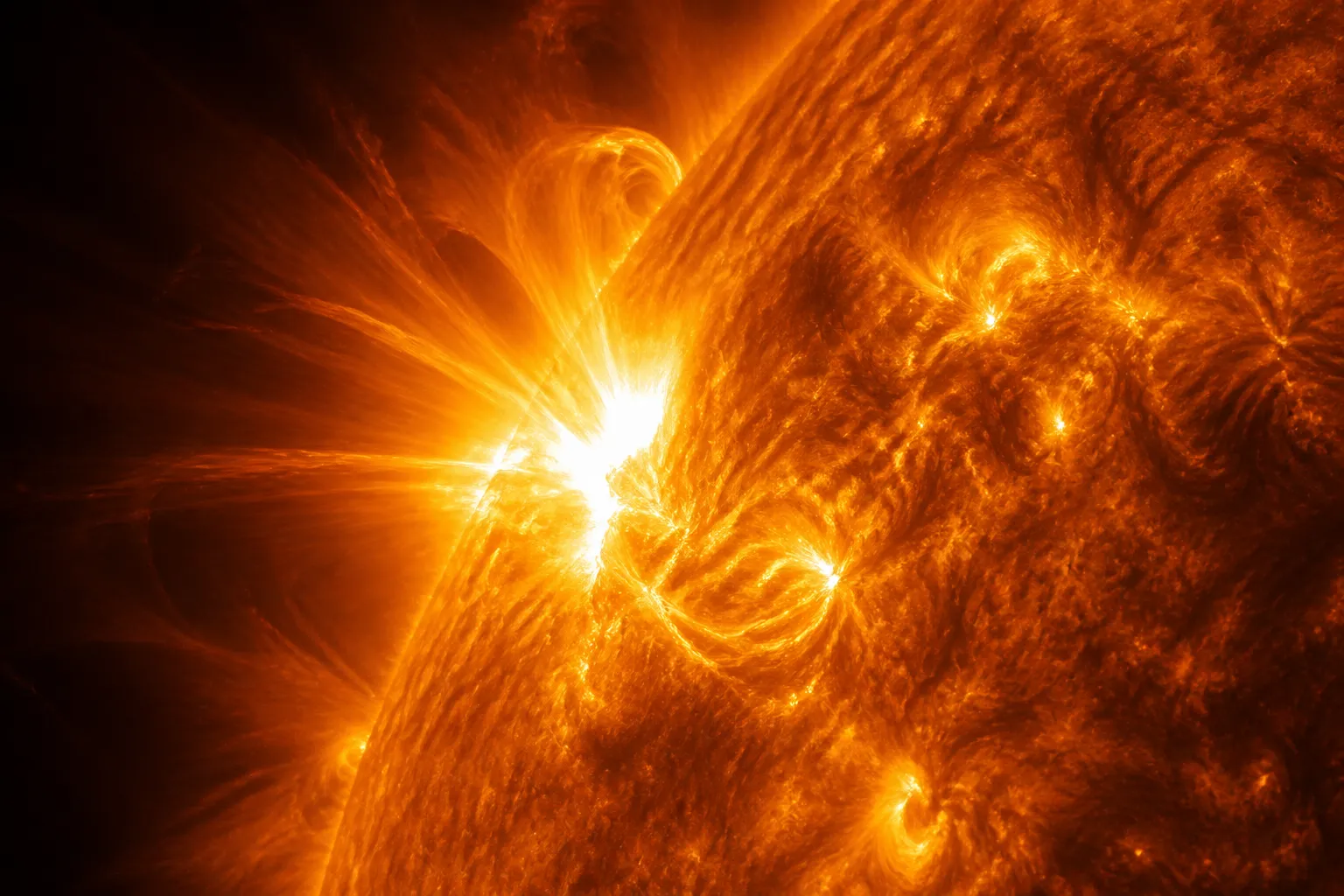
On August 25, the Sun produced a powerful M6.98-class flare in Earth-facing active sunspot region 4513. The eruption was accompanied by a coronal mass ejection that could potentially graze Earth.
Flare and radio disruptions
The flare peaked at 10:00 GMT, or 6:00 a.m. U.S. Eastern Time. According to Space.com, active region 4513 produced another five powerful M-class flares during the previous 24 hours.
Solar flares are divided into five classes: A, B, C, M and X. Each subsequent class is approximately ten times more powerful than the previous one, while the M class is surpassed in strength only by the X class.
The flare also caused moderate R2-level radio disruptions on Earth's sunlit side. This affected high-frequency radio communications in some areas of Africa, Europe and the Arctic.
More current news is available on the UA.News Telegram channel Telegram.
Possible arrival of the ejection
Initial models indicate that the coronal mass ejection could graze Earth on Friday, August 28. According to aurora chaser Jure Atanackov, a NASA model forecasts its arrival at approximately 10:00–11:00 GMT, with an uncertainty of around seven hours.
Atanackov described the ejection as slow and said he does not expect a significant effect from such a grazing impact. At the same time, the SIDC Solar Influences Data Analysis Center forecasts that a high-speed solar wind stream from a positively polarized coronal hole will begin affecting Earth from August 27.
Conditions for auroras
SIDC expects unsettled or active geomagnetic conditions and allows for a weak geomagnetic storm. If the arrival of the coronal mass ejection coincides with the high-speed solar wind stream, this could increase geomagnetic activity and improve the chances of auroras.
The final impact of the ejection will depend on its exact arrival time and the orientation of its magnetic field. A strong southward-directed magnetic field interacts more effectively with Earth's magnetic field and may intensify geomagnetic activity.




