
Pair-density waves found in uranium ditelluride after superconductivity disappears — ScienceDaily
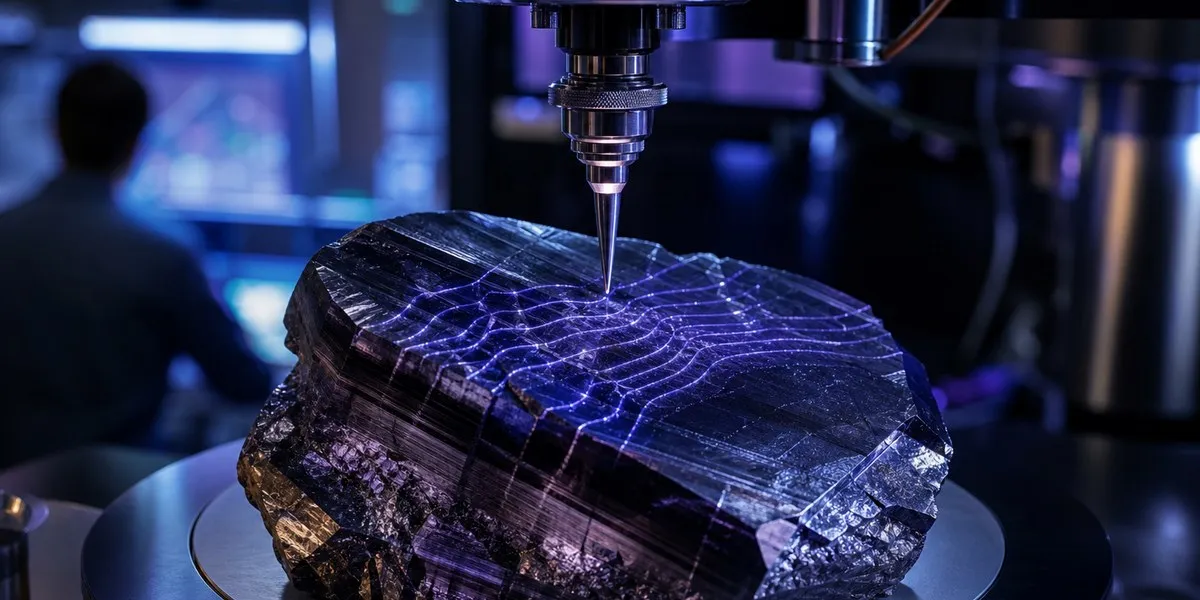
Physicists at the University of Illinois Urbana-Champaign, USA, have obtained evidence of unusual superconducting behavior in uranium ditelluride. Pair-density waves — uneven periodic structures formed by Cooper pairs of electrons — were detected in the material. As ScienceDaily reports, these structures persisted even after the primary superconducting state disappeared as the temperature increased.
Pairs before the transition to a superconducting state
Superconductivity occurs when a cooled metal conducts electricity without resistance. For this to happen, electrons form Cooper pairs that can enter a single quantum state. In conventional superconductors, the formation of such pairs is associated with the phase transition to superconductivity.
Pair-density waves, or PDWs, were predicted about 20 years ago. Unlike the uniform distribution of pairs in a conventional superconductor, in this state the pairs are arranged periodically and unevenly. The researchers note that observing PDWs above the critical temperature indicates that Cooper pairs in uranium ditelluride may form before the emergence of the primary superconducting phase.
More current news is available on the UA.News Telegram channel Telegram.
Measurements on cleaner crystals
For the experiment, the team used higher-quality uranium ditelluride crystals grown by the molten-flux method and a scanning tunneling microscope with a vector magnetic field. The instrument made it possible to track the response of the samples' surface to changes in temperature and in the strength and direction of the magnetic field.
Previously, scientists detected charge-density waves in the material, but their behavior in a magnetic field proved atypical: the field could destroy them. The new measurements showed modes whose dependence on temperature and magnetic field matched expectations for pair-density waves. Some of these modes remained noticeable even after the critical temperature was crossed.
Limitations of the study
The authors emphasize that scanning tunneling microscopy records surface properties, so the experiment does not directly show processes throughout the entire volume of uranium ditelluride. At the same time, the combination of temperature and magnetic measurements with improved sample quality provided a consistent picture of the PDW state. The results were published in the journal Proceedings of the National Academy of Sciences.




