
From a Fake Biden to a Digital Bolsonaro: How Artificial Intelligence Is Becoming a Player in Elections
29 July 2026 18:08A few years ago, deepfakes in politics seemed more like a technological scare: a montaged video of a candidate saying something they never said, a fake photo, or a voice impersonation. In 2024, this threat became a reality during the US presidential election.
And by 2026, politics has taken another step forward – now artificial intelligence can not only forge a candidate, but actually replace them during an election campaign.
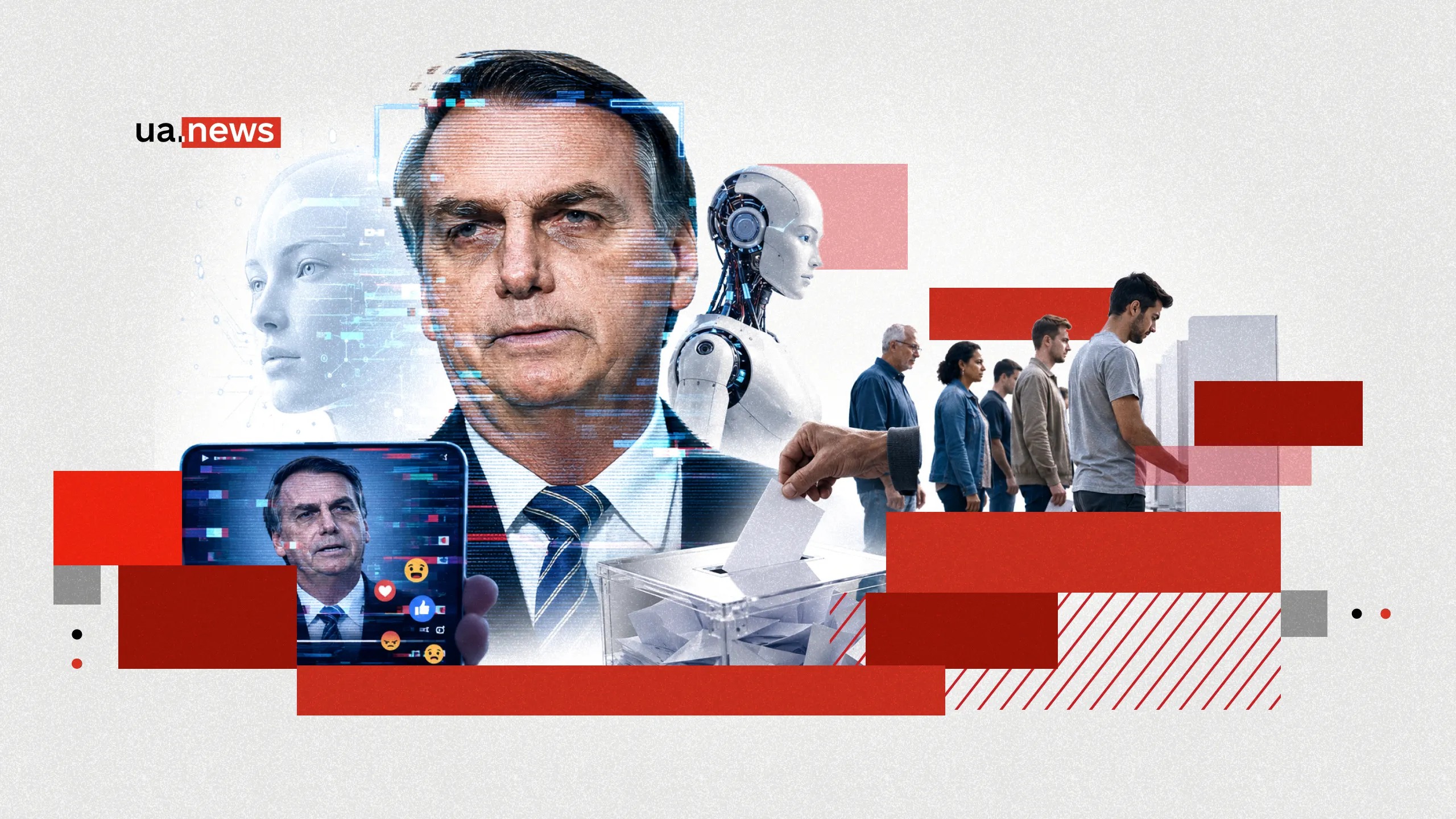
At the end of July, former Brazilian President Jair Bolsonarounexpectedly "appeared" at the launch of the presidential campaign of his son Flavio. The politician himself was not there. Bolsonaro is under house arrest and has limited opportunities for public communication, yet a digital avatar created by artificial intelligence spoke to his supporters.
Unlike a classic deepfake, the authors did not even hide the use of AI. The avatar informed the audience that it was created by artificial intelligence and then urged supporters to back Flavio Bolsonaro. The opposition has already filed a complaint against the use of such a video in the electoral court.
UA.News explains how artificial intelligence gradually transformed from a tool for creating political deepfakes into a full participant in election campaigns and how AI was already used for manipulation during the 2024 US election.
Bolsonaro is not on stage, but his avatar is campaigning
Jair Bolsonaro is not personally running in the Brazilian presidential election. However, the former president's political capital remains a vital asset in the campaign of his son Flavio, who is running for the presidency.
This is precisely where technology has opened up a possibility that simply did not exist before.
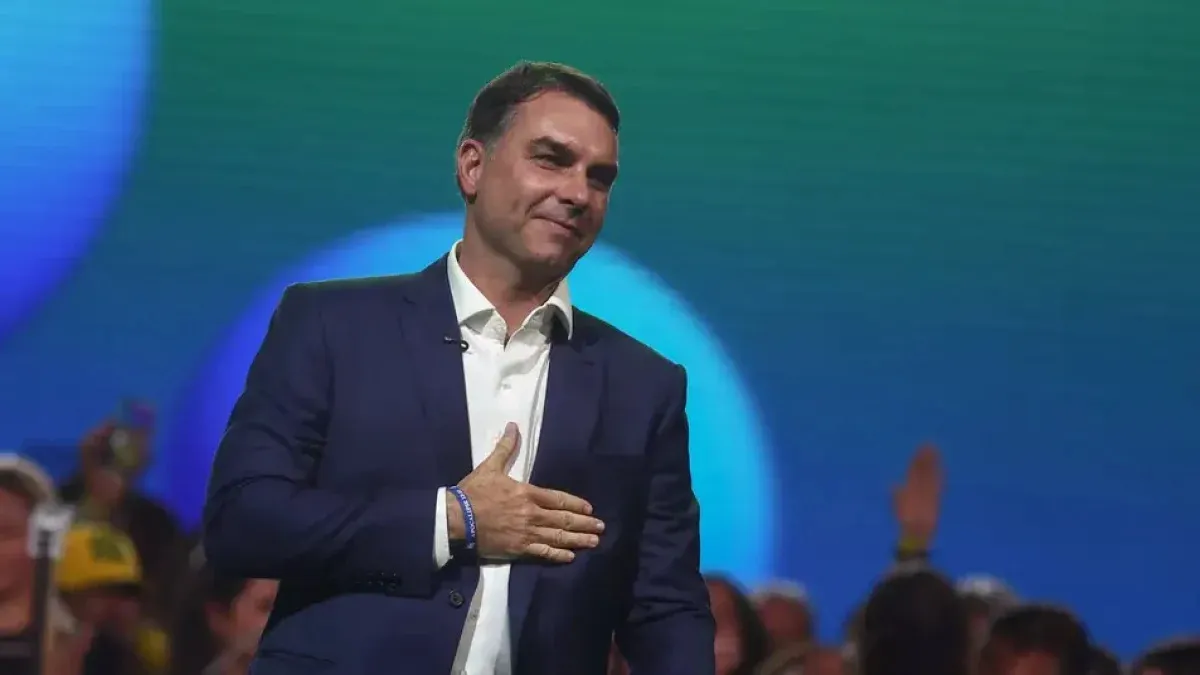
During the campaign presentation on July 25, a digital Bolsonaro appeared on screen. His AI avatar stated that no prison could silence the political movement they started, and then urged supporters to accept his son as his successor.
The problem is not only technological, but also legal. Bolsonaro is banned from public communication, though it remains unclear whether such a ban extends to a digital representation of his likeness created by someone else.
A coalition of left-wing and center-left partieshas turned to the electoral court. They claim that Brazilian regulations prohibit synthetic content capable of replicating a real person to influence the will of voters.
Flavio Bolsonaro’s campaign rejects these accusations. Their argument is simple: viewers were not being deceived because they were told outright that they were dealing with AI. Furthermore, according to Bolsonaro's team, the video is not a classic deepfake.
The President of Brazil's Superior Electoral Court, Cássio Nunes Marques, stated that the mere use of AI in a campaign is permissible, and it becomes a violation only when the technology is used to cause harm. This case is still awaiting evaluation by the court.
Thus, the political campaign in Brazil has effectively become one of the first major tests of how far one can go in using a digital copy of a real politician.
But the problem itself emerged much earlier.
"This is Biden, calling you": how AI tried to influence the US vote
In early 2024, American voters received tangible proof of how cheap and accessible political manipulation via artificial intelligence had become.
On January 21 – just two days before the Democratic primary in New Hampshire – thousands of potential voters began receiving robocalls.
Over the phone, they heard the voice of then-US President Joe Biden.
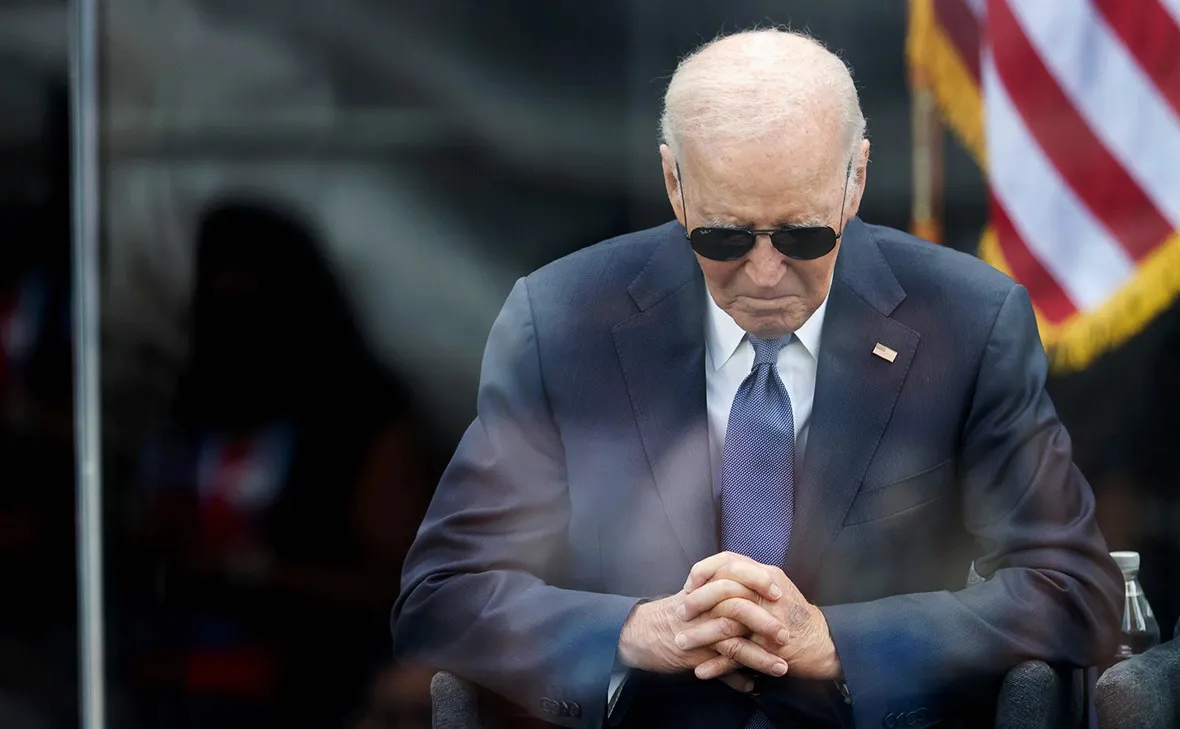
"Biden" urged Democrats not to vote in the primary and to "save" their vote for the presidential election in November.
The real Joe Biden never recorded any such message.
Asdetermined by the US Federal Communications Commission (FCC), the voice was generated by artificial intelligence. The campaign was organized by political consultant Steve Kramer.
The scale of the operation is particularly telling. FCC documents show that on the evening of January 21 alone, the system initiated 9,581 calls to potential voters in New Hampshire.
In addition to the voice itself, the organizers used another trick – caller ID spoofing. Recipients saw a phone number associated with an individual who previously led the Democratic Party in the state and was involved in Biden's support campaign.
This means the scheme relied on two layers of trust at once: the familiar voice of the president and the phone number of a local Democratic figure.
Yet the most surprising part turned out to be the cost of the technological component of the operation.
According toFCC materials, the ElevenLabs service was used to create the voice. The person who made the recording was paid about 150 dollars for the job.
Effectively, for less than the cost of a budget smartphone, it became possible to forge the voice of the US President and broadcast it to nearly ten thousand potential voters on the eve of an election.
Later, the FCCfined Kramer 6 million dollars for illegal robocall campaigning and caller ID spoofing.
Following this event, the US regulator explicitly confirmed that AI-generated voices are subject to legal restrictions regarding artificial and prerecorded voice messages.
However, the 2024 election showed that the problem is not limited to a single fake Biden.
Trump, who was never photographed
Another telling example appeared at the very start of the US presidential campaign.
Social media circulated photos of Donald Trump with groups of African Americans. In the images, they were smiling, hugging the candidate, and posing together.
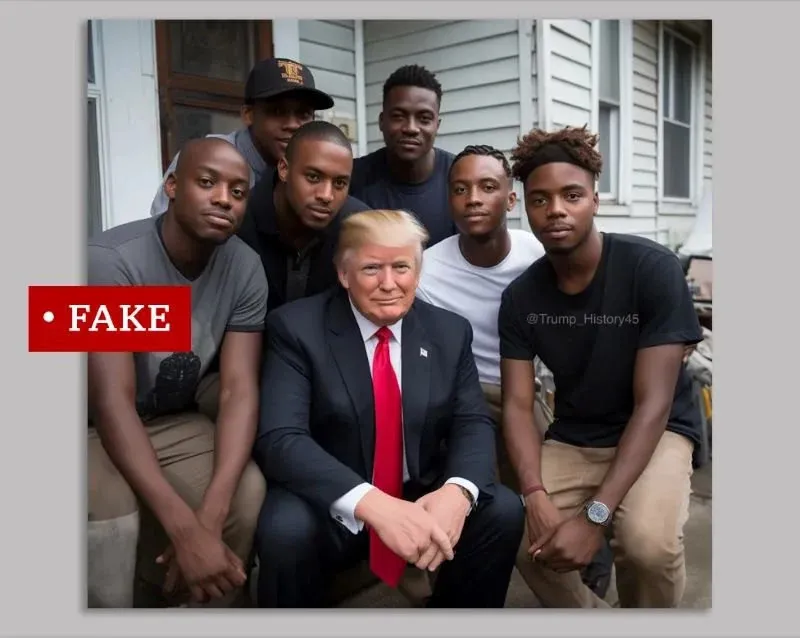
In reality, these meetings never took place.
The imageswere created by an AI-powered generator. The photographs were not directly linked to Trump’s official campaign, but some users shared them as authentic pictures.
This created the impression of much greater support for the candidate among African Americans than might have existed in reality.
This case illustrates another issue with political AI.
For manipulation, you no longer need to force a candidate to say anything scandalous. Sometimes it is enough to create a reality that never existed.
A candidate can supposedly visit a factory, meet veterans, hug a farmer, talk to soldiers, or appear among members of a specific ethnic or social group.
One AI photo may not change the outcome of an election. But thousands of such images can gradually build a certain image of a candidate in the voter's mind.
And now this can be done on an almost industrial scale.
Russia and Iran also used AI in the US campaign
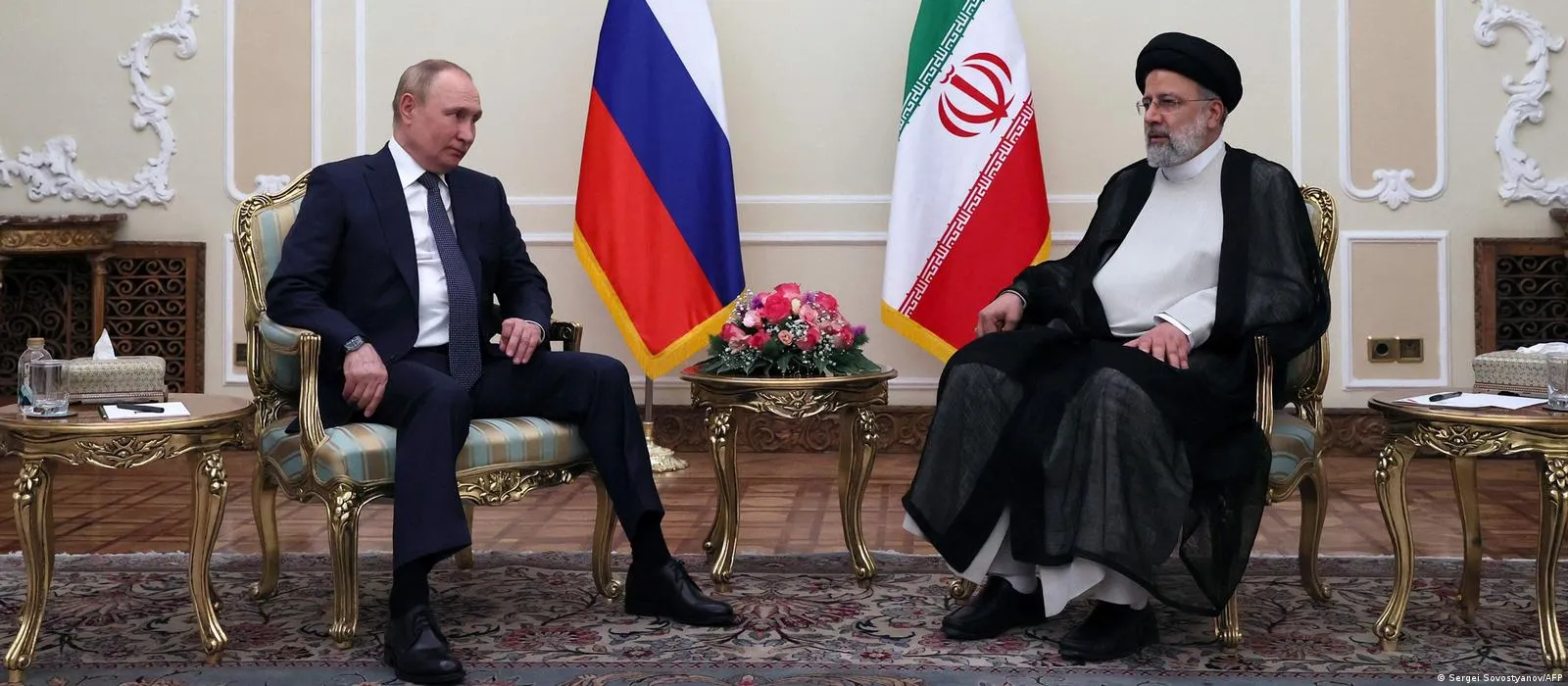
An even more serious problem turned out to be foreign influence campaigns.
In September 2024, US intelligence agencies reported that Russia and Iran were already using generative artificial intelligence to amplify operations targeting American voters.
According toestimates from the Office of the Director of National Intelligence, Russia generated the largest amount of AI election-related content in the US among major foreign actors. This involved text, images, audio, and video.
Russian campaigns used these materials to discredit individual politicians, promote conspiracy narratives, and exacerbate social divisions, particularly around immigration.
Iran, according to US intelligence data, used AI to create social media posts and write articles for websites masquerading as news outlets.
China also used artificial intelligence in broader information operations, though US intelligence did not observe a specific Chinese campaign at the time aimed directly at altering the presidential election outcome.
A separate story was the Russian Doppelganger operation.
In September 2024,the US Department of Justice announced the seizure of 32 internet domains used in a covert Russian foreign influence campaign.
According to US authorities, structures linked to Russia created websites mimicking well-known American media, used fake accounts, advertisements, influencers, and AI-generated content.
One of the goals of this system was to weaken international support for Ukraine, intensify internal divisions in Western countries, and influence the American public.
On the eve of the election itself, US special services explicitly accused Russia of producing fake political videos.
In particular,the Office of the Director of National Intelligence reported on a video allegedly showing illegal voting by Haitian citizens in Georgia. US authorities labeled it Russian disinformation.
In this case, technology did not create a new type of propaganda; it simply made old propaganda cheaper, faster, and more massive.
From deepfake to digital candidate
This is precisely why Bolsonaro's story differs from most cases in 2024.
Back then, the main threat looked like this: someone uses AI to present false information as a politician's authentic words.
Now a different model is emerging: the digital image of the politician themselves becomes a legal or semi-legal participant in the campaign.
And that is a much more difficult and serious problem.
If a deepfake tries to deceive a voter, an AI avatar can honestly communicate: "I was created by artificial intelligence."
And then – campaign. For technology, this opens up a vast space.
A politician can record a few hours of their voice and video, and the model will be able to generate a practically unlimited number of speeches.
A politician can physically be in only one city. Their digital copy – in hundreds at the same time.
In the morning, they can address farmers in one region; in the afternoon, entrepreneurs in another; in the evening, students, discussing with each target audience the topics that interest them most.
The next step is interactivity. Instead of a pre-recorded clip, a voter may gain the ability to talk directly with an AI candidate.
Technically, one does not need to wait for some radically new technology to appear. Voice models, video generation, large language models, and digital avatars already exist independently of each other. It only remains to connect them together.
What if the AI candidate says something illegal?
This is precisely where the legal territory begins, for which most election laws simply were not prepared.
Suppose a campaign team creates an official AI avatar of a candidate. The model conducts hundreds of thousands of personal conversations with voters.
During one of them, the AI promises a specific person public funds for their vote. Or formulates a defamatory accusation against a competitor. Or expresses a view contrary to the candidate's official platform.
Who said that? The candidate? The campaign team? The model's creator? The company providing the technology? Or is it simply an "artificial intelligence error"? Today, there is no clear universal answer to these questions.
Even the United States during the 2024 campaign regulated political deepfakes mainly at the state level.
According todata from the National Conference of State Legislatures (NCSL), a number of states passed legislation regarding the use of AI and synthetic content in elections in 2024.
California, Alabama, Colorado, Florida, New Hampshire, Oregon, Utah, Wisconsin, and other states introduced labeling requirements for synthetic political materials or restricted the spread of misleading deepfakes right before elections.
But even perfect labeling only solves the problem of deception.
It does not answer another question: what to do when a politician has given consent to create their own digital copy?
A politician may cease to be a "single copy" human
This may become the most significant shift of upcoming electoral cycles. For centuries, a politician had one natural limitation – their own time.
They could not hold ten rallies at once. They could not personally talk to a million voters. They could not give a personal response to every single person. Artificial intelligence removes this limitation.
A digital candidate can potentially conduct millions of parallel dialogues. And talk to each voter slightly differently.
For a person suffering from inflation, they will talk about prices. For an entrepreneur – about taxes. For a student – about education. For a soldier – about defense.
And if you add data on age, place of residence, interests, and online behavior to this, political advertising can transform into nearly personalized campaigning.
Instead of one electoral platform for 30 million citizens, you can conditionally have 30 million slightly different versions of the same platform for 30 million people.
Monitoring such a system by journalists, election commissions, and the opposition will be much harder than controlling a TV ad or a speech at a rally.
The greatest danger – perhaps not even believing in the fake
There is another effect that could prove more dangerous than deepfakes themselves.
If there are too many fake photos, voices, and videos, society gradually stops trusting any digital evidence at all.
This creates a paradox. A politician used to fear that someone would fake their video. Now, a politician can use the very existence of deepfakes as a protective shield if real compromising material appears.
Unpleasant audio recording? "It's AI." Scandalous video? "Deepfake." Call transcript? "Cloned voice."
In research on information manipulation, this phenomenon is called the liar's dividend. The more society realizes the potential of digital forgery, the easier it is for an individual to deny even authentic evidence.


