
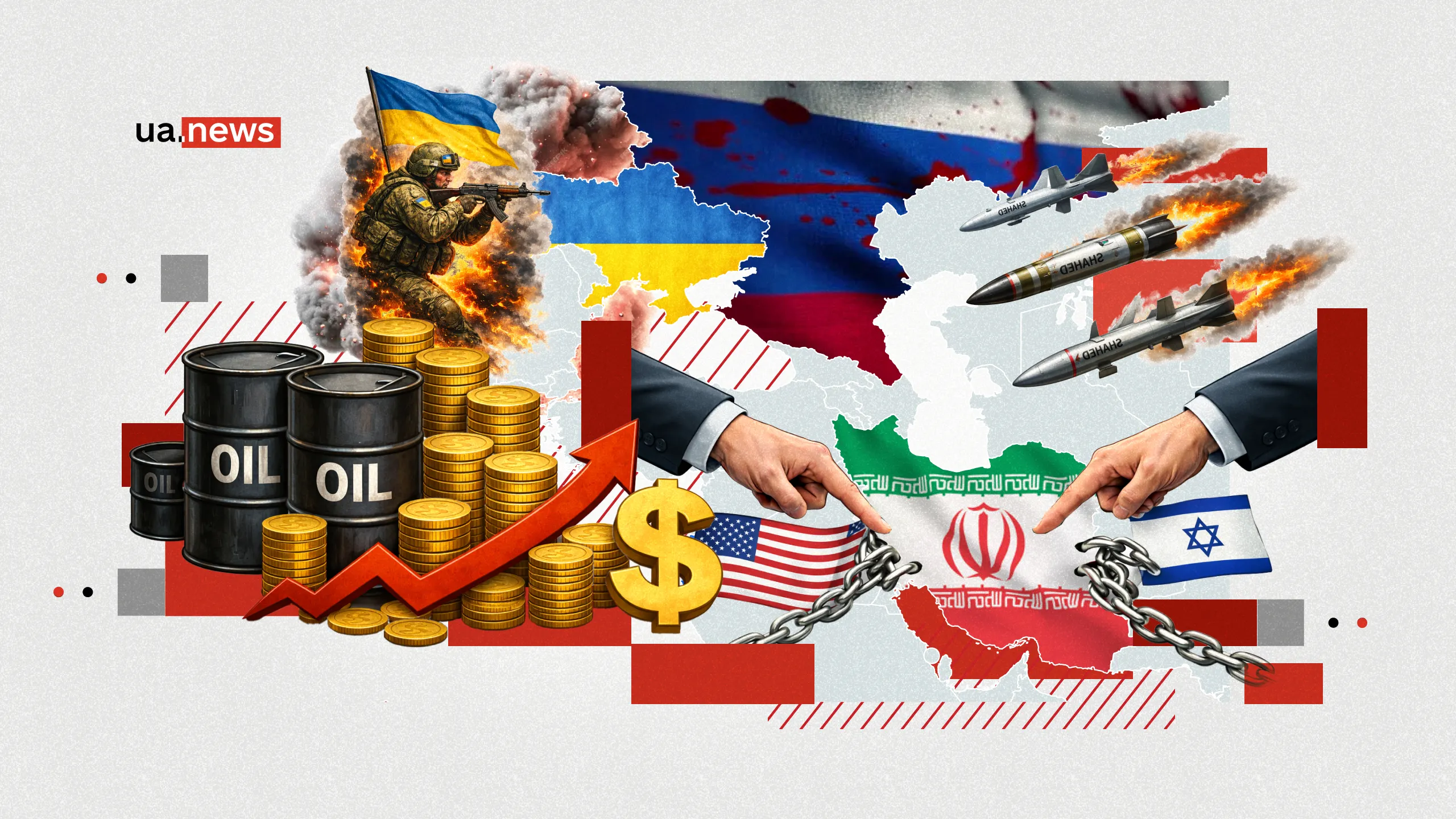
For several days, a US-Israeli operation against Iran has been ongoing. Although it would be more accurate to call it a full-scale regional war. Despite the elimination of the top leadership of the Iranian regime, including Ayatollah Ali Khamenei himself, Tehran continues to resist, and the geography of the attacks is constantly expanding.
When, on the night of Sunday, March 1, 2026, an Iranian drone struck the territory of a British airbase in Cyprus, it became a symbolic signal to the entire world. The explosion on the island in the middle of the Mediterranean Sea marked that the war in the Middle East has gone beyond traditional boundaries, and now its “shock waves” are reaching regions that seemed untouchable and very distant.
While EU leaders are urgently seeking ways to secure their territories from “Shaheds,” and in the skies over Tehran, Dubai, Doha, Tel Aviv, and other Middle Eastern cities it is still loud, in Ukraine these same events echo with rising gasoline prices, delays in euro-integration procedures, and the troubling question: will the Middle Eastern front become a “black hole” that absorbs Western arsenals intended for the Ukrainian Armed Forces?
Can parallels be drawn between the two wars? Why could the Ukrainian experience become a salvation for the wealthy but vulnerable Gulf monarchies? How does the war in Iran directly affect Ukraine? Political analyst Mykyta Trachuk from UA.News examined this question.
“Shaheds” over skyscrapers: Why the Gulf Needs Ukrainian Experience
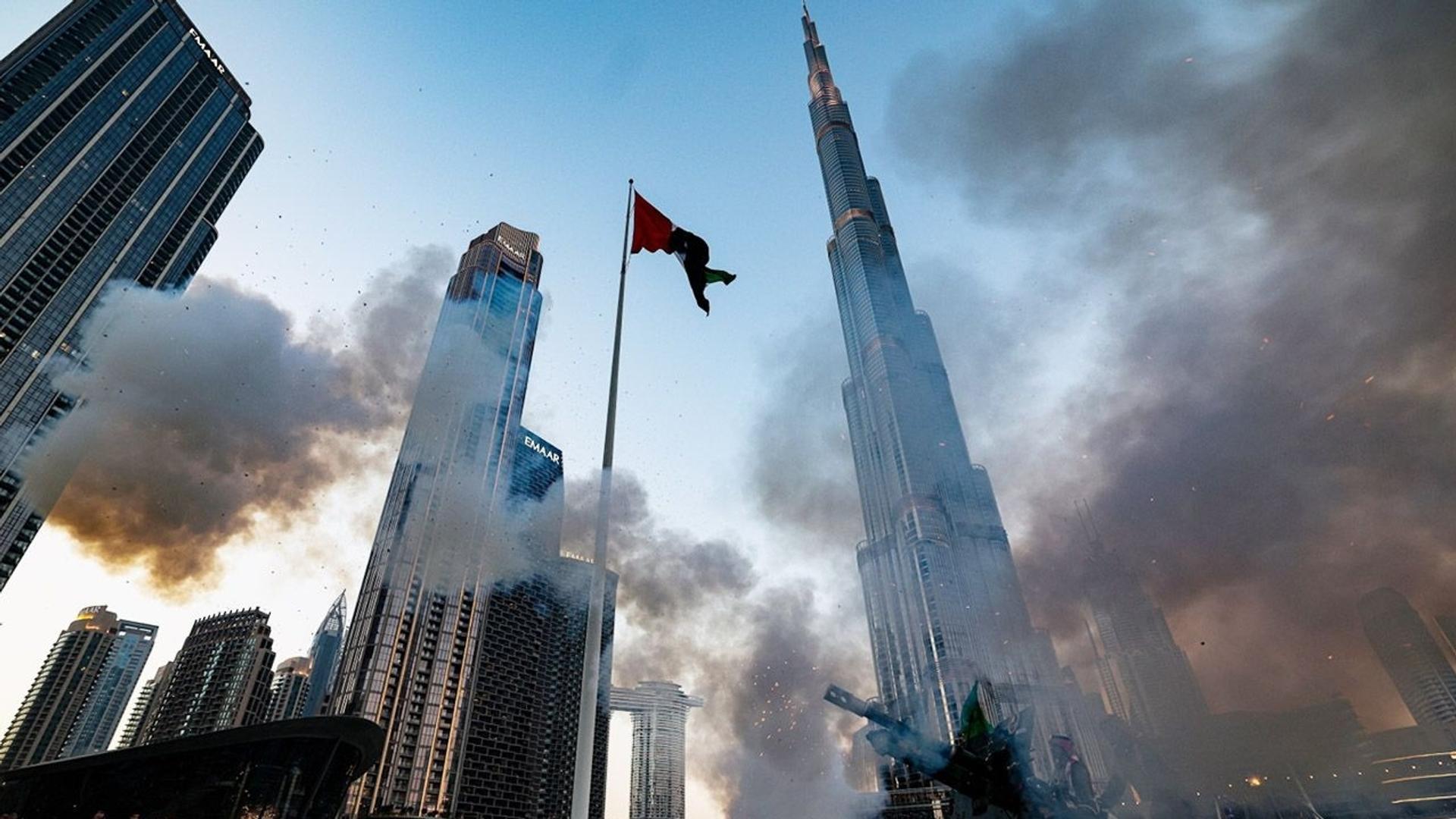
The Middle East is completely engulfed in fire. Tehran responds to Israeli and US strikes with massive drone attacks, and the geography of this war is rapidly expanding. The oil monarchies, accustomed to buying the most expensive weapon systems, turned out to be unprepared for the new threat—cheap and mass-produced kamikaze drones.
To understand the scale: in just these few days of the war, Iranians launched 812 kamikaze drones over the UAE alone. In total, this number is already in the thousands if we count all the other countries affected by the war.
And this is precisely where Ukraine’s experience can be useful for the Gulf states. All these years, Kyiv has been the main testing ground for fighting Iranian “Shaheds.” What millions of people are now seeing in the skies over Dubai or Doha has, unfortunately, been a daily reality for Ukrainian military personnel and civilians.
Israel, with its multi-layered air defense system and experienced army, is the only country in the region demonstrating high interception results. But its “Iron Dome” model is economically unfeasible for dealing with swarms of cheap drones. Using a missile costing hundreds of thousands of dollars against a “Shahed” costing 20–40 thousand dollars is a path to bankruptcy even for the wealthiest countries.
Ukraine, under pressure from objective circumstances, has created a combined air defense system. It is a symbiosis of mobile fire groups on pickups with machine guns and anti-aircraft weapons, electronic warfare (EW) tactics that jam drone signals, as well as the dispersal of strategic facilities.
For Riyadh, Dubai, Doha, or Abu Dhabi, where population density and infrastructure are extremely high, the Ukrainian model of dispersal and protection could be lifesaving. Additionally, the experience in providing at least some protection for energy facilities is urgently needed for oil terminals in the Gulf region, judging by the footage of burning oil refineries.
Furthermore, Ukrainian developments in the EW sphere, often created by volunteers in “garage” conditions, can be more effective against specific drone threats than some serial NATO systems. Gulf countries, accustomed to relying solely on imported solutions, are now forced to acknowledge the obvious: drone warfare is a war of technology and adaptability, a path Ukraine has already traversed that others are only beginning to navigate.
The Economic Front: How Oil Prices and Logistics Hit Ukrainian Gas Stations
However, the parallels between the two wars are not limited to the military sphere. They have an immediate and tangible impact on the everyday lives of Ukrainians. Iran’s announcement of a “semi-blockade” of the Strait of Hormuz—one of the world’s key oil transport routes—instantly resonated on global markets.
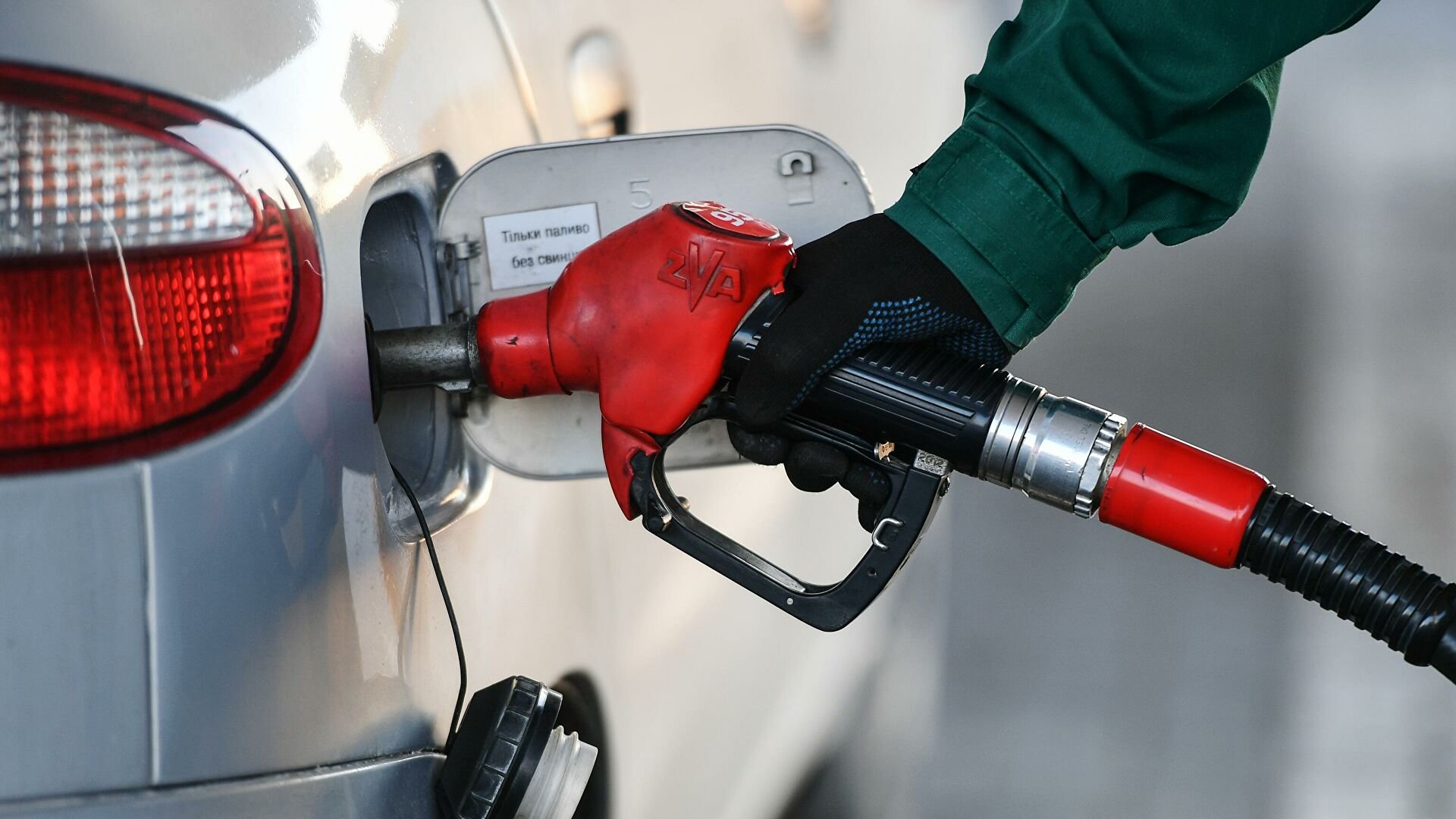
For Ukraine, which imports a significant portion of its fuel, the rise in global oil prices means one thing—almost immediate increases in gas station prices. Already, gasoline has risen on average by 5–10 hryvnias per liter, and in some places even more. If the conflict drags on and logistical chains through the Middle East are completely disrupted, Ukraine may face certain fuel shortages and a new round of price crises. Logistics costs rise, and this inevitably feeds into the final price of goods, further driving inflation.
The Battle for Weapons and Attention
However, the most alarming issue for Ukraine is military support. Ammunition expenditure in the Middle East is colossal. Intercepting ballistic missiles and drones requires launching the most expensive surface-to-air missiles or air strike systems. US stockpiles, though large, are not limitless.
At the same time, during Trump’s term, America ceased supporting Ukraine militarily. Instead, the US sells weapons to Kyiv—or does so through Europeans.
Thus, there is direct competition for resources. The Pentagon is managing logistics simultaneously on two fronts. Europe, which actively assists Ukraine, now also has to consider its own security—especially after the attack on Cyprus. Sending frigates and F-16s from Greece to protect the island is only the “first signs.”
And although officially no one has announced a reduction of aid to Ukraine due to events in Iran, the objective reality is that US and European defense industry production capacities are currently operating at their limits. If the war in the Middle East drags on, there may be less weapons available for the Ukrainian Armed Forces.
But the most destructive impact may turn out to be political, even more than economic or military, in relation to the Ukrainian context. The attention of the global community is a resource whose importance is difficult to overestimate. Just “yesterday,” the headlines of global media were dedicated to Ukraine’s peace negotiations. Today, they are filled with images of burning Middle Eastern capitals.
A vivid example of this shift in focus was the situation with the political meeting on Ukraine’s EU accession. According to Politico, the event, which was supposed to take place in Cyprus, was intended to provide Ukrainian officials with a detailed “roadmap” of further steps toward membership. However, after an Iranian drone strike on a British airbase on the island, the meeting was postponed for security reasons.
This postponement of the euro-integration meeting is quite symbolic. It demonstrates how the crisis in the Middle East disrupts schedules and delays issues critically important to Ukraine, but not nearly as urgent for the world.
And this is only one indicative episode. Overall, the loss of attention from media and politicians complicates everything—from discussing new aid packages to lobbying for Ukrainian interests, which at any moment risk becoming “off-schedule.”
In summary, current events in the Middle East definitively prove that the world has entered an era of constant military conflicts. The war in Iran and the war in Ukraine are no longer isolated crises, “things in themselves.” They are connected by thousands of geopolitical threads: from tanker routes through the Strait of Hormuz to weapons shipment schedules from American factories.
For the Persian Gulf countries, the moment of military choice has arrived. They can continue to rely exclusively on very expensive and, as experience shows, not always effective air defense systems, or they can pay attention to Ukraine’s unique experience—flexibility, mobility, and asymmetric response. Ukrainian military personnel, unlike their Arab counterparts, have long known that “Shaheds” can be shot down with ordinary machine guns if the sky defense model is properly built.
At the same time, for Ukraine itself, the war in Iran—which is more correctly referred to as a Middle Eastern war given the scale of events—is becoming a test of resilience. Ukraine will have to once again fight for the world’s attention, compete for defense contracts, and overcome economic difficulties caused by the noticeable fuel price increases affecting all drivers.
But one thing is clear: we live in a world where an attack on Dubai affects the price of gasoline in Kyiv, and the fate of Ukraine’s euro-integration depends on the security of the skies over Cyprus. This is a world that is much more interconnected than ever before. And therefore it is simultaneously more vulnerable than ever and much easier to disrupt than it seems.


