
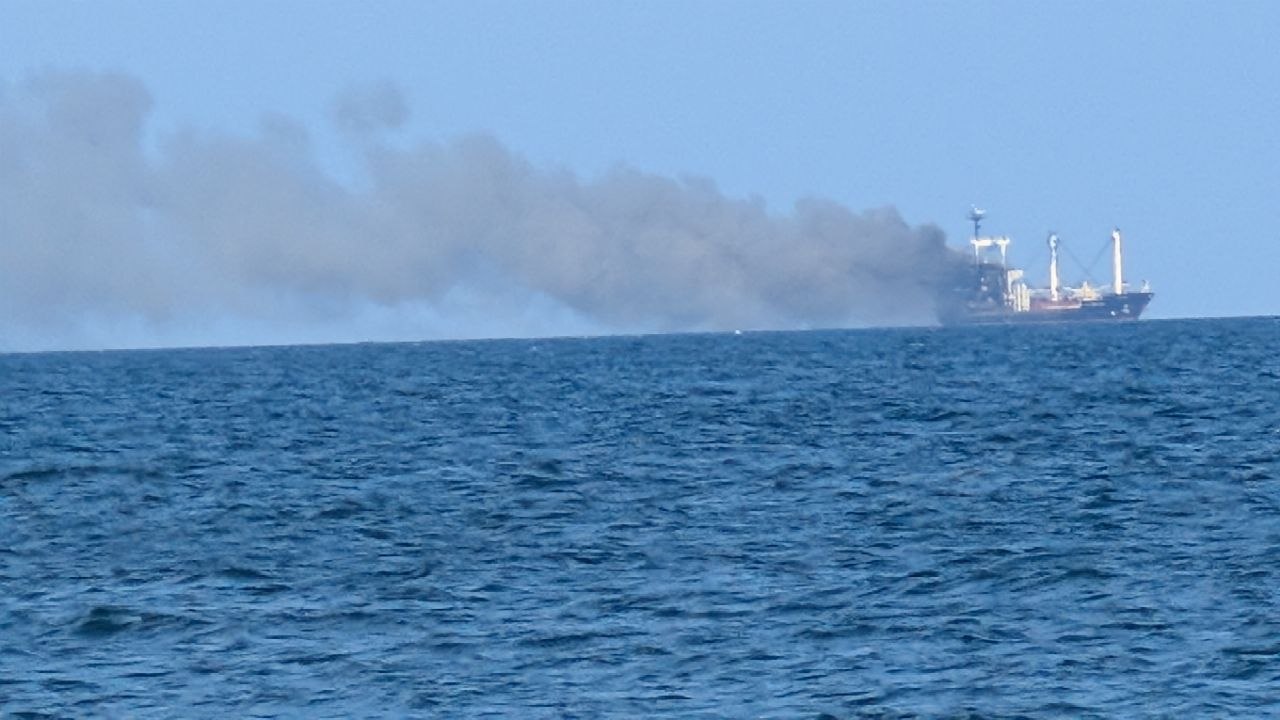
As of Friday, August 14, Ukraine’s Black Sea ports have been blocked for three weeks—since July 22. Exports, 80% of which rely on sea routes, have effectively come to a standstill. At the same time, Turkey, which had previously officially called on Ukraine and Russia to cease attacks on ships in the Black Sea and ensure the safety of navigation, found itself at the center of a diplomatic uproar. Ankara even declared its readiness to detain ships bound for Ukrainian and Russian ports, but quickly backtracked on those statements.
All of this resembles a nervous, forced, but so far fruitless attempt to compel both sides to halt the naval conflict. The question is not whether a truce in the Black Sea is needed. Everyone needs it: Ukraine, Russia, Turkey, European grain consumers, and the global market as a whole. The question is this: why, given the obvious mutual benefits of a truce, do the parties continue to fight at sea? Is it possible to break this deadlock? How realistic is a “Black Sea truce”? UA.News political analyst Mykyta Trachuk, together with experts, examined the issue.
Why Turkey Is Talking About a Maritime Ceasefire Right Now
There is a very down-to-earth explanation for Turkey’s diplomatic activity. Ankara is not taking sides and is not a sincere champion of pacifism. It is simply trying to save its own, not particularly stable, economy.
Over 90% of Turkey’s wheat imports come from Russia. Last year, over 80% of its diesel fuel was also imported from Russia. The main suppliers of sunflower oil are Ukraine and Russia. Turkey receives about 40% of its natural gas from Russia. The war at sea has put all of this trade at risk. In theory, wheat and diesel can be sourced from other suppliers, but this is significantly more expensive, and the Turkish economy is already suffering from rising energy prices.
Therefore, Turkish Foreign Minister Hakan Fidan’s calls to halt attacks on ships are not a gesture of goodwill, but a pragmatic step in Turkey’s own interest. As a maritime power, Turkey depends on Black Sea trade more than anyone else in the region—on a par with Ukraine. With Ukrainian ports at a standstill and Russian ports operating intermittently, Ankara stands to lose not only cargo flows but also its status as a key regional logistics hub. It is therefore not surprising that Turkey was the one to propose a maritime ceasefire.
At the same time, it is telling that Ukraine had already proposed a ceasefire at sea but, according to available information, never received a response from Russia. This gives the impression that one side is ready for a pause, while the other is biding its time, even though both are feeling the economic pressure.
Why a maritime ceasefire benefits both Ukraine and Russia, yet they cannot reach an agreement
For Ukraine, the benefits of a ceasefire at sea are obvious: unblocking the ports will restore exports—which are the foundation of foreign exchange earnings—reduce pressure on the budget, and enable businesses to survive. The sea will become safer for civilian shipping, which is critical for the agricultural and metallurgical sectors. In short—nothing but benefits.
For Russia (from the aggressor’s perspective), a maritime ceasefire also makes perfect practical sense. The Azov and Black Seas account for up to 80% of Russia’s grain exports and about 20% of its oil exports. Shipping to Russian ports has not stopped, but it has decreased significantly. The ability to reroute shipments to other seas is limited by logistics and port capacity.
At the same time, Russia has previously rejected any temporary ceasefires—on land, in the air, or at sea. What’s more, the Kremlin mocks the very idea of a “freeze” on the conflict. Just today, the Russian Ministry of Defense’s Telegram account posted a message with the phrase “You’ll get a freeze this winter!” accompanied by a photo of drones falling from the sky. The implication is crystal clear.
However, mounting economic losses are forcing the Kremlin to be more pragmatic. If Ukraine agrees to Ankara’s proposal, Moscow, in theory, might well agree to a maritime ceasefire as well, since for Russia this would mean the safety of its own ships and ports. The most recent reports of Russian strikes on ships near Ukrainian ports date back to August 8. If this pause is not coincidental but rather a response to the Turkish appeal, then Russian strikes will resume shortly if Ukrainian attacks on Russian shipping continue. However, Moscow has not stopped attacking Ukraine’s port infrastructure.
In other words, both sides seem to understand the stakes but are unable to take the first step, fearing to show weakness or something along those lines. As a result, the sea remains a combat zone, and the economies of both countries (and others) are suffering serious losses.

Why Mediators Are Essential
The main problem is that Ukraine and Russia will not stop or reach an agreement on their own. The logic of war, in which Moscow and Kyiv are fully immersed, is stronger than the logic of any economic expediency or common sense in general. Therefore, mediators—Turkey, the European Union, and the United States—must play a decisive role.
Ankara has already taken the first step: it has floated the idea of a maritime ceasefire and even tried to apply pressure by declaring its readiness to detain ships. This is a signal that cannot be ignored. But Turkey alone is not enough; broader international pressure is needed to make the continuation of the naval war simply unprofitable for both sides.
Europe has an interest in a stable supply of grain and oil, while the U.S. seeks to reduce global tensions and food prices. If Brussels and Washington make it clear to Kyiv and Moscow that the time has come to end the war, at least in the Black Sea, the chances of a ceasefire will increase significantly. Instead, the current situation looks like a war of attrition in which everyone loses.
It bears repeating: a ceasefire—at least in the Black Sea, and more broadly across the entire front—would benefit all parties. Ukraine will gain a safer maritime route and the resumption of exports. Turkey will see a return to normal trade and reduced pressure on its own economy. Russia would gain security guarantees for its ships and ports, as well as the preservation of its export routes. This would also benefit the global market, which relies on Ukrainian and Russian grain. Yet all sides continue the fighting, unwilling to be the first to stop.

Expert
Opinions
However, opinions on this issue are divided. For example, military expert Oleg Zhdanov believes that a “Black Sea ceasefire” is currently completely implausible and not on the agenda. Moreover, Zhdanov is convinced that Ukraine does not need such a ceasefire at all.
“Why do we even need it (a Black Sea ceasefire—ed.)? I’m amazed at our politicians who are pushing all this through. Do we want to give the Russian Federation a head start so they can regroup and start crushing us again in the Black Sea? We’re gaining the upper hand in the waters, so we need to hold onto it. Russian Foreign Minister Lavrov sent a clear signal today regarding this truce and a ceasefire in general: nothing of the sort will happen. Yet our politicians are trying to push this truce through.
As for maritime exports—who is actually exporting? The state or private holding companies? First and foremost, it’s the private holding companies; the state merely collects taxes. So we need to make up our minds: we’re either at war or we’re surrendering. There’s no other way. Imagine if there had been any trade between Germany and the USSR during World War II. Russia is suffering greater losses from the current situation in the Black Sea, and we need to maintain this situation,” asserts Oleg Zhdanov.
Political analyst Viktor Nebozhenko commented to UA.News on the possibility of a ceasefire in the Black Sea.
“I think there is potential for a ‘Black Sea truce.’ This is an original proposal that the president has also put forward: to designate a localized area so as not to disrupt global trade. Of course, no one wants to make concessions. But it would be the right thing to do. Especially if Russia starts attacking our grain ships even more aggressively—it will be difficult. “So a temporary truce at sea—at least for the duration of this heatwave in Europe, when river water levels are dropping and exports are becoming even more difficult—I think that would be the right thing to do,” the expert noted.
In
summary, a maritime ceasefire in the Black Sea is not some utopian fantasy, but a perfectly realistic scenario that has economic merit for all parties involved. Turkey has already put forward the initiative, Ukraine has supported it, and Russia has so far remained silent, hinting through its Foreign Ministry that it opposes any form of ceasefire. However, mutual benefit alone does not guarantee an agreement, because in wartime, decisions are made for reasons other than purely economic ones.
The key factor will be the position of the mediators. If Turkey, the EU, and the U.S. can jointly exert enough pressure to make continuing the naval war more costly than a pause, a truce will become possible. If, however, the international community limits itself to yet another round of empty appeals, the war at sea will continue—and with it, the blockade of Ukrainian ports, rising food prices, and a deepening economic crisis throughout the region.
Time is not on the side of those who are waiting for the situation at sea to resolve itself. Every week of the blockade means billions lost, supply chains disrupted, and new risks to global food security. Therefore, the question is not whether there will be a ceasefire in the Black Sea, but how many more losses the region must suffer before everyone realizes that it is necessary.


