
Russians are selling zebras from Askania-Nova for millions of rubles
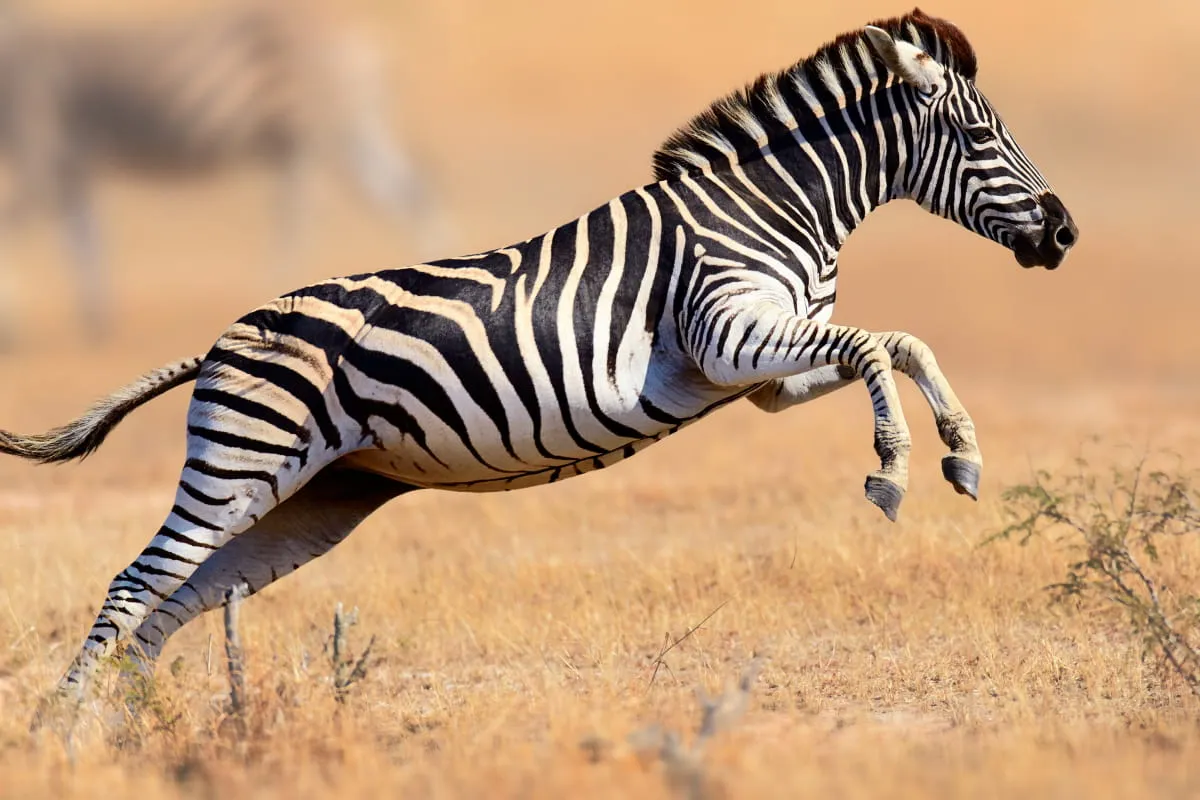
Advertisements have appeared on Russian online platforms offering Chapman’s zebras for sale, which are allegedly available for capture within the “Askania-Nova” Biosphere Reserve in the temporarily occupied part of the Kherson region. According to media reports, sellers are pricing the animals at millions of rubles, sparking a wave of outrage over the possible illegal export of rare animals from the Ukrainian reserve.
The price for one of these African animals ranges from two to three million rubles, according to an investigation by URSA.MEDIA. The deputy “director” of the reserve under the occupation regime is handling communications with potential buyers.
Journalists attempted to locate the sellers of the stolen animals among representatives of the reserve’s occupying “administration,” as well as on Russian marketplaces. In October 2025, they managed to contact a Russian man who claimed to trade exclusively in “exclusive live goods”—Chapman’s zebras from “Askania-Nova.”
For several months, the journalists corresponded with the man, who initially asked for two million rubles for the African animal and then raised the price to three million. At the same time, he claimed that zebras were being specially captured in the reserve for sale.
“This zebra is from ‘Askania.’ We work with them; there’s a person who regularly helps capture animals there,” read one of the seller’s messages.
The man then suggested moving the conversation to the Russian social network “Max,” which requires a Russian phone number to register. Because of this, the journalists were unable to continue the conversation.
The investigators also came across listings on the Russian marketplace “Avito,” where photos of zebras—similar to those provided by the previous “seller”—were posted. Over the course of several months, the journalists received several videos featuring the animals that the Russians were offering for sale.
It is not known for certain whether the zebras being offered for sale actually live in the Ukrainian nature reserve. According to the authors of the report, communications regarding the sale of the animals were handled by the deputy of the so-called director of “Askania” and collaborator Valentin Subotin. He also coordinated the transport of the animals.
“Whether these are actually Askania zebras will become clear once the investigation is complete. URSA.MEDIA continues to assist the Office of the Prosecutor General in documenting the sale of animals from ‘Askania-Nova,’” the journalists explained.
The reserve’s director, Viktor Shapoval, who is currently in territory controlled by Ukraine, said that the Russians’ interest in Chapman’s zebras is no coincidence: before the full-scale war began, “Askania” was home to one of the largest herds of this species in Ukraine. After the occupation, the Russians removed at least 10 of them from “Askania-Nova”—nearly a third of the entire herd.
Animals of such exotic species are highly valued by private collections and zoos.
In addition, due to the war, Russian private menageries have effectively lost the ability to legally replenish their collections through international exchange programs, so the animals from “Askania-Nova” have become a tempting target for them.
The International Fund for Animal Welfare states that there is a difference between evacuating animals from a combat zone and cases where a specific price is set for their sale through commercial channels. Such offers may indicate that the primary motive was not the animals’ safety, but rather the financial gain from their sale.
The organization believes that the open sale of animals is the first stage of an illegal scheme.
"This usually means that the chain is already in place: the animal has already been removed, a buyer or market has already been found for it, and those involved feel sufficiently immune from punishment to act almost openly. The sales ad is just the visible tip of a much larger structure.
The movement of several protected species, the use of private commercial facilities as final destinations, sales through onlineplatforms, and the significant value of such transactions—these are precisely the indicators we look for when assessing whether an organized network of illegal wildlife trade is operating.
“Under any other circumstances, a case of this magnitude—involving species listed in Appendix I of the CITES Convention and a site with UNESCO status—would warrant a coordinated international law enforcement investigation,” says Christian Plaumann, head of the International Fund for Animal Welfare’s Global Wildlife Cybercrime Program.
British biologist David Mellon also notes that the removal of animals from “Askania-Nova” could threaten population size and genetic diversity within the herds.
“The relocation removes individuals of particular value, especially those that have already proven successful in breeding or carry a unique genetic heritage. This also disperses large breeding herds among several smaller centers whose activities are focused on recreation or tourism rather than nature conservation,” the scientist asserts.
Source: URSA.MEDIA
The war has caused a sharp increase in the population of wild animals in Ukraine, and they are destroying crops.
As a reminder, sunflower prices in Ukraine have risen to their seasonal peak.
The government has also ordered price controls on medications due to the risk of price increases.


