
September 20, 2026: Ukraine honors the memory of Prince Oleg of Bryansk
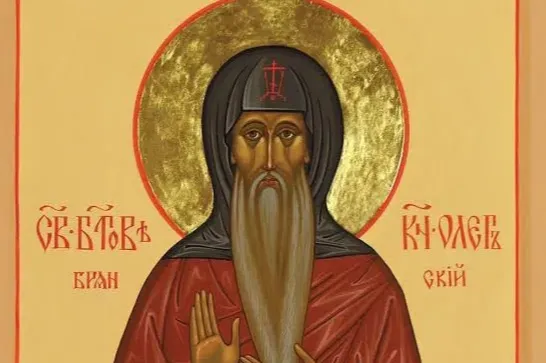
On September 20, Orthodox Christians commemorate the Venerable and Faithful Prince Oleg of Bryansk. According to church tradition, the prince renounced power and wealth, took monastic vows, and devoted the final years of his life to prayer. Here we explain who Prince Oleg of Bryansk was, why he is considered a saint, how the date of his commemoration came to be, and what traditions are associated with this day.
The day of remembrance for the Venerable and Righteous Prince Oleg of Bryansk falls on September 20. This date is associated with the Church’s veneration of the saint and is listed in Orthodox calendars. According to the old Julian calendar, this day corresponds to October 3 in the modern Gregorian calendar. In church tradition, Oleg is referred to as both a “faithful prince” and a “venerable one.” The first title is associated with his life as a prince and his veneration as a ruler who lived according to Christian principles. The second is associated with his monastic life after he stepped down from his princely duties.

This day is not a public holiday and does not entail an official day off. Its significance is primarily religious. Believers reflect on the prince’s life, pray during church services, and invoke the saint in their prayers. Oleg of Bryansk is especially revered in the church tradition associated with Bryansk. Historical sources indicate that the solemn local celebration of his memory was revived in the late 19th century. In 1900, the Bryansk city authorities declared September 20 a non-working market day, and solemn services were held in local churches on that day. In 1903, the date of September 20 was included in the monthly calendar published at that time.
Who Was Oleg Bryansky?
Oleg Romanovich Bryansky came from a princely family. He was the son of Prince Roman Mikhailovich of Bryansk and the grandson of Prince Mikhail of Chernihiv, whom the Church also venerates as a saint. At his baptism, Oleg was given the name Leontius, while he retained the princely name Oleg in his secular life. Not much reliable information has survived about the prince’s childhood and youth. Some of the information about his life comes from later church traditions and hagiographic accounts. Therefore, certain details of his biography may vary across different sources. It is known that Oleg lived during a difficult period for the princely lands. The Rus’ principalities were experiencing political conflicts, wars, and the aftermath of the Mongol invasion. The princes had to simultaneously fight for power, defend their lands, and sustain the life of cities and monasteries.

According to ecclesiastical sources, Oleg was associated with Bryansk and participated in the political and military life of his time. At the same time, he is best remembered not as a warrior or ruler, but as a man who later consciously renounced princely life. It was precisely this moment that became central to his hagiography. Oleg decided to leave secular life behind and devote himself to prayer and monasticism. For a medieval prince, such a renunciation of power was a highly unusual decision.
Why the Prince Renounced Power
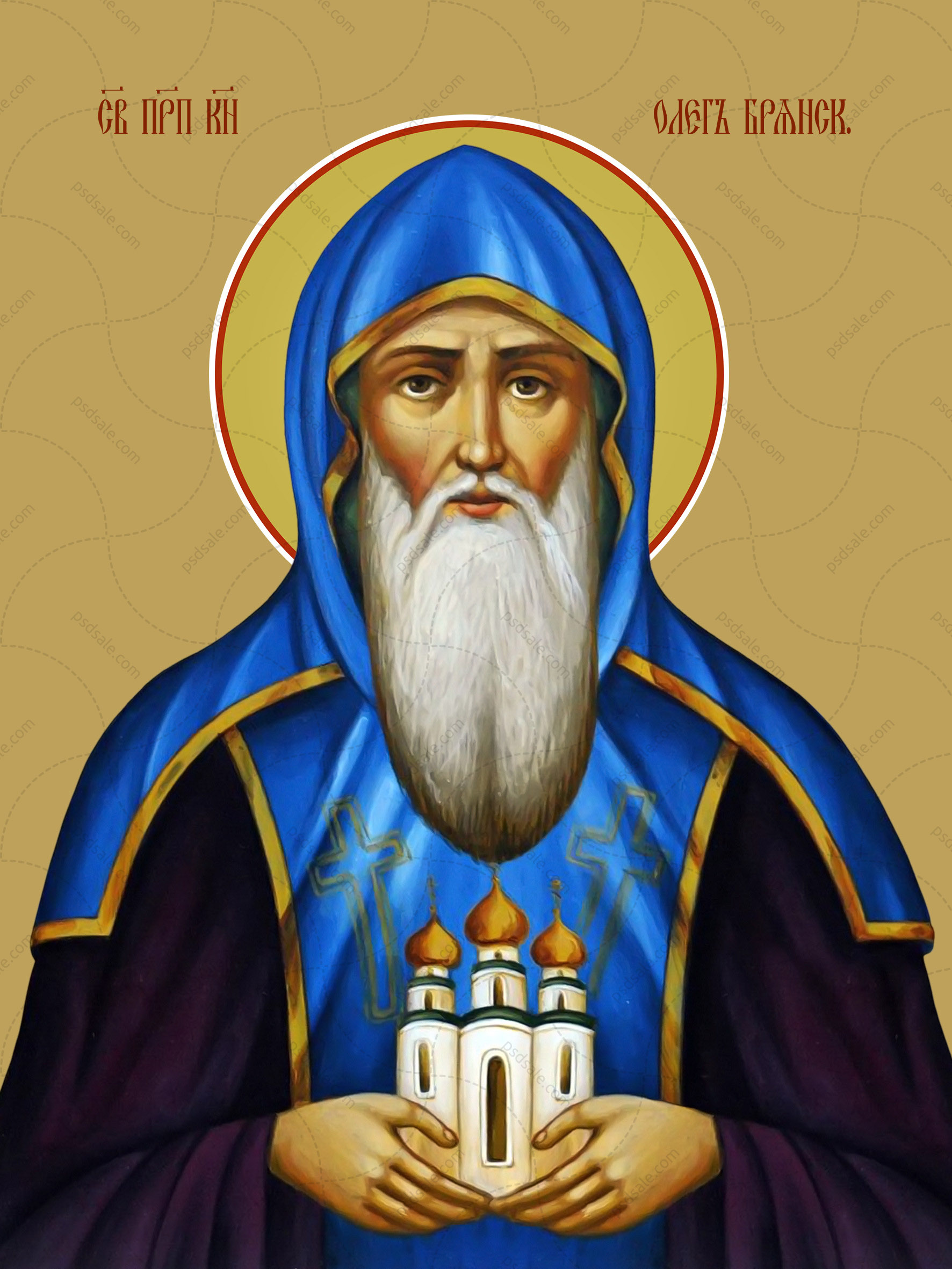
According to church tradition, Oleg did not consider earthly power and wealth to be the main purpose of life. He transferred his princely rights to a relative and chose the monastic life for himself. After taking his vows, the prince was given the name Vasily. Oleg founded the St. Peter and Paul Monastery in Bryansk and settled there himself as a monk. According to legend, he lived quite austerely, prayed a great deal, and strictly observed monastic rules. It was precisely because of this way of life that he came to be revered as an ascetic.
For people of that time, renouncing power was a very bold act. Princely status meant wealth, influence, land, and political opportunities. According to church tradition, Oleg consciously renounced all of this for the sake of a spiritual life. In the saint’s hagiography, this choice is explained by his desire to devote himself to God. Church tradition views his decision as an example that power and material possessions should not be a person’s primary value. That is why, in icons and church texts, Oleg is often referred to not only as a prince but also as a monk. His story has become an example in church tradition of the voluntary renunciation of earthly privileges.
Oleg’s Life in the Monastery
After taking his vows, Oleg—who was known as Basil in monastic life—remained at the monastery he had founded. There he lived no longer as a prince, but as an ordinary monk. According to church sources, he adhered to a strict way of life and devoted much of his time to prayer. The St. Peter and Paul Monastery became an important part of the saint’s history. It was there, according to tradition, that Oleg spent the last years of his life and was buried. His grave later became a place of pilgrimage for the faithful.
Interestingly, the memory of the prince was preserved even during the monastery’s most difficult times. Sources mention that even in ancient handwritten synodicons, the commemoration of Oleg was linked to the list of saints mentioned during divine services. In other words, his veneration did not arise only in more recent times. Church tradition holds that the memory of the prince was preserved over the centuries. Later, it gained new popularity in Bryansk. The monastery itself also changed its status and went through various historical periods. In the 19th century, the monastery became a convent, and the commemoration of Oleg once again began to be solemnly observed in the city.
When Did Oleg of Bryansk Die?
The exact date of the prince’s death is given inconsistently in historical sources. Church records most often mention the early 14th century, while some sources cite a specific year—1331. Other hagiographic texts mention the year 1289. Therefore, it is safer to say that the prince died at the turn of the 13th and 14th centuries or in the early 14th century. According to church tradition, Oleg died peacefully in a monastery after years of monastic life. He was buried in the St. Peter and Paul Monastery, which he himself had founded.
Over time, his burial site became a place of pilgrimage. People prayed to the prince, and the memory of him was passed down to subsequent generations. It was the day of his death that, in the church tradition, became a day of special veneration. Therefore, September 20 is associated not with any political event, but first and foremost with the memory of his spiritual journey. This also explains why, on this day, churches recite prayers and hold services in honor of the saint.
How the Prince’s Relics Were Found
The history of Oleg of Bryansk’s relics was also a complicated one. After the monastery was closed in 1923, the relics were in danger. In the early 1930s, the prince’s relics were secretly reburied beneath the altar of the Church of the Presentation to protect them from possible destruction or desecration. Those who participated in the reburial kept the burial site a secret for a long time. The secret was kept for decades. It was not until 1995 that Maria Belova, the former caretaker of the Church of the Presentation, revealed exactly where the relics had been hidden. After that, they were rediscovered and officially opened for veneration.
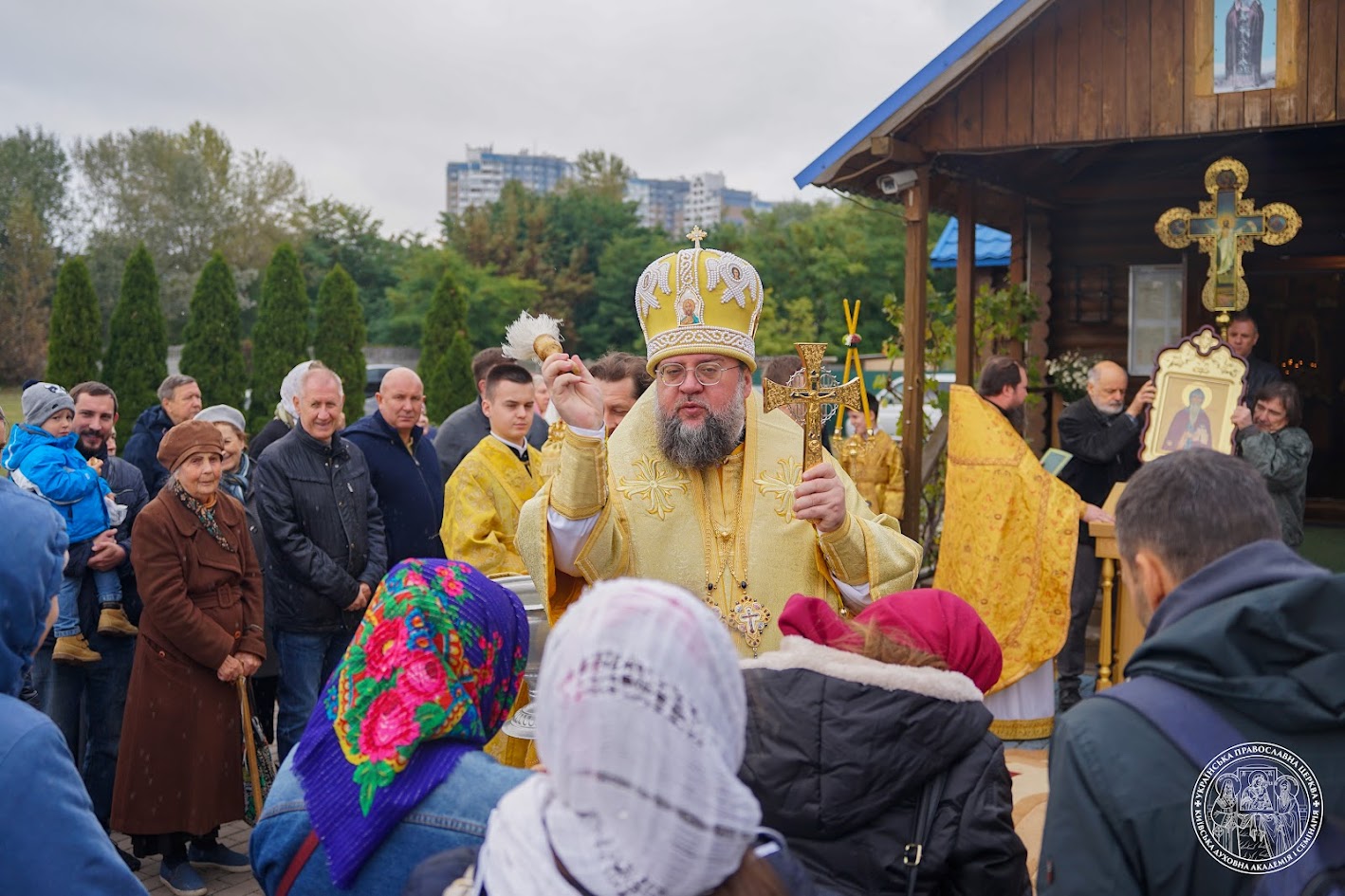
This story has become one of the most well-known aspects of the modern veneration of Prince Oleg. For the faithful, it serves as an example of how church relics were preserved even during times of persecution. Over time, the relics were transferred to various churches. According to church sources, in 2012 they were solemnly transferred to the Holy Trinity Cathedral in Bryansk, where they are housed in a reliquary for veneration.
How Oleg of Bryansk Is Honored on September 20
The main tradition of this day is prayer and participation in the divine service. Believers can come to the church, light a candle, pray before the saint’s icon, and ask for his intercession. Prayers for family, health, and spiritual support hold a special place. At the same time, in the Orthodox tradition, saints are not worshipped as God—people turn to them with requests to pray for others before God.

In churches where possible, solemn services, akathists, and other prayer services may be held on this day. In Bryansk, where the prince is particularly revered, the tradition of such services has a long history. Believers may also read the saint’s hagiography or tell their children about his life. Such a day can serve as an opportunity to discuss mercy, humility, responsibility, and attitudes toward authority and material possessions. There are no special folk festivities or mandatory secular traditions associated with this day. It is primarily a religious holiday, so the main emphasis is placed on prayer and commemorating the saint.
What Does the Figure of Prince Oleg Symbolize?
In the story of Oleg of Bryansk, what matters most is not his princely title, but his decision to renounce power. That is why, in the church tradition, his image is associated with humility, a spiritual choice, and a desire for monastic life. His hagiography portrays the prince as a man who had the opportunity to live a life of wealth and influence but chose a different path. For the faithful, this story serves as a reminder that material possessions are not the only true value.
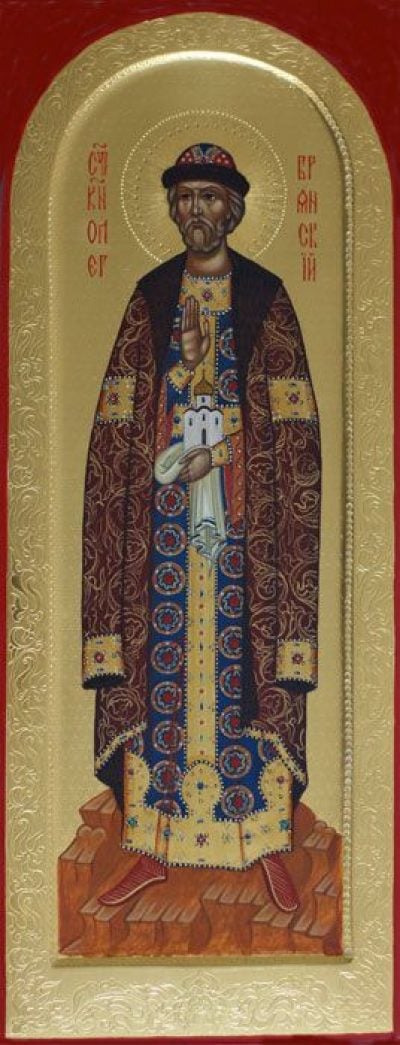
Oleg is also associated with the development of monastic life in Bryansk. According to church tradition, he founded the St. Peter and Paul Monastery, which became the center of his spiritual life and his final resting place. In liturgical texts, he is cited as an example of a man who, even at a young age, embraced the Christian way of life and later renounced his princely privileges. This theme runs through the Church’s veneration of the saint. Therefore, on September 20, we commemorate more than just a medieval prince. On this day, Church tradition draws attention to his choice, his life in the monastery, and his spiritual journey.
Oleg’s Name Day
September 20 is also associated with the Name Day for men named Oleg. It is the Venerable and Faithful Prince Oleg of Bryansk who is considered one of the heavenly patrons of those bearing this name. Ukrainian liturgical calendars also designate September 20 as the date for honoring Saint Oleg. On this day, you can congratulate acquaintances, friends, and relatives named Oleg. Traditionally, people wish them health, peace, prosperity, strength, and God’s protection.

The greeting doesn’t have to be elaborate or formal. A few warm words or a simple message will suffice. For example: “Happy Name Day! I wish you health, peace, strength, and may your heavenly patron always watch over you.” For people of faith, this day is also a time to visit a church and pray before the saint’s icon. And if that’s not possible, you can say a prayer at home.
Interesting Facts About Prince Oleg of Bryansk
Oleg was a prince, but after taking monastic vows, he received a new name—Vasily. At his baptism, he was named Leontius. Thus, three names appear in the saint’s life: his princely name, Oleg; his baptismal name, Leontius; and his monastic name, Vasily.
Another interesting fact is that the prince is associated with the founding of the St. Peter and Paul Monastery in Bryansk. It was there that he spent the last years of his life.
The memory of Oleg was preserved in church manuscripts long before the date was officially established in the liturgical calendar. Sources mention that his name appeared in ancient synodicons.
In the 19th century, veneration of the saint began to revive in Bryansk. In 1893, solemn celebrations in his memory were reinstated there, and a few years later, church authorities permitted the production of icons bearing his image.
Another unusual fact: in 1900, the day commemorating the prince was declared a non-working shopping day in Bryansk. This meant that stores and markets were closed on that day, and the main events were church services.
What to Do on September 20
For believers, this day can first and foremost be devoted to prayer. You can visit a church, light a candle, and remember Saint Oleg of Bryansk. You can also pray for your family and loved ones on this day. If there is an Oleg in your family, September 20 is a good occasion to congratulate him. You can wish him good health, peace, strength, and God’s protection. It’s especially appropriate to do this in person, without formal words.

This day can also be used to learn about history. For example, you can read the prince’s hagiography and learn more about medieval principalities and the development of monasteries. At the same time, one shouldn’t view this church holiday as a day with a long list of mandatory restrictions. The main significance of September 20 lies in commemorating the saint, praying, and reflecting on his life choices. For the church tradition, the story of Oleg of Bryansk is, above all, the story of a man who held power but voluntarily renounced it and chose the monastic life. It is precisely this choice that remains the main reason why he is remembered and honored many centuries later.


