
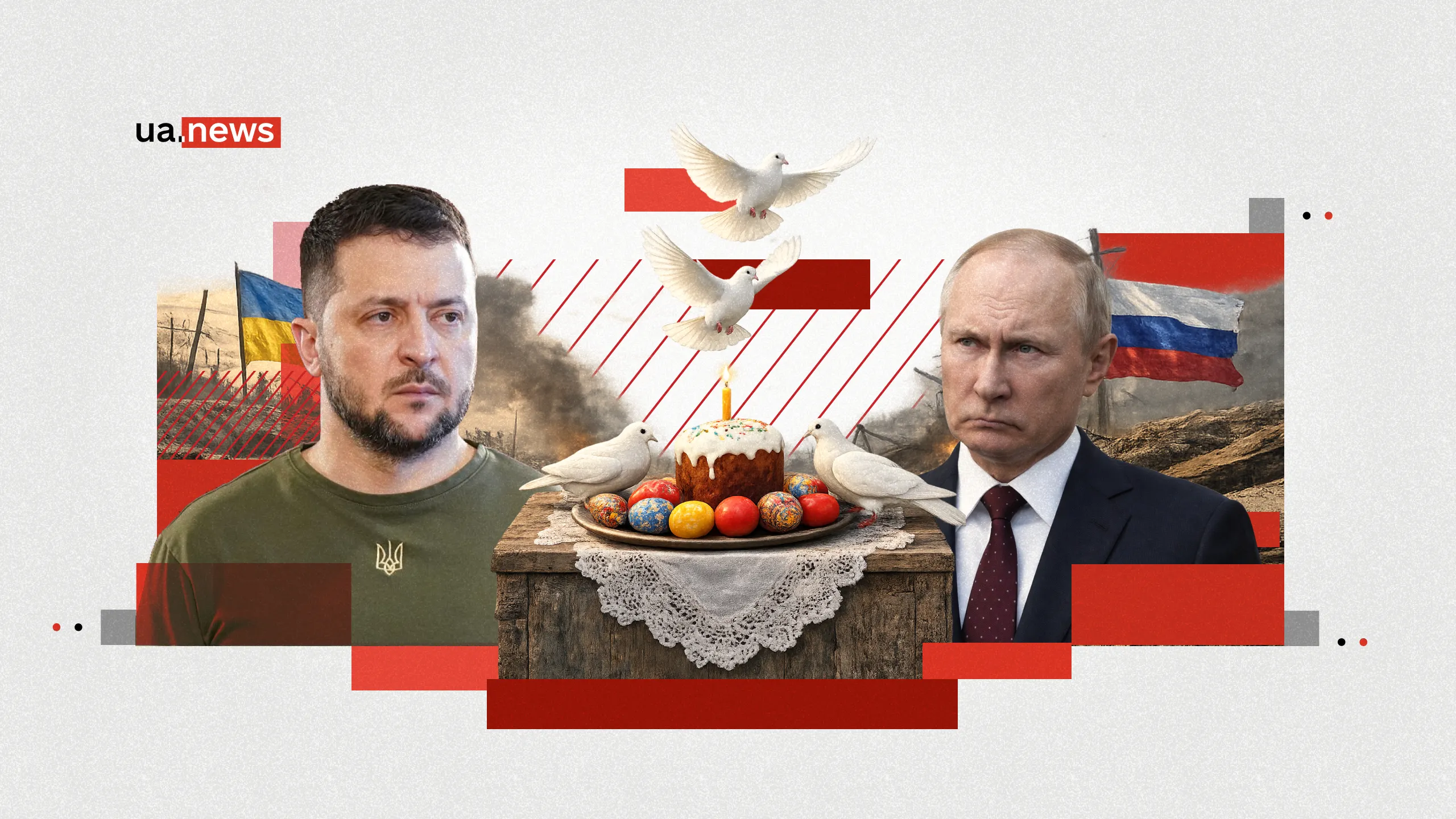
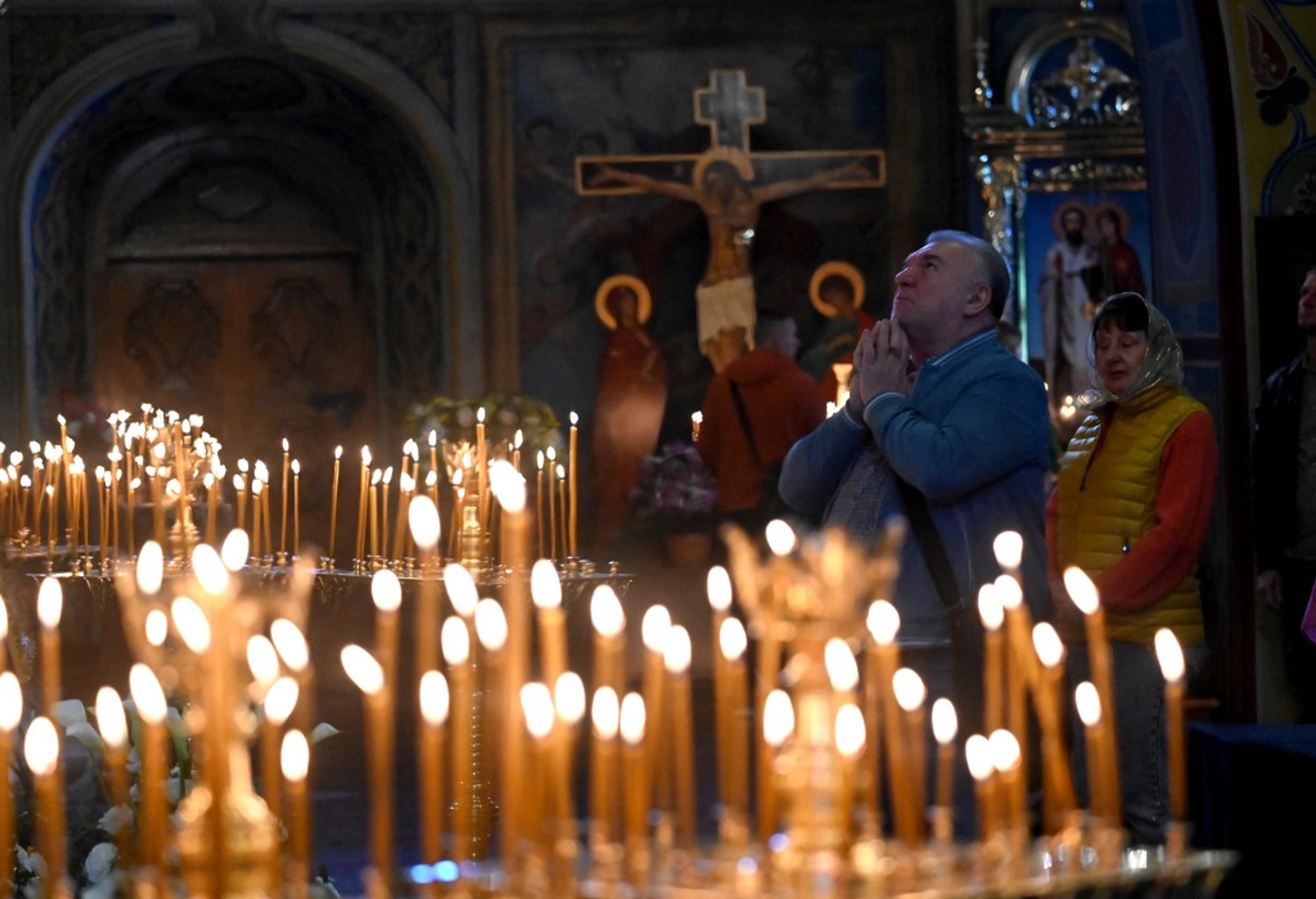
For millions of Ukrainians, April 12, 2026, is more than just a date on the calendar. It is the Resurrection of Christ, or Easter: a holiday that, in the Christian tradition, symbolizes the ultimate triumph of life over death and of light over darkness. In peacetime, this day is filled with the sound of church bells, the aroma of freshly baked Easter bread, and the warmth of family gatherings. Even those who do not consider themselves deeply religious usually view Easter as an oasis of peace, an opportunity to breathe a sigh of relief, gather with loved ones around a single table, share traditional dishes, and reflect on simple yet vital human values.
However, the reality of the fifth year of a full-scale invasion is forcing a different reality upon these bright expectations. War recognizes neither holidays nor weekends nor religious calendars.
Nevertheless, this year there was once again an initiative to establish a ceasefire in honor of Easter. It came from the Ukrainian side. The Kremlin’s reaction had long been sluggish and ambiguous, but yesterday, April 9, Moscow suddenly announced its agreement. Thus, formally, from 4:00 PM on April 11 to 11:59 PM on April 12, a ceasefire is to prevail in Ukraine.
Any pause in the mass bloodshed deserves approval and support. But in the context of 2026, this initiative evokes not so much a wave of hope as deep skepticism and a series of questions to which there are no clear answers yet.
What is really behind this decision, and why is there significantly less euphoria over the announced ceasefire this time than in previous years? UA.News political analyst Mykyta Trachuk, together with experts, examined the issue.
Historical Retrospective: How the Easter Truce Became Part of the War
To understand the essence of the events of spring 2026, it is worth rewinding the timeline a bit. Many have already forgotten, but similar initiatives have appeared in the news at least three times (!) since the start of the full-scale war, and each time they had their own unique specifics and political overtones.
The Easter truce was first discussed back in the spring of 2022. At that time, Kyiv, with the support of its Western partners, proposed a ceasefire for the holiday period from April 21 to 25. However, Moscow rejected the proposal at the time, so hostilities continued.
The next significant episode occurred in 2023. This time, the initiative came from Russia and concerned Christmas. It involved a “Christmas truce” in early January. However, this time it was Ukraine that refused: the Armed Forces of Ukraine were at the peak of their combat power, and following the Kharkiv and Kherson counteroffensives, the public largely did not even want to hear about a truce.
Finally, the idea was revisited for the third time last year. In 2025, Putin himself unexpectedly stepped forward as the initiator. The Kremlin’s sudden statement proposing a truce was clearly unexpected for Kyiv. However, Zelenskyy quickly agreed, proposing an even longer pause in return: 30 days.
The logic here is simple and clear: if it’s possible to stop shooting for 30 hours, then it’s entirely possible to stop shooting for 30 days—or even 30 years. All it takes is a political decision to end the bloodshed. However, as expected, the Kremlin did not accept this proposal. The ceasefire lasted a little over a day, and for the most part, the sides observed it.
Peaceful Easter 2026: Skepticism and a Lack of Strategic Vision
Returning to April 2026, it is worth setting the record straight right away. Any ceasefire—whether for an hour, a day, or a week—means, first and foremost, the lives of Ukrainians saved. From this perspective, any period of silence is an absolute blessing and a huge positive. To deny this would be pointless.
However, in the fifth year of the war, this idea—without further extension, seemingly “hanging in a vacuum”—evokes a certain skepticism. The main question hanging in the air and remaining unanswered is very simple: “What is this for?” What is the ultimate goal of this brief act of truce? Is it part of a broader diplomatic track, or is it purely a symbolic gesture aimed at a domestic and/or international audience? Today,
neither side has a genuine, deep-seated desire to end the war as soon as possible. Everyone believes that the time for peace has not yet come, and that more can be achieved on the battlefield than through negotiations in high-level offices. Even Donald Trump, who was perhaps the only “peacemaker” in this situation, has now cooled toward the Ukrainian-Russian conflict. Moreover: the American leader now has to figure out how to end his own “special military operation”—in Iran.
Against this backdrop, the behavior of the direct participants in the war looks particularly irrational. The sides continue to destroy one another on a massive scale with great persistence. And so, in this vortex of death, a pause of a day and a half is suddenly declared once a year. Soldiers in the trenches on all sides are supposed to catch their breath, eat Easter bread and a painted egg, and then, with the first minutes of April 13, take up their weapons again and continue their bloody work. From the perspective of ordinary human logic, rather than military strategy or political expediency, this picture looks absurd and surreal. The
fundamental problem with the 2026 Easter truce is that its idea exhausted its moral and political capital last year. In 2025, the Ukrainian side clearly articulated the only possible constructive path forward: not to rest on one’s laurels, but to turn the tactical pause into a strategic step toward peace, starting with a 30-day ceasefire. Moscow rejected this idea. Actually, there is nothing more to add in this context.
In 2026, we are essentially witnessing a repeat of the exact same scenario. Zelenskyy states that there is an option not to fire even after April 12. However, everyone understands perfectly well that this is merely rhetoric, and in reality, literally no one believes in such a possibility. So, this entire ceasefire merely allows the parties to demonstrate “goodwill” to their own populations and the international community, without making any commitments regarding the cessation of hostilities in the future.
On the other hand, the humanitarian aspect cannot be denied. It is precisely during these brief hours of calm that volunteers and the police will have at least some opportunity to evacuate civilians from the hottest spots, deliver humanitarian aid, carry out basic repairs to critical infrastructure, and so on. Ultimately, the Easter truce will undoubtedly save dozens, if not hundreds, of lives. That is precisely why the assessment of the situation remains highly ambiguous. It is both a blessing in the moment and a simulacrum of the peace process in the strategic dimension.

Expert Opinions
Political analyst and head of the “Third Sector” Center, Andriy Zolotaryov, notes: Volodymyr Zelenskyy had already proposed the idea of an Easter truce for Catholic Easter. And now, on the eve of Easter for Eastern Orthodox churches, Putin
has put forward this initiative.This is primarily a political ploy designed to declare that the issue of peace lies not in Moscow, but in Kyiv. It is evident that the Kremlin has been constantly trying to demonstrate this lately—primarily for Donald Trump. Moscow, despite all the contentious issues, is trying to maintain normal relations with the Trump team. Perhaps the benefits that Dimitriev outlined as part of this “grand deal” between Washington and Moscow (potentially trillions of dollars and the effective dismantling of the sanctions regime) serve as such a powerful lever that Putin is trying to save face in Trump’s eyes. He is trying to show that he wants to end the war, while Zelenskyy supposedly does not. And that is precisely why, in this PR game, Putin took this step by announcing an Easter truce.
Unlike in 2022, this is a completely different situation. Back then, relations between Moscow and Washington were at “ground zero,” there was significant tension with the Biden administration, but now the situation is entirely different. Despite statements that the “spirit of Anchorage” is fading, it is still evident that the parties are not interested in escalating tensions. And that is precisely why this might work. It is unlikely, however, that this truce will be extended. Most likely, after Easter we will see a new massive strike, given that the “Iskanders”—which have been stockpiled all this time—have not been used for nearly a month. In any case, even 24 hours of peace is better than nothing,” Andriy Zolotaryov is convinced.
Political analyst and director of the Ukrainian Institute of Politics Ruslan Bortnik believes that the idea of an Easter ceasefire certainly deserves support and consideration regarding how this initiative could be extended in the future. “Let
me remind you that President Zelenskyy proposed some form of ceasefire several weeks ago. But now the announcement of this idea by the Russian side is primarily linked to informational and political moves regarding a willingness to implement a unilateral ceasefire for 32 hours—although three days, or 72 hours, had previously been discussed. Other mechanisms were also discussed, including a large-scale exchange of captured persons, as well as the start of direct negotiations between Ukraine and Russia. None of this has happened. There is a unilateral statement of readiness to cease fire, which serves primarily political, humanitarian, and informational purposes. This effort is an attempt to whitewash their reputations, demonstrate a willingness for peace, and so on.
Unfortunately, however, no further conclusions can be drawn from this, as it is not the result of agreements between the parties. These are unilateral political and PR initiatives by both Russia and Ukraine. There is a chance that the ceasefire will actually hold, as both sides have already stated that they will abide by it. However, a complete ceasefire should not be expected. Nevertheless, this is a good opportunity to launch a new round of negotiations with the involvement of religious leaders, conduct a large-scale exchange of captives, and so on. This can be achieved. But in order to begin effective negotiations, Russia and Ukraine must demonstrate a willingness to make concessions. And neither side is currently demonstrating such willingness, so effective negotiations between them are, unfortunately, impossible. So the initiative is certainly positive, but it is unlikely to continue or have any impact on the overall negotiation process,” noted Ruslan Bortnik.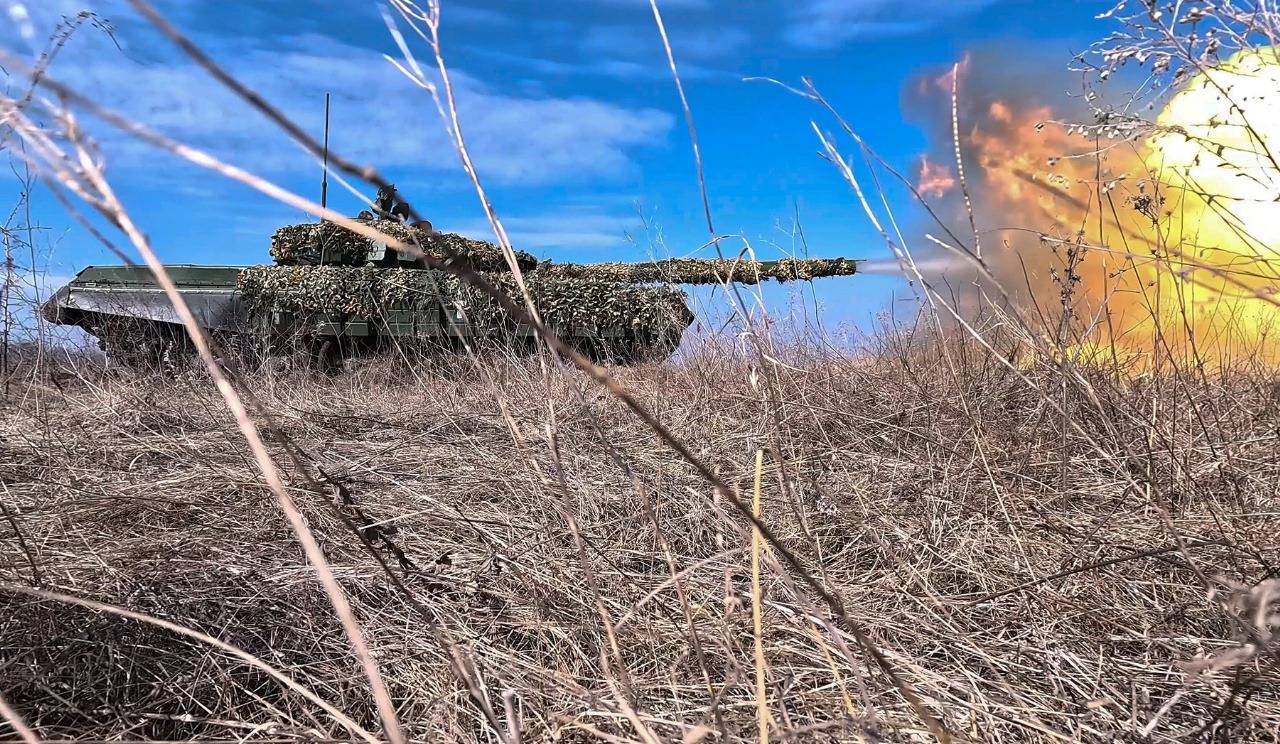
In summary, this year we will apparently have as many as 32 hours of formal ceasefire. This will allow millions of Ukrainians to celebrate Easter without the sounds of sirens and explosions, which in itself is an undeniable achievement and of immense value. Every day without civilian or military casualties is a small victory of life over death, which surprisingly coincides symbolically with the essence of the holiday.
At the same time, we have yet another confirmation that an initiative without a mechanism for extension and without a genuine desire on the part of the parties to sit down at the negotiating table loses its fundamental meaning. It resembles an attempt to extinguish a massive fire with a glass of water: there is a symbolic gesture, efforts are supposedly made, but globally nothing has changed.
A typical year usually has 8,760 hours, and the war continues every moment of those hours. Thirty-two hours of peace, unfortunately, are literally a drop in the ocean. So the Easter 2026 ceasefire feels more like a PR stunt and a political ritual than a real step toward truly ending the bloodshed.


