
Renowned historian Vitaliy Dribnytsia is in critical condition due to cancer
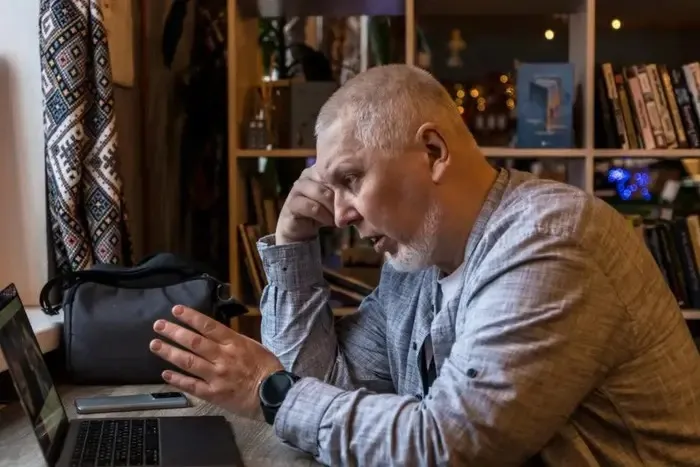
Historian and educator Vitaliy Dribnytsia, known for his debates with Russians and the educational project Vox Veritatis, has become seriously ill. According to military officer and civic activist Marusia Zvirobiy, he has cancer, and his condition is considered critical.
Marusya Zvirobiy reported on Vitaliy Dribnytsia’s serious condition. She wrote that the historian is battling cancer and needs treatment abroad. “The author is in critical condition. Cancer. There is a possibility of treatment in Germany,” Zvirobiy reported.
According to her, Ukraine currently lacks all the necessary tests and medications for Dribnytsia. At the same time, she noted that funds to help the historian have already been raised. Vitalii Dribnytsia is a historian and educator from Bila Tserkva. For many years, he has been working to popularize the history of Ukraine and explaining complex historical topics in simple language. Dribnytsia previously worked as a history teacher. Later, he began actively developing educational content online. In particular, his videos are published on the Vox Veritatis YouTube channel.
The historian pays special attention to discussions with Russians in video chats. He uses the so-called “chat roulette” format, where he randomly chats with people from Russia and other countries. During these conversations, Dribnytsia discusses the history of Ukraine, Kievan Rus’, the figure of Stepan Bandera, World War II, and the Soviet past. He doesn’t simply argue with his interlocutors but tries to explain the origins of various historical myths.
The historian himself has previously noted that it’s not just the specific debates that matter to him. According to him, such conversations also allow Ukrainians to see exactly how Russians perceive history and what ideas about Ukraine are instilled in them by the Russian education system and propaganda. Among his interlocutors were people who identified themselves as history students. According to Dribnytsia’s observations, even they often have serious gaps in their knowledge of the history of Ukraine and Russia.
One of the topics the historian regularly returns to is Kievan Rus’. He explains to Russians the difference between medieval Rus’ and the Muscovite state and draws attention to how interpretations of their shared past have changed in Russia over the centuries. Another important theme of his work is the influence of school education on the perception of history. Dribnytsia has stated that the Russian education system continues, to a large extent, to reproduce imperial and Soviet views of the past.
Because of this, in his view, some Russians perceive historical events not on the basis of scholarly research, but through pre-established propaganda templates. At the same time, Dribnytsia does not limit the problem of historical myths to Russia alone. He also discusses Ukrainian myths and problems in the teaching of history in Ukraine. In particular, the historian criticized the approach that requires students to memorize a large number of dates and events, but does not always help them understand how these events are connected. In his view, it is more important to explain historical processes and the causes of events rather than simply requiring students to memorize facts.
Dribnytsia is also a co-author of educational materials on Ukrainian history. His work combines teaching, creating educational content, and participating in public discussions. Currently, the historian’s top priority is receiving medical treatment. According to Marusia Zvirobiy, the necessary financial assistance has already been raised, and treatment is available in Germany. This was reported by Marusia Zvirobiy, a military officer and civic activist.


