
Russia has increased the number of jet-powered drones used in attacks on Ukraine
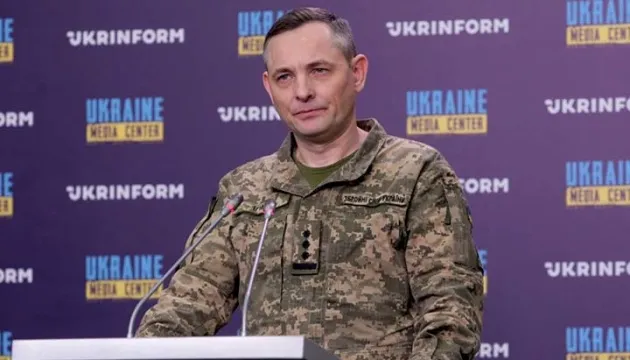
In September, Russia sharply increased the number of jet-powered drones it is using to attack Ukraine. As of September 29, Russian forces had already launched 3,177 such drones, compared to 2,850 in all of August. The Air Force says Ukraine needs more missiles for air defense and new interceptors that can be quickly put into mass production.
In September, Russia increased the number of jet-powered drones it is using to attack Ukraine. In fact, more were launched in less than a month than in the entire previous month. Yuriy Ignat, a spokesperson for the Ukrainian Air Force, made this statement on September 29 during a broadcast. According to him, as of September 29, Russia had used 3,177 jet-powered UAVs against Ukraine. By comparison, there were 2,850 such drones in all of August. “We’ve already had more drones this month than in the entire previous month. Today is the 29th, and the enemy continues to attack. We had 2,850 jet-powered UAVs in August, and this month we’ve already had 3,177,” Ignat said.
In other words, in September alone, the number of such drones has already exceeded August’s total by at least 327 drones. And the month isn’t over yet. Earlier, on September 23, Ignat reported that Russia had increased its use of rocket-powered drones eightfold over the course of three months. According to his data, Russian forces deployed 350 such UAVs in June, 1,500 in July, and 2,850 in August. As of September 23, the total was about 1,900, so the current figure of 3,177 indicates a further acceleration of the attacks.
Russian troops are attacking Ukraine in waves. According to Ignat, the main focus of these strikes is currently on Kyiv and the Kyiv region. At the same time, Russian drones regularly fly into other regions as well. Among them, the spokesperson named Kharkiv, Odesa, Mykolaiv, Sumy, Kherson, and Dnipro. He noted that air attack assets are sometimes directed toward western Ukraine, and jet-powered drones can reach quite remote areas.
The speed of jet-powered drones poses a particular challenge. Because of this speed, some conventional counter-UAV measures are less effective or have less time to intercept the target. At the same time, Ignat noted that man-portable air defense systems can effectively engage jet-powered drones if the drone enters their engagement range.
Ukraine, however, needs a larger number of missiles for its air defense systems. This applies, in particular, to the Patriot and other ground-based systems used to combat both jet-powered UAVs and Russian ballistic missiles. “We need more missiles for both the Patriot systems and the ground-based systems,” Ignat emphasized.
According to him, various means are currently being used to repel attacks. Tactical aircraft, particularly F-16 fighters, are operating in the air, while air defense units are deployed on the ground—provided they have the necessary missiles.
The spokesperson also reported that Ukraine is already receiving individual aid packages from partners for air defense systems. “There is already information that countries are providing certain packages for specific systems,” Ignat said. At the same time, he emphasized that such assistance will only last for a certain period. Support for Ukraine and the supply of necessary ammunition must continue, as Russia is escalating its attacks.
Another area of focus is domestic production. The Air Force expects domestic manufacturers to develop new solutions that can not only be tested but also quickly brought into mass production. “Given the sheer scale of the attacks, we obviously need new capabilities that can be effective and deliver the results we expect,” Ignat stated.
He added that Ukrainian manufacturers must work as quickly as possible so that such systems can be scaled up and delivered to the military personnel who defend Ukraine’s skies every day. The need for new interception systems is not solely due to the growing number of drones. Russia is gradually increasing the proportion of jet-powered drones in its massive strikes. On September 23, Ignat stated that approximately half of Russia’s “Shaheds” may already be jet-powered.
Ukraine is also already testing its own systems to counter such targets. On September 25, Ignat reported that four promising models of interceptor drones are being tested on the front lines, and about ten other manufacturers are testing their own designs. At the same time, President Volodymyr Zelenskyy stated the day before that the current interception rate for jet-powered drones in particular is still insufficient. On September 28, he reported that the overall drone shoot-down rate stands at 70%, while for jet-powered drones it is about 57%. According to him, new interceptors are being actively tested.
Thus, Russia is not only continuing its massive attacks on Ukraine but is also increasing its use of faster jet-powered drones. More of them were launched in September than in all of August, so the need for additional missiles, aircraft, and new interceptors is becoming even more urgent for Ukraine. Yuriy Ignat, a spokesperson for the Ukrainian Air Force, made this statement on television.
A drone strike in the Kyiv region caused a fire in residential buildings; two people were rescued.
As a reminder, debris from a Russian drone caused a fire in a five-story building in Kyiv.
Following the Russian Federation’s nighttime attack on Kyiv, an educational institution was hit.




