
The U.S. Did Not Sell Tomahawk Missiles to Germany - Politico
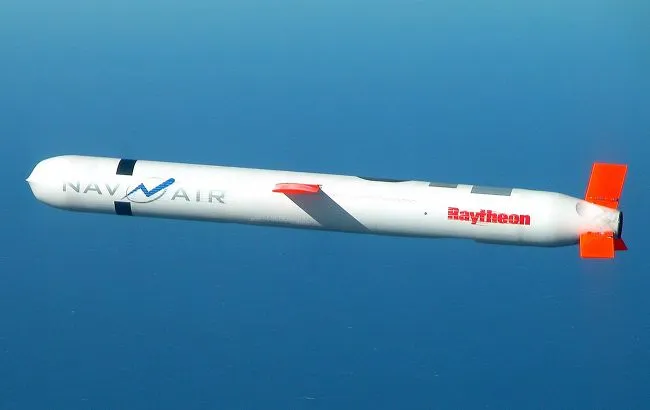
The Pentagon has blocked the sale of Tomahawk cruise missiles to Germany. According to Politico, officials in Washington fear that such a move could provoke Russia and further escalate tensions in Europe.
The publication notes that this decision is part of broader changes in U.S. policy regarding European security. In Europe, there is growing talk that the old system of cooperation with the United States is beginning to change.
The Pentagon has refused to sell long-range Tomahawk cruise missiles to Germany, Politico reports. The publication believes that this decision could have serious consequences for the entire security architecture in Europe, which has been shaped over decades since World War II. As the publication notes, the refusal to sell the missiles was not the first move by Washington to cause concern among NATO allies.
Earlier, the U.S. had already reduced its military presence in Germany by withdrawing about 5,000 troops. In addition, the deployment of an American battalion armed with Tomahawk missiles was suspended. Washington has also reduced its planned contribution to NATO forces. This involves fewer bombers, fighter jets, destroyers, and submarines that were to be deployed for the Alliance’s joint defense. The Pentagon explains these steps as an effort to achieve a more equitable distribution of defense spending between the U.S. and European countries.
However, according to the authors at Politico, the situation with the “Tomahawks” points to a deeper problem. It is not just about the reduction of the U.S. military presence in Europe. Washington is also in no hurry to give its allies the ability to acquire modern long-range weapons on their own. The publication argues that one of the reasons for this approach is concern over Russia’s potential reaction.
In fact, as Politico notes, the U.S. is increasingly separating its own security from that of its European partners. After Donald Trump’s first administration withdrew from the Intermediate-Range Nuclear Forces Treaty in 2019, NATO countries began looking for ways to strengthen their strike capabilities. Tomahawk missiles were viewed as a temporary solution while European countries worked on developing their own long-range strike systems.
Now, as Politico reports, this gap remains open once again. In recent weeks, the Trump administration has also expressed dissatisfaction that NATO allies did not sufficiently support U.S. and Israeli actions during the conflict with Iran. Against this backdrop, European nations continue to increase defense spending and are accelerating the development of their own long-range strike systems.
Politico notes that some of these future systems may be equipped with both conventional and nuclear weapons. At the same time, they will be under the full control of European countries, and the U.S. will have no right to influence decisions regarding their use. “Decoupling does not mean that Europe will be left defenseless. But the security of Europe and the U.S. will no longer be viewed as a single entity,” the Politico article states.
At the same time, there is increasing talk in Europe of a crisis of trust in Washington. According to opinion polls, Europeans’ trust in the U.S. has dropped significantly in recent times. Against this backdrop, EU countries are increasingly discussing the need to strengthen their own defense capabilities and reduce their dependence on American military support, Politico reports.


