
Ukraine has stepped up fire control over Russian logistics operations in the Luhansk region and in the direction of Crimea
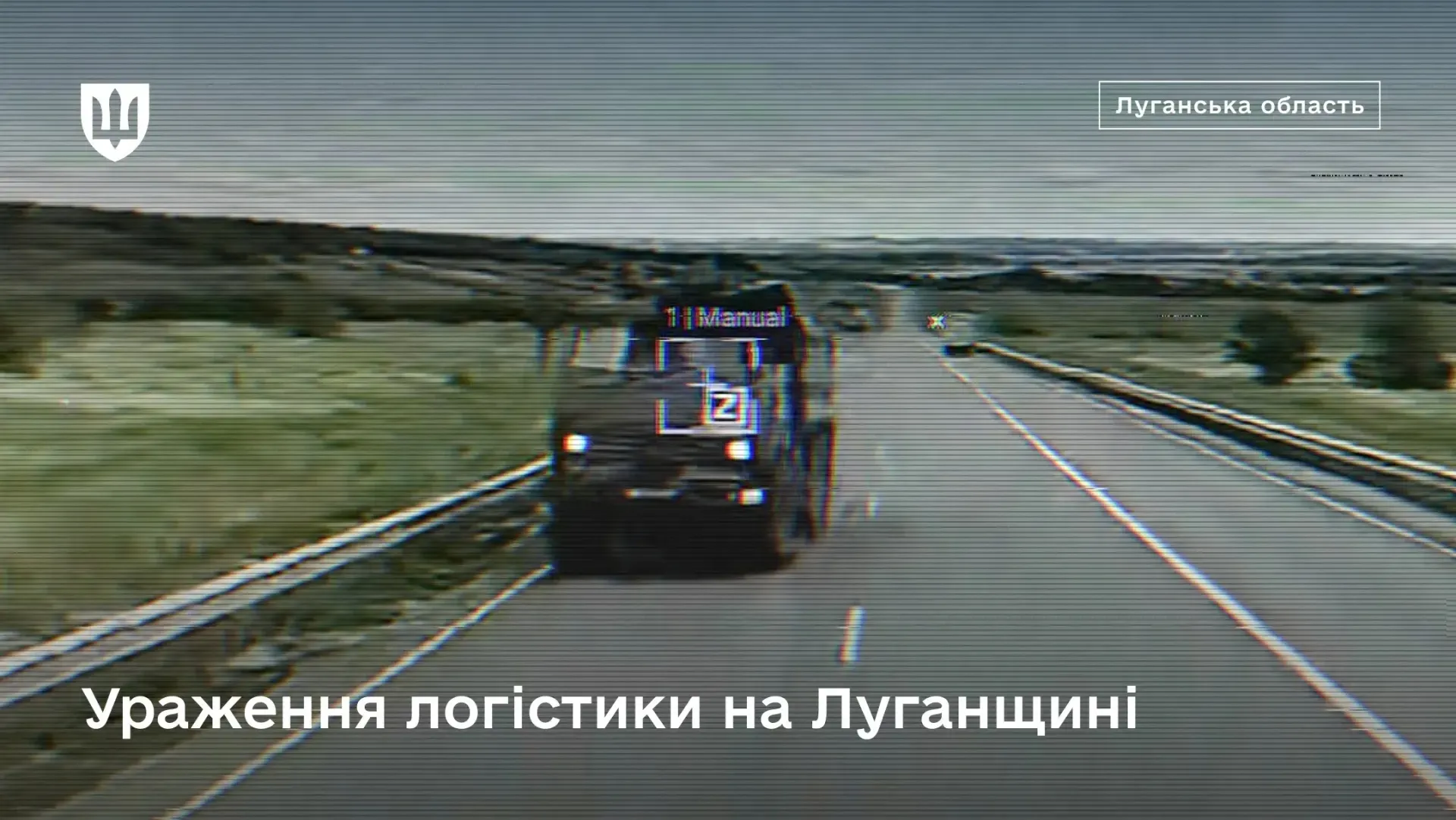
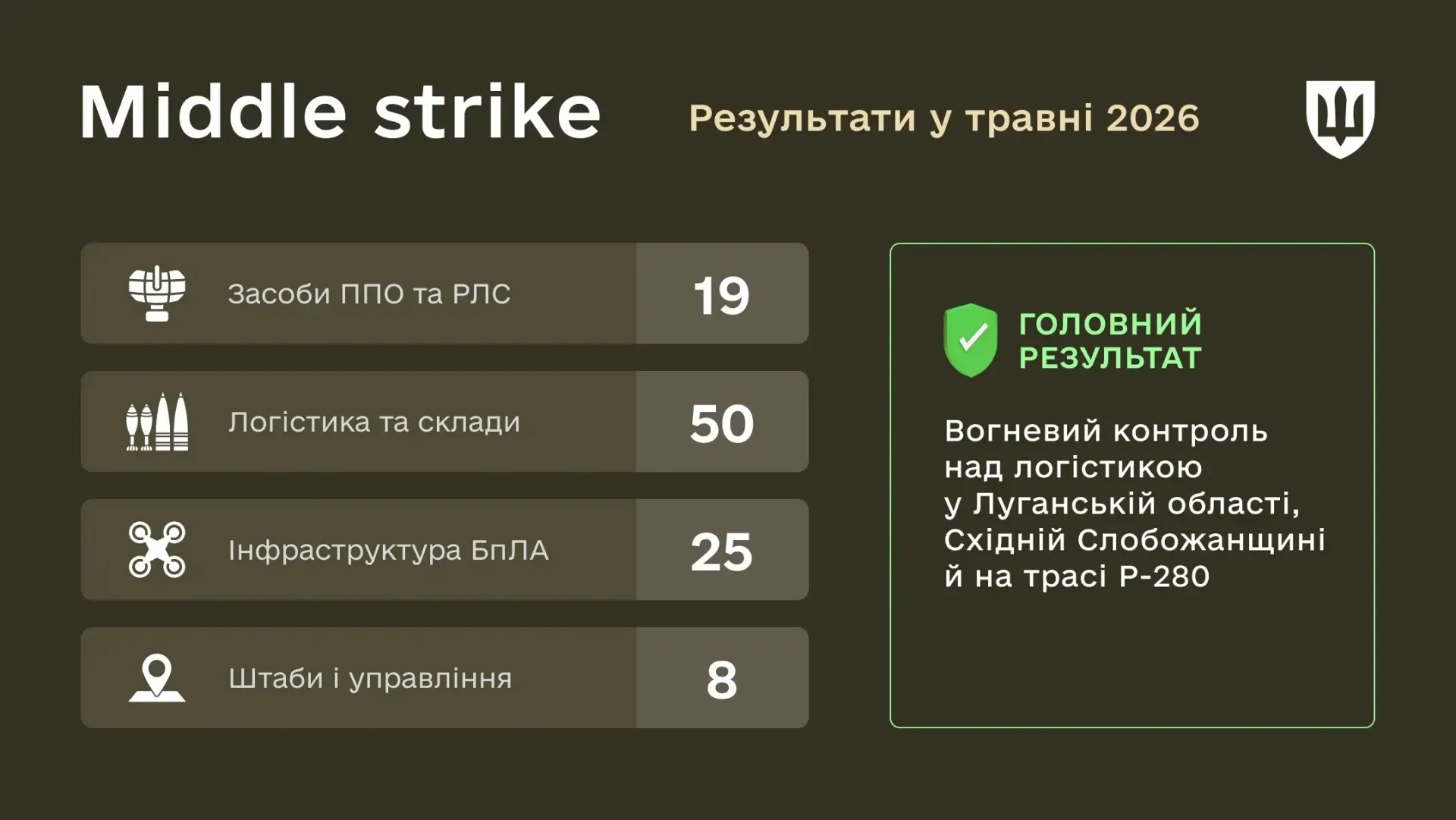
In May 2026, the Ukrainian Defense Forces launched a series of strikes against key elements of Russian military infrastructure as part of the “middle strike” campaign. Logistics routes in the Luhansk region and toward Crimea, as well as the occupiers’ warehouses, command posts, and air defense systems, came under fire, according to the Ukrainian Ministry of Defense.
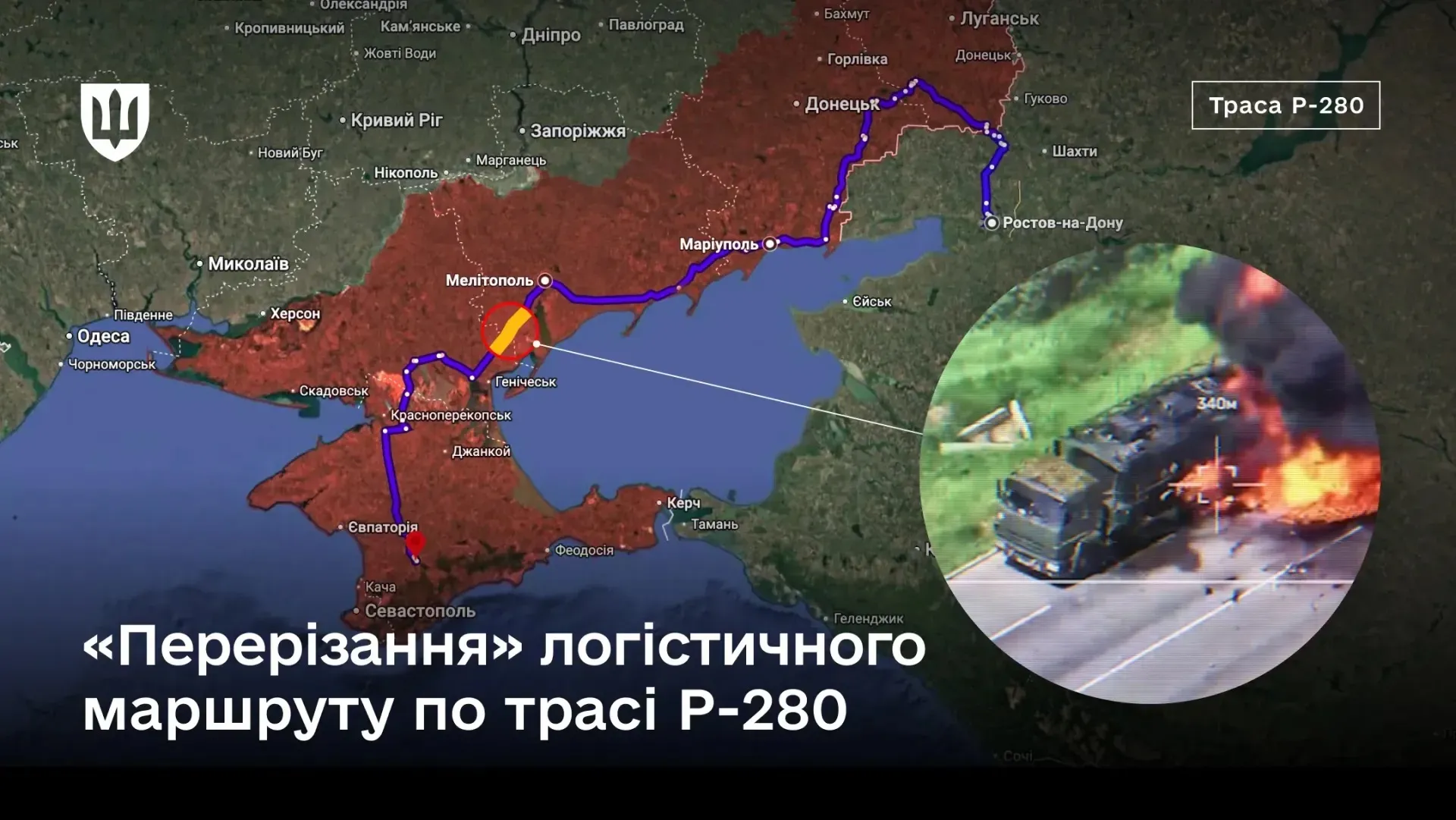
Particular attention should be paid to the placement under fire control of the Russian occupiers’ key logistics in the temporarily occupied areas of Luhansk Oblast and Eastern Slobozhanshchyna, as well as the R-280 highway, which connects Rostov-on-Don with the temporarily occupied Crimea.
The Ministry of Defense reports on the main successes of Ukrainian defenders and Russian losses in May as a result of the middle strike.
The systematic destruction of logistics deep behind enemy lines helps Ukraine contain the enemy on the front lines and move closer to ending the war from a position of strength. As the President of Ukraine emphasizes, this window of opportunity will last another 6–9 months.
Therefore, on the President’s orders, the Ministry of Defense is scaling up middle strikes to the maximum extent possible and, in coordination with the military, is creating a complete logistical lockdown for the enemy. As part of the first phase of the program, the Ministry of Defense, together with the General Staff of the Armed Forces of Ukraine, has allocated an additional 5 billion UAH directly to the military for the procurement of modern middle strike capabilities.
At the same time, support from allies could be decisive—as long as Ukraine maintains the initiative and can increase pressure on the enemy.
The logistics routes of the Russian occupation forces in the Luhansk region and Eastern Slobozhanshchyna are under systematic fire control.
Successful strikes have been carried out against enemy armored vehicles and depots directly near the “Izvarine” checkpoint on the Ukrainian-Russian border, located more than 205 kilometers from the front line.
Logistics in the areas of Luhansk, Starobilsk, Alchevsk, Bryanka, and Kadiivka have come under constant drone fire control.
The logistical collapse in the Luhansk region is crippling the aggressor’s frontline units, depriving them of their offensive capabilities.
Federal Highway R-280 is a key military-logistical highway over 500 km long. It connects Rostov-on-Don with the temporarily occupied Crimea through the Donetsk, Zaporizhzhia, and Kherson regions, specifically through Mariupol, Berdiansk, and Melitopol. This route serves as the main “land corridor” and supply route for fuel, ammunition, and equipment for the entire southern group of Russian forces.
From now on, Ukrainian drones are regularly striking freight vehicles, fuel tankers, and military equipment along the entire length of the route. Successful attacks on logistics vehicles have been recorded in the Chongar and Sokolohirsk areas, as well as at the exits from the temporarily occupied peninsula.
Firepower is directed not only at moving targets on the highway itself but also at supporting infrastructure—logistics depots, parking areas, and repair bases in the occupied cities along the Azov Sea.
Along with the destruction of railway hubs (such as Debaltseve) and bridge crossings, the disruption of road traffic deprives the Russian Federation’s army of the ability to rapidly redeploy reserves between the Zaporizhzhia and Kherson directions.
Defense forces continue to systematically “blind” the enemy. Throughout May, the destruction of 10 anti-aircraft missile and missile-gun systems, as well as 9 radar stations and technical reconnaissance assets, was confirmed.
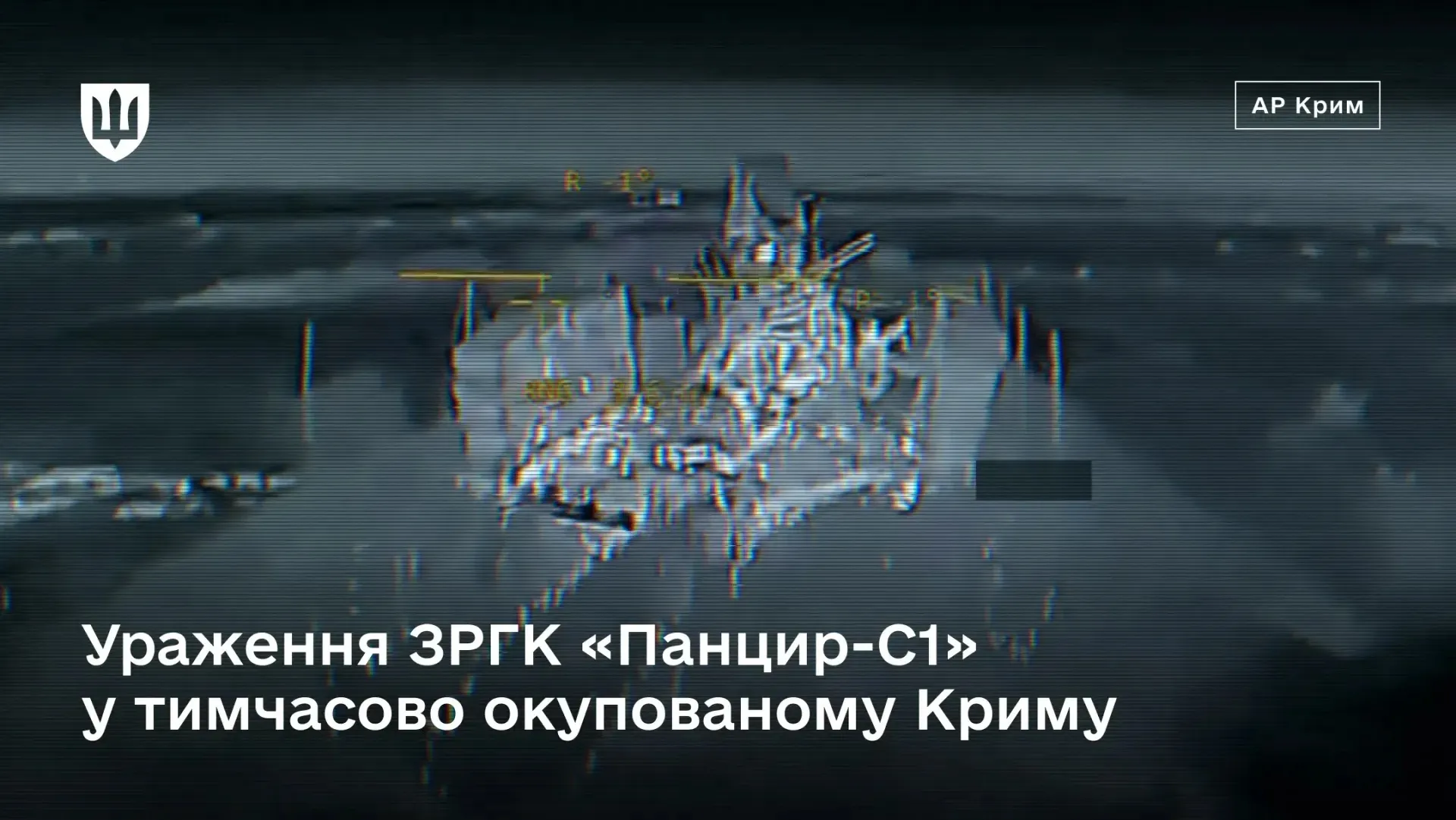
In particular, three Pantsir-S1 anti-aircraft missile and gun systems were put out of action (Novyi Svit, Henicheskaya Gora, Saki airfield), four Tor and Tor-M2 air defense systems (Mykhailivka, Staryi Oskol, Zakhidne, Berdianske), a Buk-M3 air defense system (Olkhovatka), an Osa air defense system (Donetsk), and a command and control vehicle from the Buk-M2 complex (Kadiivka).
The following radar stations and reconnaissance systems were destroyed: the “MIS-M1” coastal radar station (Mayak), the “Podlyot” radar station (Yevpatoria), the P-18 “Terek” radar station (Sofiivka), the “Kasta-2E” radar station (Mysove), the “Yastreb” counter-battery radar (Novosolovka), the 1L125 “Niobium-SV” radar (Yarsk), the “Nebo-SV” radar (Kamianka), “ST-68” air target detection radar (Feodosia), as well as the MR-232 “Bussol-S” radar with an optoelectronic module at the FSB’s coastal technical reconnaissance post in Mariupol.
In addition, in May, 8 command posts and 25 UAV control centers were destroyed, and more than 50 warehouses and repair bases were struck, according to the official website of the Ministry of Defense of Ukraine.
Read also:
Russian forces attacked three districts in the Dnipropetrovsk region
Russia attacked Kharkiv and the region overnight; there are casualties
Over the past day, 291 combat engagements were recorded on the front line between the Ukrainian Defense Forces and Russian troops, with the most intense fighting continuing in the Pokrovsk direction.
Over the past day, the Russian army lost another 1,430 soldiers in the war against Ukraine. Ukrainian defenders also destroyed dozens of artillery systems, hundreds of vehicles, and nearly 1,800 drones.


