
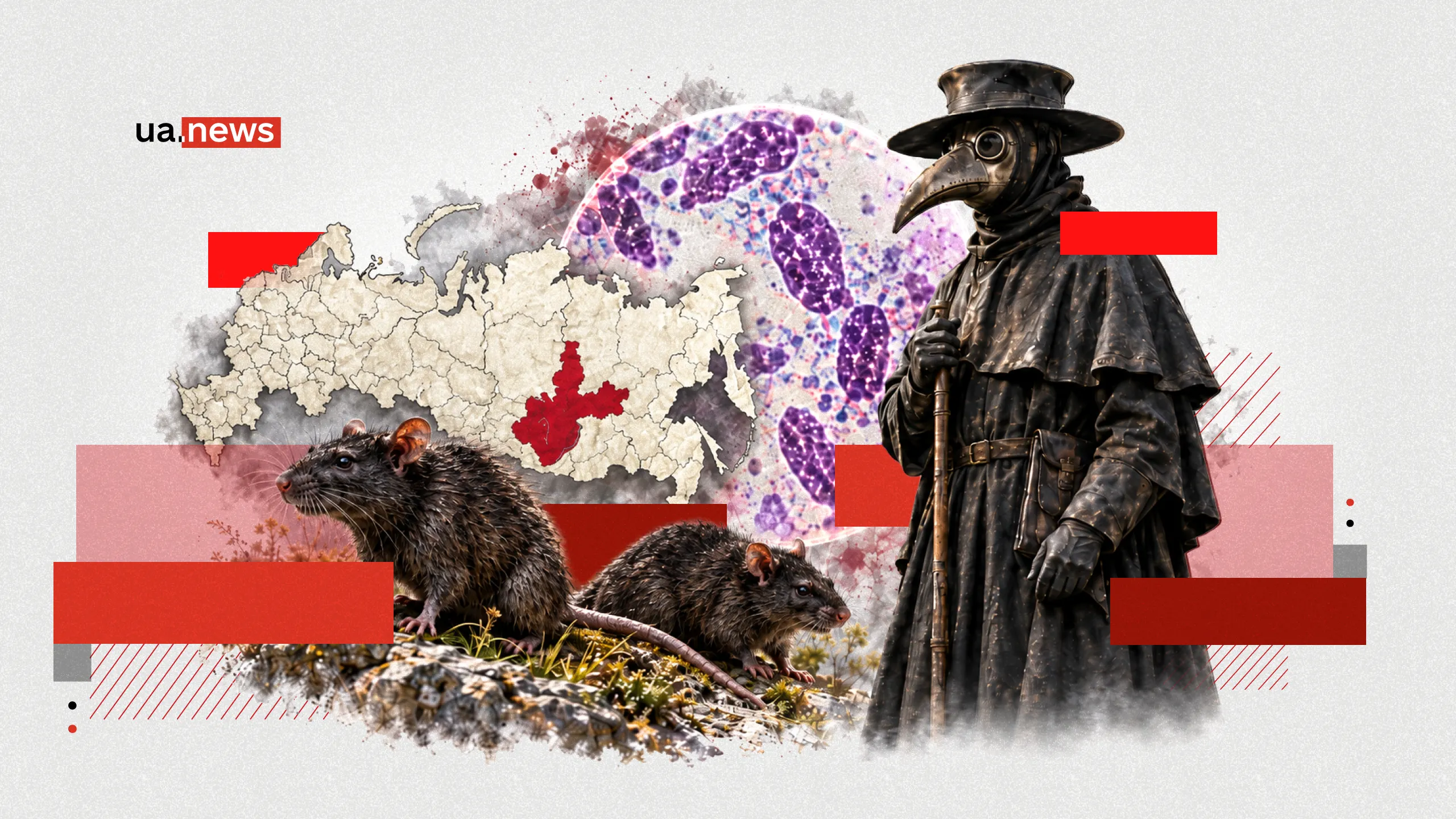
A few days ago, a 28-year-old employee of the Anti-Plague Institute died in the Irkutsk region of Russia. The official diagnosis was “pneumonia of unknown etiology.” But rumors that the deceased woman had pulmonary plague proved surprisingly persistent and quickly spread around the world.
Without treatment, the fatality rate for this form of the disease is 100%. That is why talk of a plague outbreak in Siberia quickly spread far beyond the region, reaching all the way to the White House and Donald Trump himself.
So what really happened? Is Russia truly facing an epidemic? How dangerous is the plague, and is a new global outbreak possible? UA.News investigated the matter.
What is known about the situation in the Irkutsk region
The story began with reports from Russian Telegram channels and media outlets that on the night of October 2, 2026, a young woman died at the Shelekhov District Hospital: a lab technician at the Irkutsk Research Institute for Plague Control in Siberia and the Far East. Her name was Daria Shipilova; she was 28 years old and had been working at the institute since at least 2022. According to Telegram channels, shortly before falling ill, she had returned from a business trip to Buryatia—a region where natural outbreaks of the plague are regularly recorded along the border with Mongolia. Other sources claimed that she had returned from a vacation in Thailand.
According to one version of events, which was widely circulated in the media, the woman accidentally broke a test tube containing the plague pathogen while working in the laboratory. She allegedly told doctors this version of events, though there is currently no official confirmation. Initially, doctors suspected a severe case of COVID-19—the symptoms were similar. The patient was admitted to the Shelekhov District Hospital, which houses a COVID-19 treatment center, and was placed on a ventilator, but they were unable to save her.
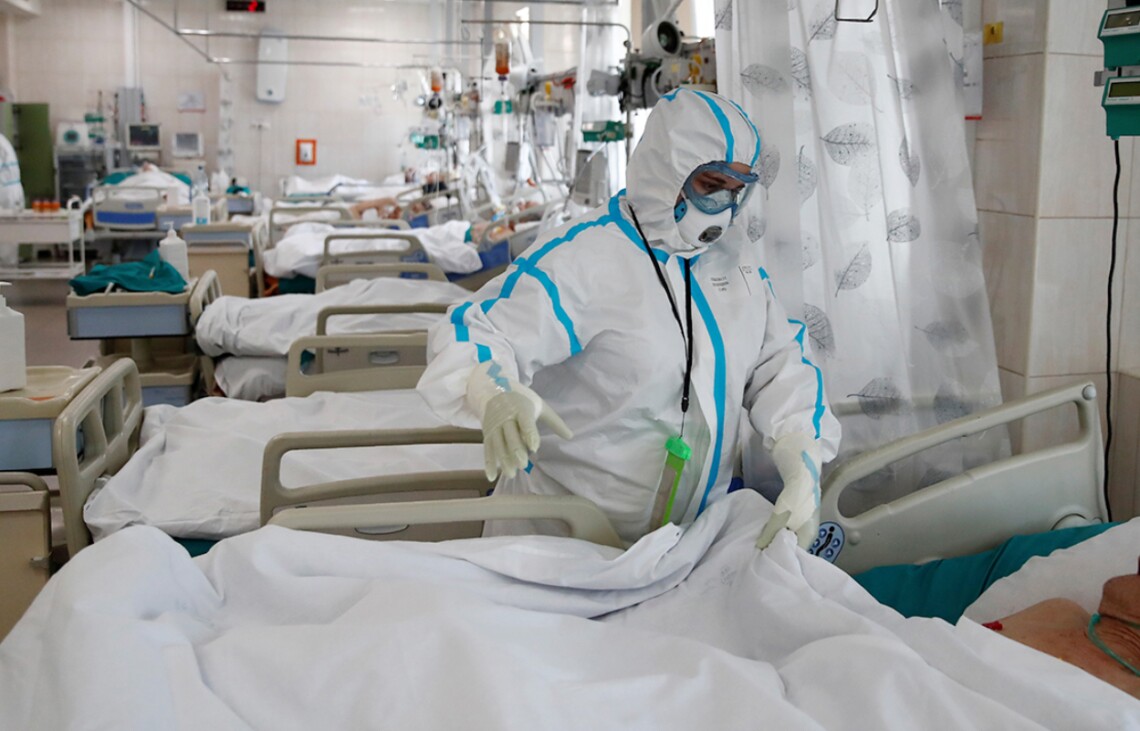
Following her death, the hospital was placed under quarantine; admissions and discharges from several wards were suspended, as was the collection of lab samples. Nearly 200 people who had been in contact with the deceased were placed under medical observation. In Irkutsk itself, according to reports, several city hospitals were placed under quarantine, and a mask mandate was implemented at the Irkutsk Aluminum Plant in Shelekhov. Local residents began stockpiling medications, and panic spread on social media.
The authorities’ response was mixed. The head of Buryatia, Alexei Tsidenov, publicly stated that the woman “may have contracted the plague,” but at the same time emphasized that she had not traveled to Buryatia and that there are no natural foci of the plague in the republic. Igor Kobzev, governor of the Irkutsk Region, convened an emergency meeting of the regional sanitary and anti-epidemic commission with the participation of Rospotrebnadzor leadership. This heightened anxiety among locals: why would the country’s chief sanitary doctor personally fly to Siberia if the situation were routine?
Subsequently, Rospotrebnadzor stated that the woman had died of “pneumonia of unknown etiology,” and that there had been no emergency situations involving pathogenic microorganisms at the institute. Extensive testing of the biological material did not reveal any microorganisms linked to her professional activities. Among her close contacts, two cases of COVID-19 and two cases of rhinovirus infection were identified—no other infectious agents were found. Rospotrebnadzor assessed the sanitary and epidemiological situation in Irkutsk and Shelekhov as stable.
At the same time, the phrase “pneumonia of unknown etiology” means that the specific cause of the illness remains unclear to doctors. Theoretically, it could have been pneumonic plague—Rospotrebnadzor has neither confirmed nor definitively ruled out this possibility, emphasizing that no specific cases of plague have been detected so far. In the Kremlin, as always, officials urged people “not to be swayed by rumors” and to rely on official statements, implying that everything is supposedly stable and under control.
Meanwhile, the story has reached the international stage. U.S. Secretary of State Marco Rubio stated that Washington is “closely monitoring” the situation, although it does not yet consider it a cause for concern. Even President Donald Trump, when answering questions from journalists, spoke not of the plague but of pneumonia, though he assured that the U.S. is ready to help Russia. The World Health Organization confirmed that it is in contact with Russian health authorities and assessed the risk to global public health as low, citing available unofficial information.
The bottom line: the plague theory has not been officially confirmed. But the exact cause of the young woman’s death has not been disclosed either. Russian authorities have neither confirmed a laboratory accident nor a plague infection, nor have they announced any final conclusions. This leaves room for interpretation: ranging from a cover-up of a real threat to the deliberate stoking of panic. In any case, the situation seems somewhat suspicious.
The
Plague: What It Is and Why It’s So Dangerous
The plague is an infectious disease caused by the bacterium Yersinia pestis. It is not a virus, but a bacterium—a fact that is fundamentally important for understanding how to combat it. Rodents—such as rats, marmots, ground squirrels, and gerbils—serve as the natural reservoir for the pathogen. Fleas are the most common carriers.
The entire process works as follows: an insect bites an infected rodent, picks up the bacteria, and then, by biting a person, transmits them to that person. This is exactly how the most common form of the disease—bubonic plague—arises. A person can also become infected while hunting or skinning infected animals. Incidentally, this is exactly what happened in Russia in 2016, when a 10-year-old boy in the Altai region fell ill after helping a relative skin a captured marmot. The boy, however, was successfully treated.
There are several forms of plague: bubonic, pneumonic, septic, as well as the rare cutaneous and enteric forms. The bubonic form manifests as inflammation of the lymph nodes—the so-called buboes—which swell, become painful, and may become infected. The pneumonic form affects the respiratory system and, most dangerously, can be transmitted from person to person via airborne droplets containing mucus secreted when coughing or sneezing. The septic form occurs when the bacteria enter the bloodstream, and it can kill a person even before characteristic symptoms appear.
The mortality rate depends on the form of the disease and how quickly treatment begins. According to the WHO, without treatment, bubonic plague kills up to 60% of those infected, while the pneumonic and septic forms are fatal in nearly 100% of cases. This is precisely why pneumonic plague is classified as a particularly dangerous infection, and this is why any suspicion of it triggers such a serious response. At the same time, with timely treatment with antibiotics, the disease is entirely curable. Mortality rates are minimal when treatment is started early.
It is worth emphasizing for clarity: plague is not some distant, exotic disease, nor is it a relic of the distant past. It is regularly reported in various countries, including Russia, particularly in regions bordering Mongolia and China, where natural foci exist. In Africa, specifically in Madagascar, hundreds of plague cases are recorded annually. Even in the U.S., the plague is occasionally detected in people who have come into contact with wild rodents. But all cases are generally isolated and do not escalate into epidemics—fortunately for humanity.

Is a Plague Epidemic Possible in Russia and Around the World?
When we hear the word “plague,” our minds immediately conjure up the chilling images of medieval Europe that we’ve read about in history books and seen in movies: devastated cities, carts filled with corpses, “plague doctors” wearing masks with beaks filled with aromatic herbs, and a sense of chthonic despair. The largest plague epidemic in history—the “Black Death”—swept through Europe in the mid-14th century. According to various estimates, it claimed the lives of up to 60 percent of the continent’s population. In England alone, in a single year—from 1349 to 1350—roughly half of London’s population died. Some cities, such as Bremen and Avignon, lost nearly their entire population: there was no one left to even bury the dead.
In total, the “Black Death” claimed the lives of about 25 million people in Europe alone. In those days, there were no antibiotics, no vaccines, and no understanding that the disease was carried by fleas and rats—or that the appalling unsanitary conditions in the cities of the time greatly “contributed” to its spread. People believed in “poisoned air” or God’s punishment. This left such a deep collective trauma (which is even reflected in the genomes of Europeans!) that even today, centuries later, the mere word “plague” evokes a reflexive fear.
Incidentally, the plague also struck Ukraine—and more than once. As early as the 11th century, the chronicler Nestor mentioned a “plague among the people.” In 1090, 7,000 people died in Kyiv within two weeks. In 1351, the plague reached Ukraine again via Poland—first Chernihiv, then Kyiv. The epidemic of 1572 wiped out nearly half of the city’s population. And in 1770, the plague broke out again in Kyiv, claiming the lives of several thousand people. This is part of our history, just as much as it is part of European history.

But there is good news: the modern world is not the Middle Ages. At least, certainly not when it comes to disease.
First, sanitary conditions have improved dramatically. In the Middle Ages, people lived in cramped conditions, without sewage systems, alongside rats, and so on. Today, even in the poorest countries, basic sanitary standards are incomparably higher than they once were.
Second, there is a vaccine against the plague. It was created by the Soviet scientist Magdalene Pokrovskaya. She developed the world’s first live plague vaccine based on a weakened strain of the pathogen.
Third, the plague is very effectively treated with antibiotics. It is, in essence, an ordinary bacterium, and ordinary antibiotics work against it—the very same ones used to treat pneumonia, strep throat, or other bacterial infections.
Fourth, there are strict epidemiological control and surveillance protocols, including international ones, that allow for the rapid isolation of patients and the tracing of all their contacts.
That is precisely why isolated outbreaks of the plague are possible and occur regularly. But this does not lead to epidemics. Doctors are also quite skeptical about the threat of a global plague outbreak. For the disease to develop into an epidemic, a confluence of many factors is required: widespread unsanitary conditions, lack of access to medical care, high population density, and, most importantly, the absence of rapid diagnosis and treatment. None of these conditions exist in modern Russia or in most countries around the world.
The exception would be if the bacterium somehow mutated and became resistant to antibiotics or began to spread much more easily. Then, theoretically, anything is possible. But as of now, there is no scientific evidence of such a mutation. Yersinia pestis has been studied quite thoroughly, and so far it remains susceptible to the drugs available to humanity.

In
summary, the story of the lab technician’s death in the Irkutsk region is a classic example of how a real tragedy intertwines with media hype and, perhaps, even with disinformation. A young woman died under unexplained circumstances. The official cause of death is pneumonia of unknown etiology. Was it the plague? There is still no definitive answer: it is entirely possible that it was, but it may not have been. This uncertainty has become fertile ground for various rumors.
In any case, if we set aside our emotions, look at the facts, and think on a global scale, we’ll arrive at a simple and reassuring conclusion: a plague pandemic is (almost) impossible today. There are no epidemiological, medical, or social conditions that would allow for it. Isolated cases will occur in Russia, the U.S., Africa, and elsewhere. But the “Black Death,” in the form that wiped out half of medieval Europe, is definitely a thing of the past. At least until the bacterium learns to resist antibiotics—but so far, fortunately, it cannot.
So the answer to the question “Is the world threatened by the plague from Irkutsk?” is most likely no. But the question of what actually happened there remains open. And it is precisely this uncertainty—rather than the plague itself as a disease—that makes this story so compelling.




