
Victory Day over Japan: Why September 2 Marked the End of World War II
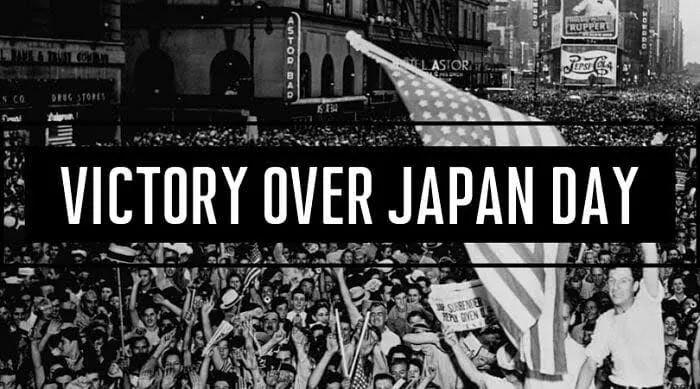
On September 2, the United States commemorates Victory over Japan Day, or V-J Day—a date that has come to symbolize the end of World War II. It was on this day in 1945 that Japanese representatives signed the Instrument of Surrender aboard the American battleship USS Missouri in Tokyo Bay. The ceremony lasted about 20 minutes, but its consequences changed world history.
In the U.S., Victory over Japan Day is traditionally associated with September 2, 1945. It was then that Japan officially signed the document of unconditional surrender to the Allies. In 2026, this date falls on Wednesday, September 2.
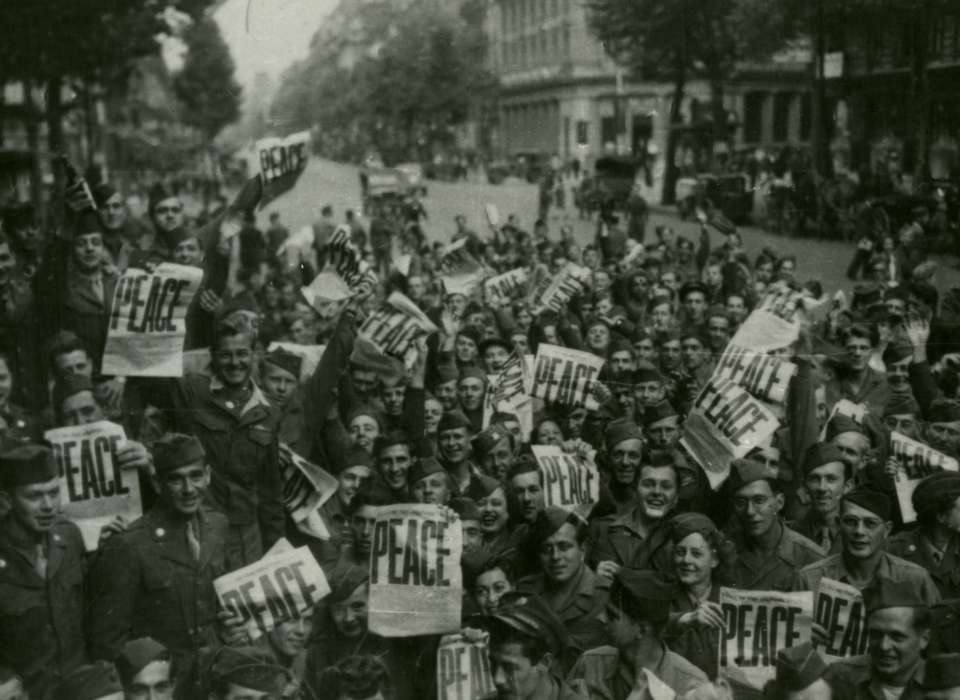
At the same time, another date is also observed in the United States—August 14. It was on this day in 1945 that Japan agreed to accept the terms of the Potsdam Declaration, and the news of this became known to the American public. President Harry Truman declared September 2 as Victory over Japan Day, linking it specifically to the official surrender ceremony.
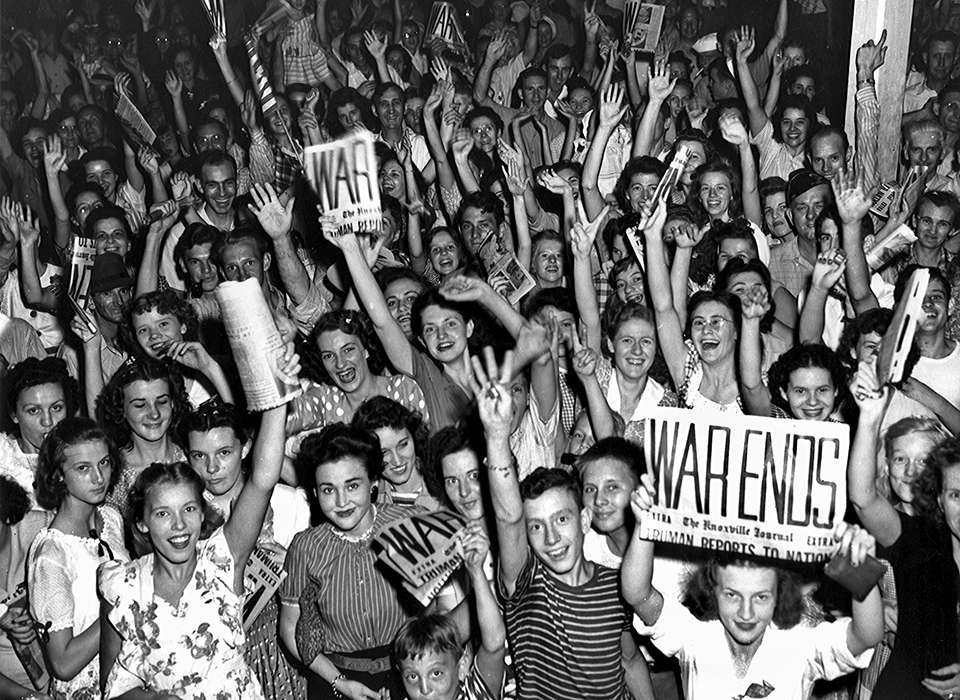
This led to some confusion regarding the dates. On August 14–15, the U.S. and its allies celebrated the news of Japan’s agreement to surrender, while the legal formalities of the surrender took place on September 2.
How V-J Day Came to Be
Victory over Japan Day emerged in the final months of World War II. By that time, Germany had already surrendered, but combat operations against Japan in the Pacific continued. Japan remained the main Axis power that refused to end the war. The United States and its allies fought fierce battles for the islands of the Pacific and were gradually advancing toward the Japanese islands.

On July 26, 1945, the Allies issued the Potsdam Declaration. In it, they called on Japan to surrender, warning of serious consequences if the war continued. In August, the situation changed dramatically. On August 6, the United States dropped an atomic bomb on Hiroshima, and on August 9, on Nagasaki. On that same day, August 9, the Soviet Union launched an offensive against Japan in Manchuria.
After several days of heated debate, the Japanese leadership agreed to surrender. On August 15, Emperor Hirohito addressed the nation on the radio and announced the acceptance of the Allies’ terms. But the war was not yet formally over. The final document was not signed until September 2.
What Happened Aboard the USS Missouri
The ceremony took place on the morning of September 2, 1945, aboard the American battleship USS Missouri, which was anchored in Tokyo Bay. Representatives from Japan and the Allied nations arrived on the ship. On behalf of the Japanese government, Foreign Minister Mamoru Shigemitsu signed the document. General Yoshijiro Umezu signed on behalf of the Japanese armed forces.
On behalf of the Allies, the document was accepted by General Douglas MacArthur, who was the Supreme Commander of the Allied Forces. Admiral Chester Nimitz also signed on behalf of the United States. Representatives of other Allied nations, including the United Kingdom, China, the Soviet Union, Australia, Canada, France, the Netherlands, and New Zealand, also signed the document.
The ceremony began shortly after 9:00 a.m. The Japanese side signed the Instrument of Surrender, thereby agreeing to a complete cessation of hostilities. The document also contained a demand to release Allied prisoners of war and civilian internees and to provide them with the necessary assistance. After signing the document, MacArthur stated: “I hope that a better world will emerge from this solemn occasion.”
Why This Date Is Important for the U.S.
For the United States, V-J Day marked the end of nearly four years of war in the Pacific. The U.S. entered World War II following Japan’s attack on Pearl Harbor on December 7, 1941. After that, American military forces took part in large-scale operations against Japan. Fighting took place across a vast territory—from the islands of the Pacific to the Philippines and other parts of Asia.
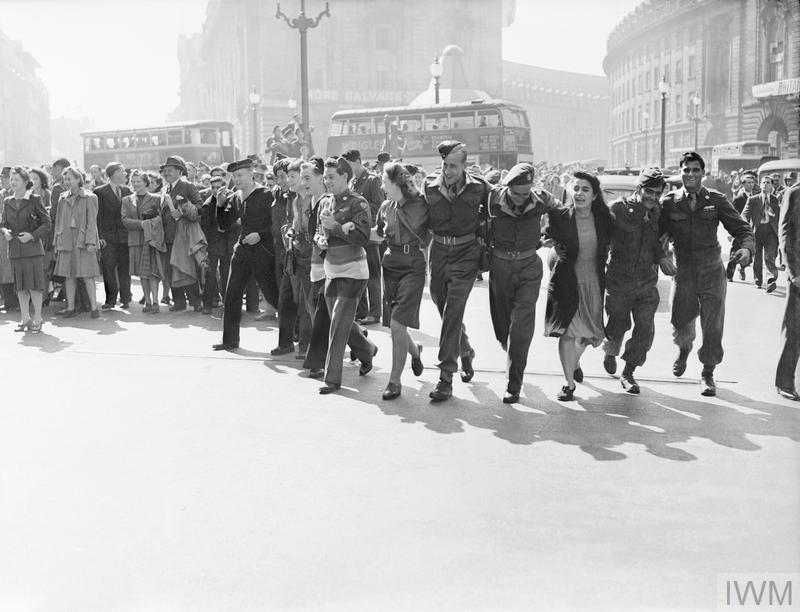
The war claimed the lives of a vast number of people. American soldiers fought far from home, while millions of civilians worked in factories that supplied the army with weapons, equipment, and other essential goods. That is why the news of Japan’s surrender was met with massive celebrations in the United States. People took to the streets, hugged one another, danced, sang, and waved flags.

In his address, President Harry Truman emphasized that the victory signified not only the end of hostilities but also the beginning of a new era of responsibility. In his words, after the victory, the country needed to build peace and create conditions for the security and well-being of its people.
How Americans Celebrated Victory in 1945
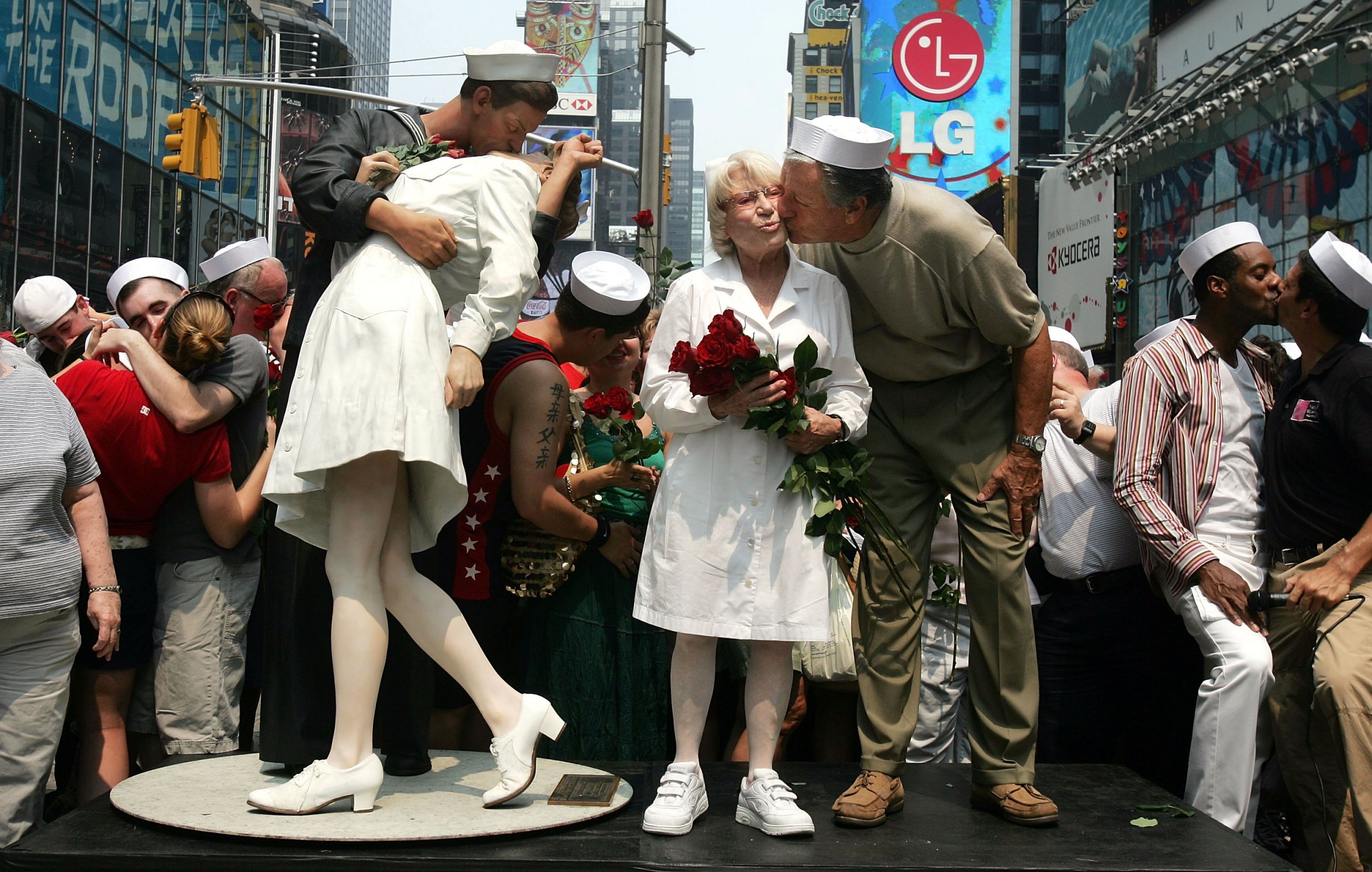
When it became known on August 14 that Japan had agreed to surrender, massive street celebrations began across the United States. Footage from New York became particularly famous. Huge crowds gathered in Times Square. Newspapers published special editions, and radio stations continuously reported the latest news.
Americans took to the streets waving flags, welcoming servicemembers as heroes. People rejoiced that their family members and loved ones, who had been serving far from home, would finally be able to return. Celebrations also took place at military units and U.S. bases in the Pacific. The U.S. Naval Historical Service has preserved photographs of these events, including celebrations at U.S. bases in August 1945.

However, the victory did not mean that all American soldiers returned home immediately. After the surrender, it was necessary to organize demobilization, the return of prisoners of war and service members, and to ensure compliance with the terms of the surrender.
Interesting Facts About Victory over Japan Day
One of the best-known facts is that the surrender document itself was very brief. It consisted of only eight main points but legally formalized the end of the war and the surrender of the Japanese armed forces.
The ceremony on the USS Missouri lasted about 20 minutes. Representatives of the Allied powers were aboard the ship that morning, and hundreds of warships were stationed around Tokyo Bay.
Another symbolic moment: American and Allied aircraft flew over the ship during the ceremony. According to the U.S. Naval Historical Service, about a thousand aircraft flew over the fleet after the ceremony concluded.
The USS Missouri itself later became a museum ship. It is preserved at Pearl Harbor in Hawaii, where visitors can see the spot where Japan’s Instrument of Surrender was signed.
The original document is also preserved in the U.S. National Archives. On September 6, 1945, it was transported to Washington, D.C., and later became one of the archive’s most important historical artifacts.
Is Victory over Japan Day a federal holiday in the U.S.?
It is important not to confuse this historical date with a modern official holiday. September 2 is not a federal holiday in the U.S., unlike Independence Day or Thanksgiving. Today, V-J Day primarily holds historical and commemorative significance.

The date is commemorated by military organizations, museums, archives, veterans’ groups, and historical institutions. During major anniversaries, exhibitions, lectures, and special events dedicated to the end of the war in the Pacific are held. Special attention is given to World War II veterans and to the memory of those who did not return from the front. For historians, this date is also important because it was Japan’s surrender that finally brought World War II to an end.
Why V-J Day Is Still Remembered Today
Victory over Japan Day is not just the date of a U.S. military victory. It is a reminder of one of the greatest tragedies of the 20th century and of the enormous price that various nations paid to end the war. After September 2, 1945, a completely different phase of world history began. The United States and its allies were tasked not only with ending hostilities but also with establishing a postwar order.
Japan came under Allied control, and sweeping political and social changes began in the country. At the same time, millions of soldiers around the world were gradually returning home. Therefore, V-J Day in the United States is not only associated with the joy of victory. It is also a day of remembrance for the fallen, for veterans, and for those who survived the war.

In 2026, as every year, Victory over Japan Day falls on September 2. This date commemorates the morning in 1945 when, aboard the USS Missouri in Tokyo Bay, a document was signed that officially ended World War II.


