
DW discussed pressure on Georgia’s media and artists in Berlin — Deutsche Welle
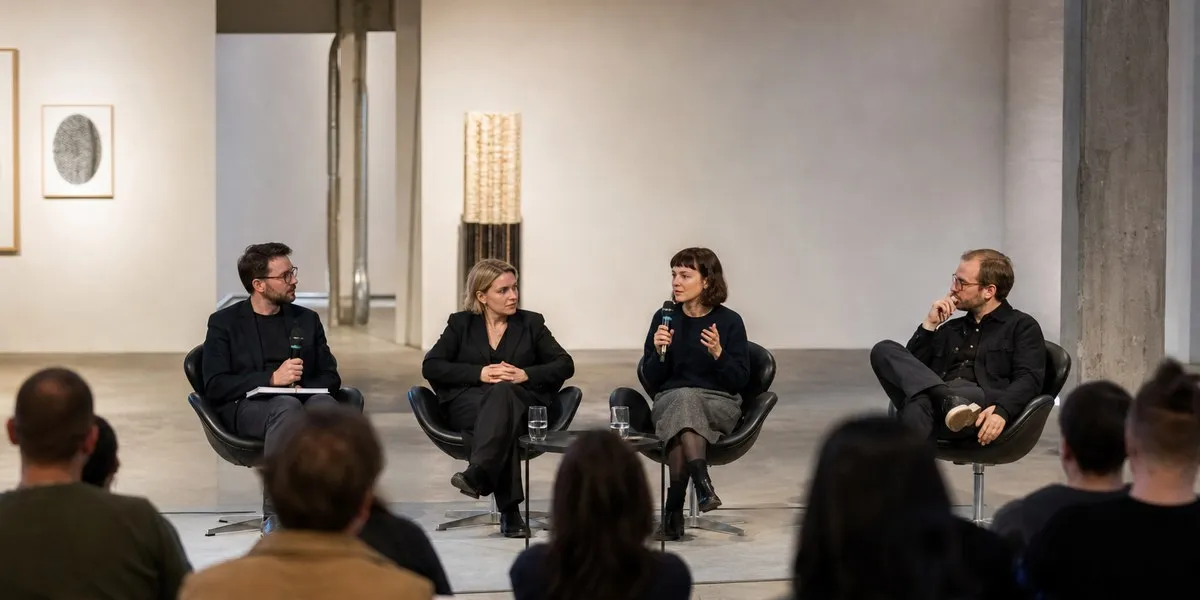
In Berlin, Germany, Deutsche Welle held a discussion on the situation of media and cultural workers in Georgia. According to the panel participants, Georgian journalists face physical, digital and psychological threats, as well as financial and legal pressure on media organizations.
The discussion at the James-Simon-Galerie was attended by Georgian media expert and press freedom advocate Nino Robakidze, musician, director, journalist and cultural organizer Marika Lapauri-Burk, as well as DW’s Riga bureau chief Yuri Resheto. Robakidze said that she does not feel safe as a citizen of her country and as a person who has worked in independent media for a long time. According to her, activity in international civil society groups has made her a target in Georgia.
Pressure on critical voices
Discussion moderator Jochen Rosenkranz said that it was difficult to find Georgians willing to speak on the panel: many refused out of concern for themselves, their friends and their families. Lapauri-Burk stated that people fear intimidation, while the authorities are becoming increasingly inventive in finding arbitrary grounds for detaining critical voices.
According to estimates by local civic and human rights organizations, between 90 and more than 100 political dissidents and protesters in Georgia are in prison or held in pretrial detention. DW also notes that after the disputed parliamentary elections in October 2024, the Georgian Dream party gained a larger parliamentary majority. A month later, the party announced the suspension of negotiations on the country’s accession to the EU until 2028, which sparked demonstrations.
More current news is available on the UA.News Telegram channel Telegram.
Impact of laws on culture
The participants discussed the consequences of “foreign agent” legislation for independent cultural institutions, festivals, arts organizations and heritage preservation projects. According to DW, many of them depend heavily on funding from the EU, European foundations and international cultural programs. The law, which was protested in 2023–2024, entered into force in June 2025. A stricter version provides for criminal liability and up to five years in prison for failure to comply with requirements to register activities as being “under foreign influence.”
Resheto cited the example of a small gallery in Gori, where protesters’ slogans were projected onto a wall during an exhibition. According to him, the city is now refusing to extend the lease for the premises, so the gallery may close. Robakidze stressed that despite protesters’ fatigue and state pressure, supporters of Georgia’s democratic future need media support.
DW’s Georgian-language service
The event also noted the launch of DW’s Georgian-language service on Instagram. Georgian became Deutsche Welle’s 33rd language. DW Director General Barbara Massing said that the service, created in cooperation with France Médias Monde and TVP World, is intended to strengthen access to free media and verified information in a region affected by disinformation campaigns.




