
The European Commissioner stated that Ukraine will not receive preferential terms for EU accession
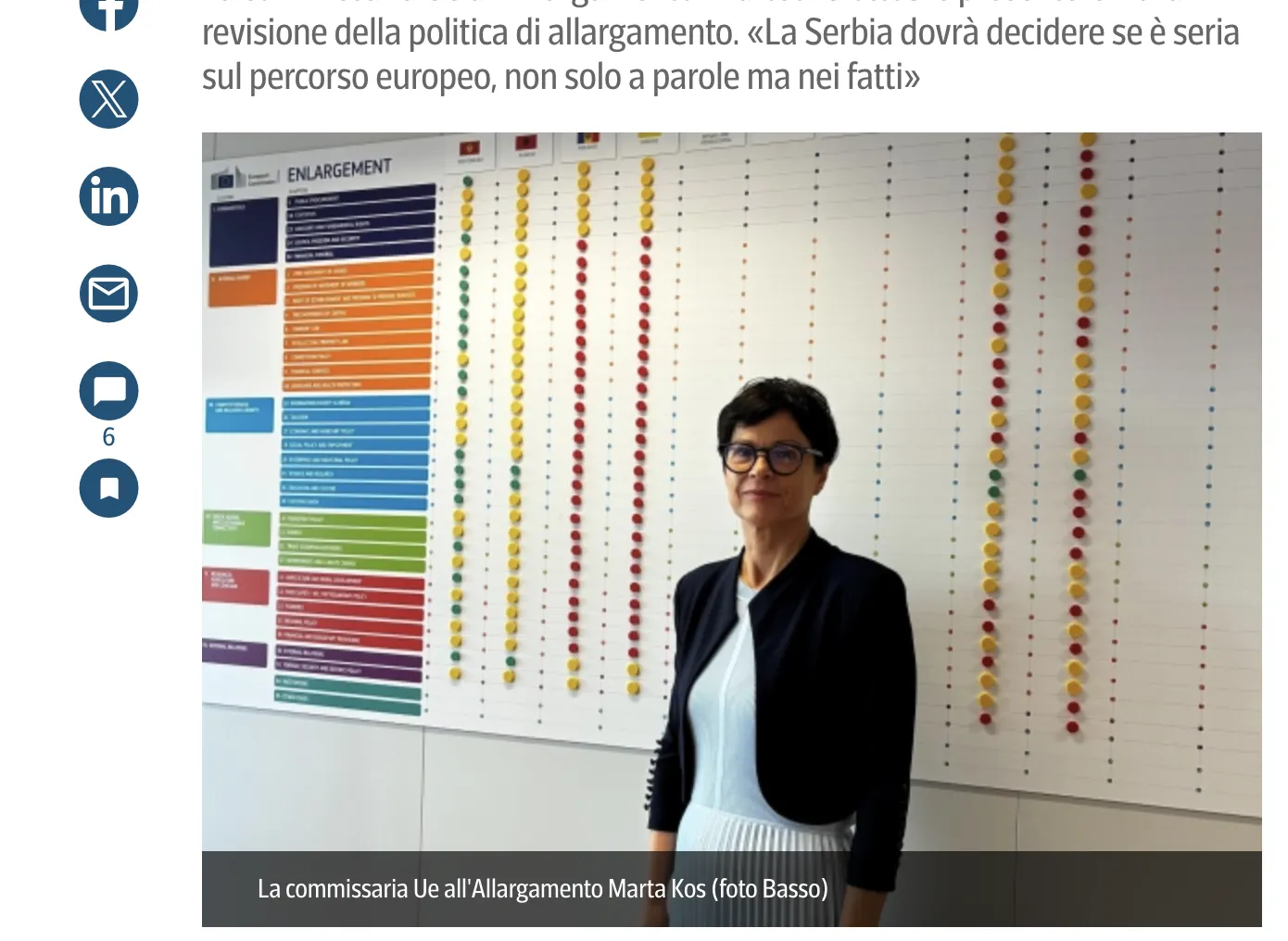
Ukraine will not receive any special privileges or preferential terms upon joining the European Union, the European Commissioner stated. He also called January 1, 2027, an unrealistic date for Ukraine’s accession to the EU.
According to the European Commissioner, the integration process is based solely on the candidate country’s merits and the implementation of necessary reforms.
“Accession is merit-based: it is clear that this date is not feasible. There are no privileges or concessions in the accession process, but we must take into account that Ukraine is fighting a war for survival, so it is also our duty to help it,” emphasized Marta Kos.
She added that the European Union hopes to open as many negotiation chapters as possible for Ukraine by the end of this year.
On Tuesday, October 6, the European Commission will present an updated review of its enlargement policy.
During the European Council meeting in mid-October, EU leaders will discuss four key issues:
- the impact of enlargement on existing member states;
- internal EU reforms to ensure more effective functioning with a larger number of members (in particular, a possible transition from unanimity to qualified majority voting in the areas of security and defense);
- safeguards to ensure that new members uphold the rule of law and democracy;
- the concept of gradual and deepened integration of candidate countries.
The European Commissioner emphasized that the model of gradual integration does not replace full membership but allows candidates to cooperate more closely with the EU as they work to meet all requirements.
It should be noted that, against the backdrop of the European Commission’s statements regarding the absence of special privileges for candidate countries, Ukrainians themselves have mixed views on the country’s readiness for accession.
Source: Corriere della Sera
As a reminder, the European Commission will allocate €130 million for drones to strengthen border control.
Bulgarian Prime Minister Rumen Radev stated that Europe should reconsider the balance between military, economic, and diplomatic tools and prioritize diplomacy in its relations with Russia. According to him, further escalation could lead to the risk of a Russian nuclear strike.
NATO Secretary General Mark Rutte stated that the North Atlantic Alliance does not see an immediate threat to its territory and regards nuclear blackmail by Russia as an attempt to divert attention from its own defeats in Ukraine.




