
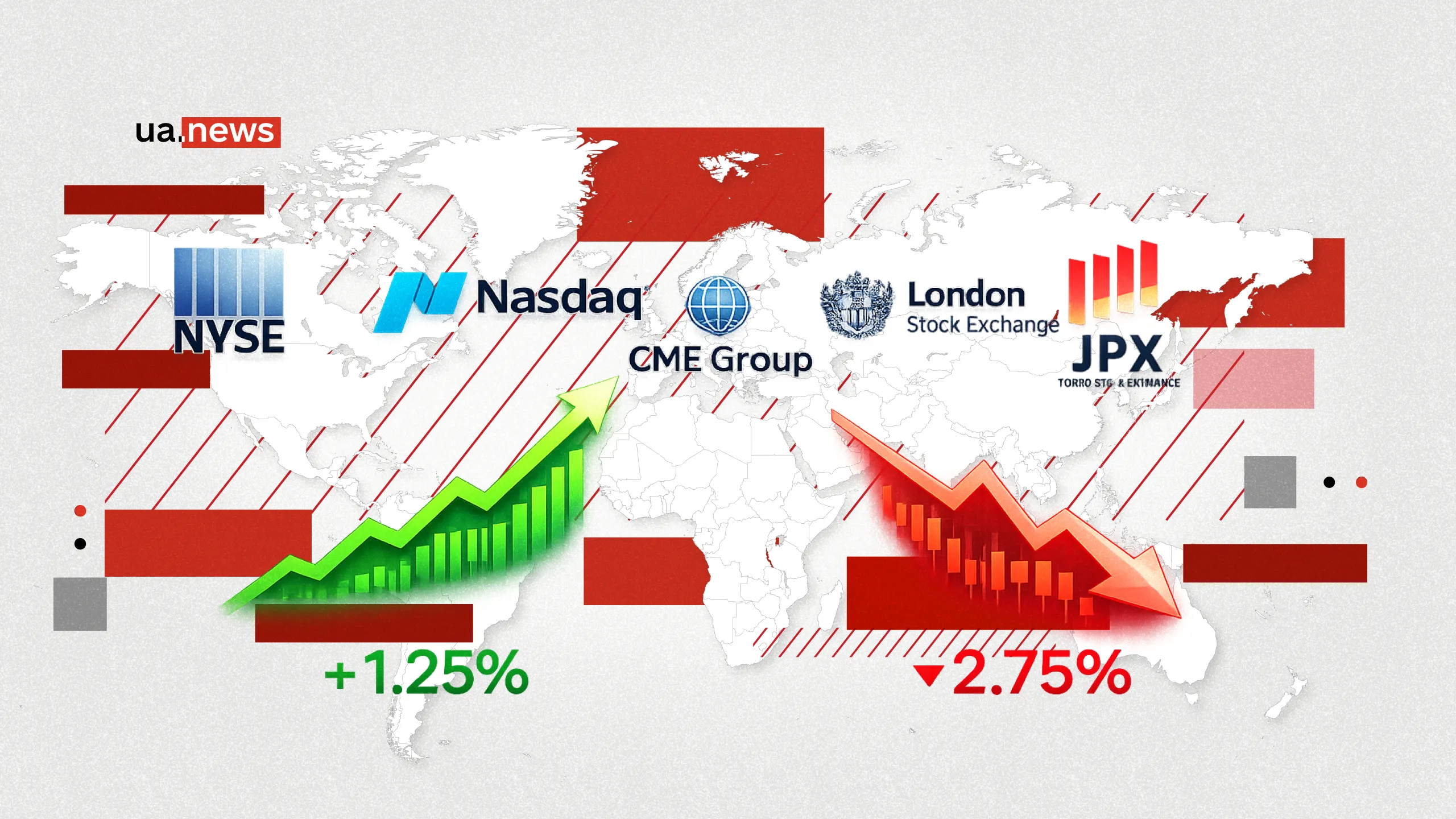
Every day, news feeds are filled with reports of yet another drop or rise in stock indices or oil futures. Astronomical figures are mentioned—hundreds of millions in losses or trillions of dollars in market capitalization vanishing in a matter of minutes. The cause is often a brief post by some leader on social media, an unexpected statement, or even just rumors. To the casual observer, not deeply immersed in economic processes, such market behavior seems completely irrational, resembling panic and hysteria rather than a measured economic process.
Particularly telling is the story that unfolded the day before, on March 23, in the oil futures market. Just 15 minutes (!) before U.S. President Donald Trump posted a message on Twitter about another round of “productive talks” with Iran, unidentified traders sold approximately 6,200 Brent and WTI oil futures contracts worth nearly $580 million. When the post appeared, the price of oil fell, and those who had sold earlier made a windfall profit. Subsequently, Tehran stated that no such talks had taken place, after which the price of “black gold” surged again.
All of this looks very suspicious, but the White House denied the use of insider information. The situation, however, still left many questions unanswered.
This case is a vivid and telling reason to examine the following questions: Why do global markets react so sharply to political signals? Is it really about real money when the news reports losses in the hundreds of millions or even billions? What mechanisms drive these instantaneous fluctuations? UA.News political analyst Mykyta Trachuk examined the issue.
Political signals as triggers: what markets fear so much
Stock markets, oil markets, metal markets, and other commodity markets are, first and foremost, tools for assessing the future. They react not so much to what is happening now as to what market participants expect to see tomorrow, or in a week or a month. That is precisely why any news that alters perceptions of the future is instantly reflected in prices.
Political statements—especially those concerning geopolitical risks such as wars in oil-producing regions—are among the most powerful triggers. In the case of Iran and oil futures, the mechanism is simple: any escalation in the Middle East traditionally leads to rising oil prices due to the threat of supply disruptions. Conversely, a signal of de-escalation instantly lowers prices.
When the U.S. president posts yet another update about supposedly “productive talks” with Tehran, the market perceives this as a reduction in risks and a chance for peace. Traders who held long positions (bets on rising prices) rush to close them to avoid losing capital. Their actions trigger a chain reaction: algorithmic systems programmed to track keywords in the news automatically place sell orders. As a result, the price falls faster than market participants can even begin to comprehend the long-term implications of the statement and, indeed, the degree of truth in the rhetoric.
However, the incident that occurred on March 23 is interesting not only for the reaction itself but also for what happened before the post was published. Sales of $580 million in the 15 minutes leading up to the official news are a classic sign that some market participants may have had access to certain information earlier than others—that is, they were acting on insider information. Proving this is difficult, but the very existence of such situations demonstrates that the market is an environment where the level of access to information determines windfall profits or massive losses.
Virtual money: what do trillion-dollar losses really mean?
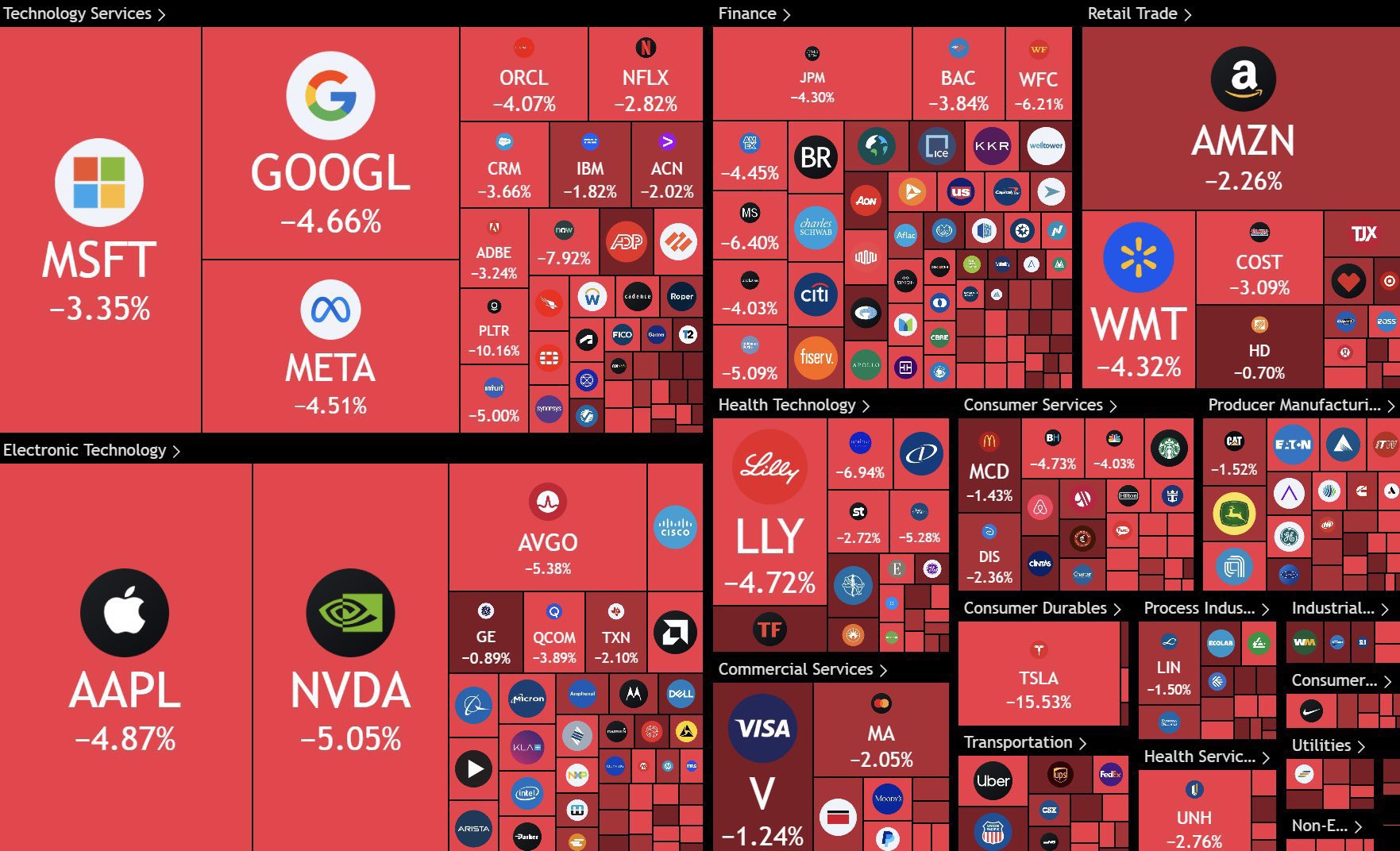
When the news reports that the stock market has lost a notional “trillion dollars” in a single day, many people interpret this as if an astronomical sum of real money had vanished somewhere: meter-high stacks of bills, dozens of zeros in bank accounts, gold bars, or other tangible assets. In reality, the mechanism is entirely different. This is about market capitalization.
This term refers to the total estimated market value of all company shares. This value, of course, is not held in the form of cash or platinum bars. It exists as the current market price of shares and the number of shares in circulation. When the share price falls, market capitalization decreases—but this does not mean that someone has lost money in the same amount that someone else has gained.
Simply put, the market resembles an auction where the value of a lot is determined by the last transaction. If the last share was sold for $100, all shares are considered to be worth $100 each. If the next trade takes place at $90, market capitalization drops by 10%. But the money paid in the last trade was real only for that specific transaction. The rest of the shareholders, who didn’t sell anything, have losses only “on paper,” which may never become real if the price recovers (which often happens).
In the case of futures, the situation is even more “virtual.” A futures contract is an agreement to buy or sell an asset in the future at a predetermined price. To enter into such a contract, you do not need to have the full contract amount: it is sufficient to post a security deposit (i.e., margin), which amounts to only a small percentage of the contract value. Therefore, a change in the futures price by a few dollars can multiply or wipe out a trader’s capital by a factor of ten, even though the actual movement of money between participants is significantly smaller than the amounts mentioned in the news.
Thus, when discussing “trillions of dollars lost,” it is more accurate to speak of a revaluation of assets rather than the disappearance of actual money supply. This does not mean that the losses are purely “on paper”: for investors forced to sell during a crash, they become very real. But for the system as a whole, this is a process of redistribution, not the physical destruction or “loss” of money.
Why are markets so vulnerable
Modern financial markets combine three factors that make them hypersensitive to any external signals.
The first factor is automation. More than half of the trading volume on major exchanges is accounted for by algorithmic systems that react to events in milliseconds. They do not analyze context, do not assess the reliability of the source, but merely execute the instructions programmed into them. If an algorithm is programmed to sell when the keywords “Iran” and “negotiations” appear in a single news report, it will do so regardless of whether the news is expected or not.
The second factor is a decline in liquidity in certain market segments. Liquidity refers to the presence of buyers and sellers willing to enter into a transaction at a fair price. When the market moves sharply in one direction, many participants temporarily exit the market, making it harder to find a counterparty. This amplifies volatility: even a relatively small trade can shift the price significantly more than in a calm market.
The third factor is simple human psychology. Despite automation, capital management decisions are made by people who are prone to herd mentality. Seeing the market fall, many rush to exit trades before the decline accelerates. This creates a rather amusing “self-fulfilling prophecy” effect: the expectation of a decline leads to panic selling, which actually causes the decline.
The story of oil futures on March 23 illustrates all three factors simultaneously. Unknown players (most likely with inside information from the White House) created the initial selling pressure. Algorithms, tracking this movement and preparing to react to the news, picked up on the trend. By the time Trump’s post was officially released, the market already had momentum that simply needed to run its course. The result is what we see today.
In summary, global financial markets are a rather complex system for the uninitiated, where prices are shaped more by expectations than by actual supply and demand. Their sensitivity to political statements, especially amid immense geopolitical tension, stems from the very nature of these markets: they attempt to assess the future, and the future in today’s world is highly uncertain. Consequently, the markets behave accordingly.
The case of oil futures and the U.S. president’s post shows that information asymmetry—that is, unequal access to information among different participants—remains a constant problem even in highly liquid markets. At the same time, it is important to understand that the astronomical sums mentioned in the news are often not real money, but rather asset revaluations that can quickly reverse as soon as the situation shifts in the opposite direction.
For the average observer, the key takeaway is that market fluctuations are the result of the interaction of a host of mechanisms: algorithmic trading, crowd psychology, liquidity, and, of course, news events. So no matter how dramatic the headlines about “trillion-dollar crashes” may be, they describe only one stage of the ongoing process of capital redistribution, in which some lose, others gain, and the actual money supply changes far less than it seems at first glance.
