
European Parliament committee chair calls on EU and South Korea to align standards — Korea Herald
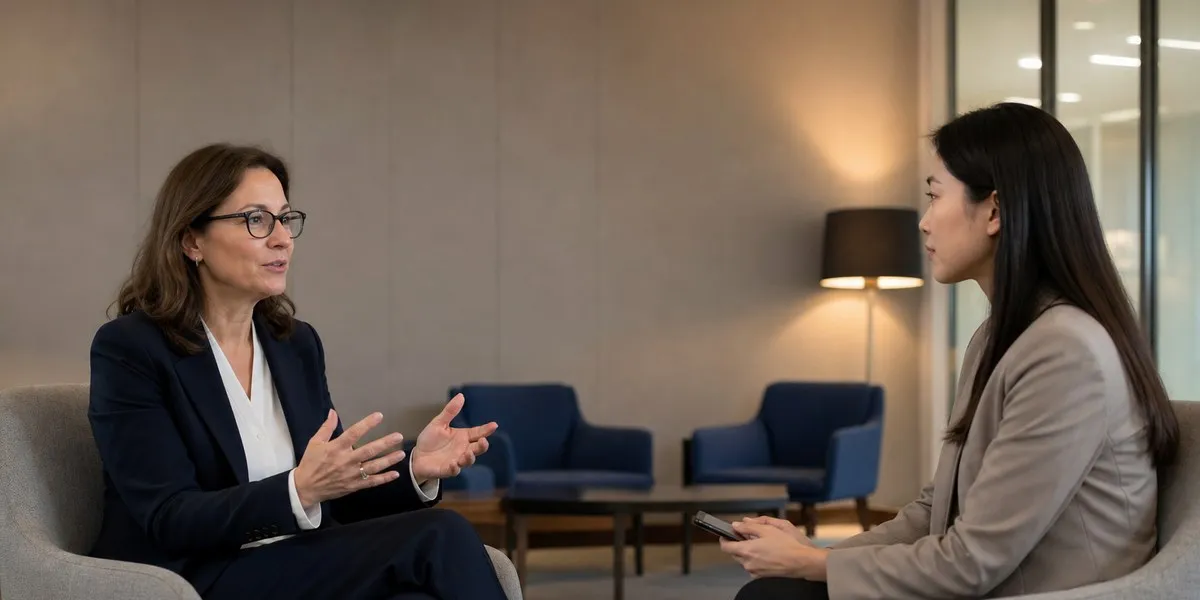
Anna Cavazzini, chair of the European Parliament Committee on the Internal Market and Consumer Protection, called on South Korea and the European Union to align regulatory standards during a visit to Seoul in order to reduce trade barriers. She said this in an interview with The Korea Herald at the EU delegation’s office in the South Korean capital.
According to Cavazzini, European companies point to obstacles related to rules for vessels involved in offshore wind projects, vehicle certification, as well as access to public procurement and support programs. European defense companies have also reported difficulties entering the South Korean market.
Barriers for both sides
Cavazzini noted that regulatory barriers affect businesses on both sides: Korean companies also face requirements in the European market. She stressed that rules must be justified, fair and non-discriminatory, as well as aligned with consumer protection and climate policy goals.
Seoul has expressed concerns about the EU’s carbon border adjustment mechanism and industrial policy, which provides advantages for European production. Separately, the Korean side raised the issue of the EU’s proposed Industrial Acceleration Act, in particular preferences for EU-based production in certain public procurement and support programs.
More current news is available on the UA.News Telegram channel Telegram.
During the trip, Cavazzini met with South Korean government representatives, with whom she discussed the proposed act and economic cooperation. According to South Korea’s Foreign Ministry, Korean officials called on the EU to ensure that its measures comply with the Free Trade Agreement between the sides and to avoid discrimination against Korean companies. The agreement has been in force since 2011, and bilateral trade in goods reached about €124.25 billion in 2025, according to the European Commission. The Foreign Ministry also reported that more than 800 Korean companies have invested in Europe.
Diversifying supplies
Cavazzini also described dependence on a limited number of large markets and suppliers as a shared challenge. Among potential areas of cooperation, she mentioned stockpiling and recycling critical minerals needed for high-tech manufacturing and clean energy.
She added that similar EU and South Korean standards, including for cosmetic products, could reduce regulatory barriers for Korean exporters and strengthen consumer trust. In Cavazzini’s view, expanding the operations of Korean companies in Europe would help them reduce dependence on several large markets.




