
How fugitive William Buckley lived among the Wathaurong for three decades
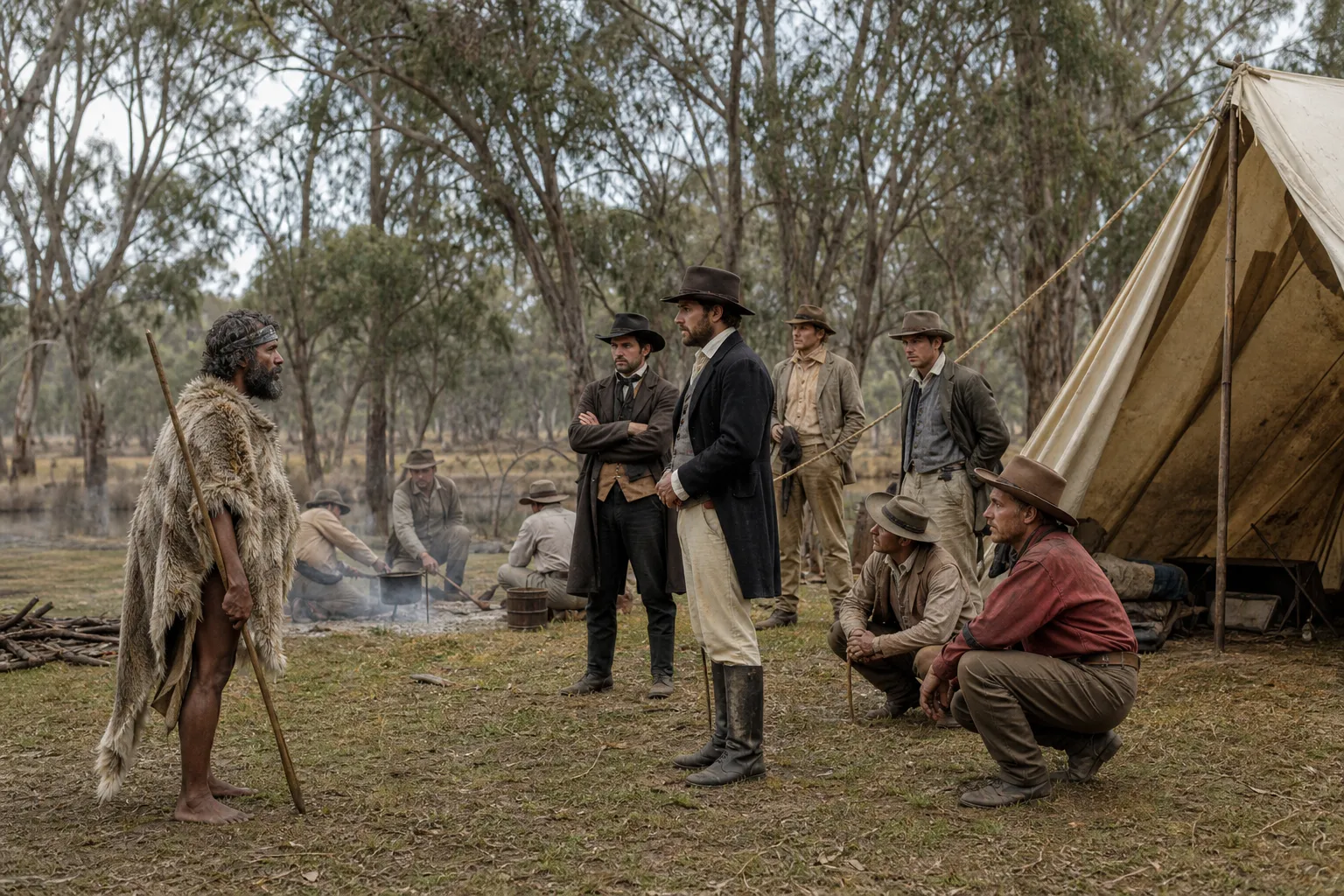
In 1835, British colonizers and their Eora guides near Djilong, now Geelong, encountered a man wearing possum-skin clothing and carrying a spear. He had almost forgotten English, but showed tattoos with the letters W. B. This is how the colonizers established that he was William Buckley — a convict who escaped from the settlement at Bullnatalong, now Sorrento, in 1804. His story is recounted by ABC News Australia.
Escape from the colonial settlement
Buckley was born in 1780 in Cheshire in northern England, worked as a bricklayer and served as a soldier. In 1803, he was convicted of burglary and sent to Australia. Buckley later claimed that his guilt consisted only of receiving stolen cloth.
At the age of 22, he travelled to Port Phillip with 300 other convicts who were sent to establish a settlement on the Bellarine Peninsula. Conditions there were difficult due to a lack of fresh water and limited areas of land suitable for farming. Buckley and several other convicts escaped, believing that Sydney was within walking distance.
The fugitives ended up on the other shore of Port Phillip Bay, eating berries and shellfish. Buckley's companions later returned to the settlement, while he decided to survive on his own.
Life with the Wathaurong
At first, Buckley refused assistance from members of the Wathaurong people. Several months later, exhausted by hunger and injured, he was rescued by two women who brought him to a camp. The Wathaurong taught him their language, hunting, fishing and how to find food.
More current news is available on the UA.News Telegram channel Telegram.
Buckley lived on the periphery of their society with a Wathaurong woman and their child. Several other people were also accepted into their family group. In memoirs written by another person based on his accounts, he recalled that he had almost completely become a dweller in the wilderness, slept on the ground and lived for years without familiar comforts.
Before Buckley's arrival, the Wathaurong had contact with whalers and seal hunters. During his life among the community, two smallpox epidemics occurred, and he also contracted the disease. Lee Boucher, co-host of the history podcast The Dead Can't Sue, believes that Buckley passed on information to the Wathaurong about the colonial force that was becoming increasingly visible in their lives.
An intermediary between two worlds
After returning to the British in 1835, Buckley said that he had heard of the Wathaurong's intentions to attack the camp of John Wedge and his settlers. He decided to surrender, hoping to prevent a conflict. After being pardoned, Buckley acted for several years as an intermediary between British colonizers arriving in the region and local Indigenous communities.
He did not return to the Wathaurong or his family. British settlers regarded him with suspicion, which complicated his attempts to reduce violence. Buckley later moved to Hobart, where he married a widow in 1840. In 1852, journalist John Morgan published the book “The Life and Adventures of William Buckley” based on his accounts.


