
Carney says Canada is modelling scenarios of a US attack — BBC News
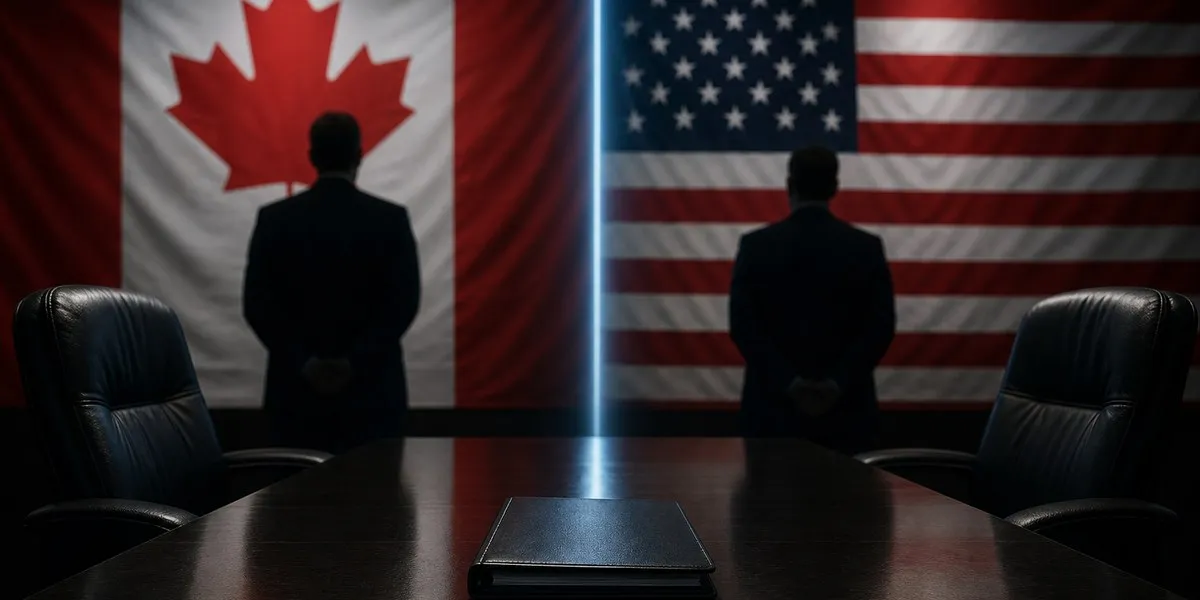
Canadian Prime Minister Mark Carney said the country is working through scenarios for an unlikely attack by the United States. He told The New York Times that, amid a rethinking of Canadian-American relations under Donald Trump’s presidency, he must consider every possibility. As BBC News reports, Carney called this risk management and stressed that the risk is low and the scenario extremely unlikely.
Reasons for concern
According to the BBC, Canada is conducting military simulations of a possible US attack amid Trump’s global tariffs and his repeated statements about wanting to make Canada the 51st state. In 2025, the US president said that the use of force against Canada was “extremely unlikely” and that he intended to continue using economic pressure to achieve political goals.
The White House told the BBC this week that Trump has done more than anyone to protect Canadians. At the same time, according to a Leger poll in January, after the United States captured Nicolás Maduro in Venezuela, more than 30% of Canadians considered a possible US invasion likely.
More current news is available on the UA.News Telegram channel Telegram.
Defence cooperation and expert assessments
Military experts interviewed by the BBC consider an invasion unlikely, including because of the close defence cooperation between the two countries. Retired Lieutenant General Christopher Coates noted that Canada and the United States are NATO members, conduct joint Arctic missions within the North American Aerospace Defense Command, NORAD, and regularly share intelligence.
In Coates’s view, in the event of hostile actions against Canada, the United States might begin not with an open armed attack but with less visible methods, including cyberwarfare. The Globe and Mail previously reported that a Canadian military model envisages the possibility of Canada’s strategic positions being rapidly overrun within a week. Under this scenario, Canadian forces could turn to guerrilla warfare because of the enemy’s numerical superiority.
National security expert Matthew Schmidt suggested that if relations shifted into armed confrontation, the United States could focus on Canadian resources, including oil and minerals, as well as removing the political leadership. At the same time, in his assessment, Washington would find it difficult to secure support for a war with Canada, since the militaries of both countries regularly train together.




