
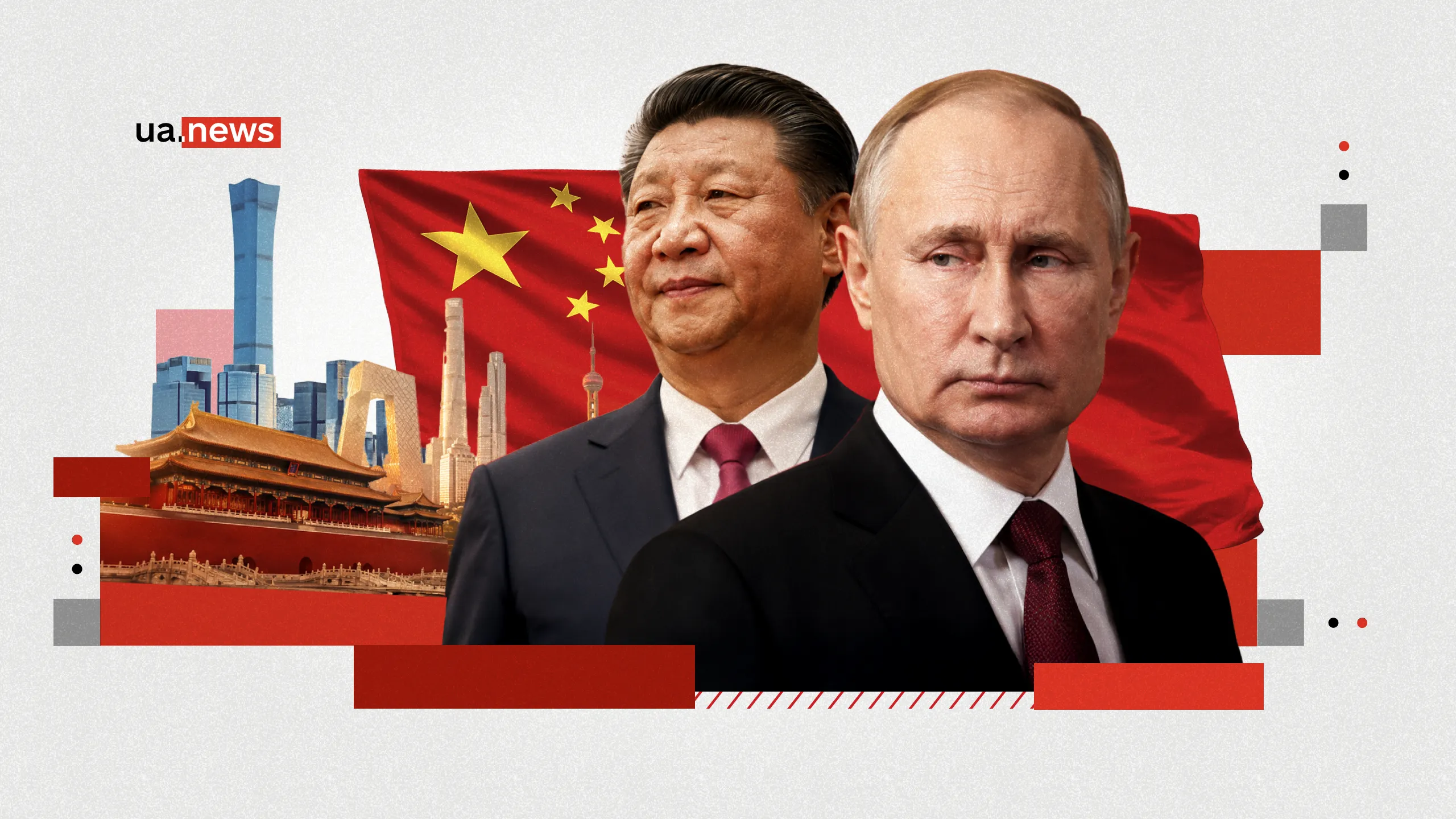
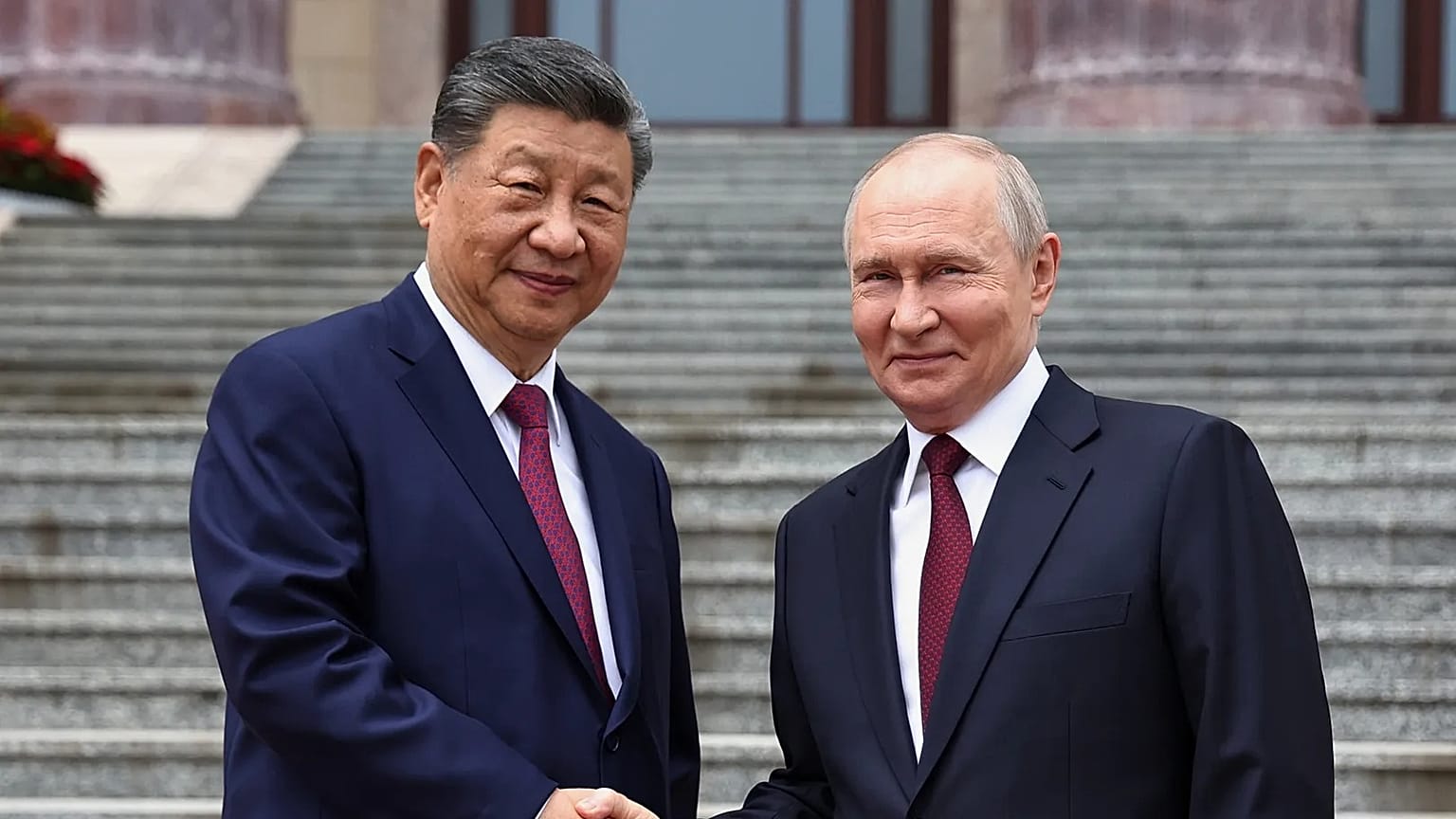
On May 20, 2026, Russian leader Vladimir Putin concluded his two-day visit to China. In Beijing, he held talks with Chinese President Xi Jinping, participated in a series of bilateral events, and signed a package of intergovernmental agreements. Formally, the main reason for the trip was the 25th anniversary of the Treaty on Good-Neighborliness, Friendship, and Cooperation between Russia and China, signed back in 2001. But the actual significance of this visit is much broader.
It is interesting to note that Putin’s trip took place just five days after Donald Trump’s high-profile visit to China. And although the Russian side had announced the talks in Beijing back in the winter, the timing itself became a significant symbol. In a single week, Xi Jinping received two world leaders who today define the logic of global confrontation—the U.S.-China and Russia-West axes.
As a result, China has found itself in the role of a state around which a new system of international balances is effectively being built. Now everyone is heading not to Washington, Brussels, or even Moscow, but specifically to Beijing. For the Kremlin, this visit was primarily an attempt to strengthen its economic rear, ensure continued support from China amid war and sanctions, and demonstrate to the world that Russia is not internationally isolated.
However, behind the outward display of “strategic friendship,” another reality is becoming increasingly apparent: relations between Moscow and Beijing are growing ever more asymmetrical, and China itself is increasingly exploiting Russia’s weakness to serve its own geopolitical interests.
So what can ultimately be said about this visit? UA.News political analyst Mykyta Trachuk, together with experts, examined the issue.
China as the Main Diplomatic Hub of Spring 2026
May 2026 was an exceptionally busy month for China in diplomatic terms. Beijing effectively became the main stage of world politics. First, Trump visited China, holding talks with Xi Jinping on the trade dispute, Taiwan, technology restrictions, and global security. We covered this visit in detail in a separate analytical piece. Just a few days later, Putin arrived in China. The Chinese leadership has demonstrated that China is currently capable of maintaining simultaneous dialogue with both Russia and the United States. This aligns with Xi Jinping’s long-term strategy to gradually transform China into a key hub of global diplomacy and an alternative pole of power in the world.
For Beijing, the current international situation presents unique opportunities. The war in Ukraine is exhausting Russia and the West, the conflict between the U.S. and China remains primarily economic and technological, and Europe is experiencing a crisis of security and competitiveness. Under these conditions, China is trying to act as pragmatically as possible: avoiding direct military conflict while simultaneously strengthening its influence over all key centers of power.
That is precisely why Putin’s visit to China was important not only for Moscow but also for Beijing itself. China is demonstrating that it is capable of playing the game on several fronts simultaneously, without severing ties with Russia, the U.S., or Europe.
What Putin Really Wanted
For the Kremlin, this visit had primarily practical and symbolic significance. In the fifth year of the major war, Russia remains under unprecedented sanctions pressure. Formally, the Russian economy is showing growth (+1.8% GDP in March), and official statistics are brimming with optimism. But structural problems are piling up: a technology deficit, dependence on imports, a shortage of skilled workers, inflation, the gradual depletion of reserves, and so on.
Under these conditions, China has become a critically important partner for Russia. China’s share of Russia’s foreign trade continues to grow, and the total trade volume between the two countries has already exceeded $200 billion. From China, Russia receives industrial equipment, electronics, automobiles, dual-use components, microchips, and other goods to which access via the West is virtually closed. However, this cooperation is becoming increasingly unequal. Whereas the Kremlin previously sought to frame the relationship as an equal “strategic partnership,” today Russia increasingly resembles a raw materials appendage to the Chinese economy. China buys Russian oil and gas at huge discounts, dictates its own terms in major energy projects, and is gradually pushing individual Russian producers out of even the Russian domestic market.
The economy was the central topic of the talks between Putin and Xi Jinping. Particular attention was paid to energy issues. Moscow continues to push for the construction of the “Power of Siberia-2” gas pipeline, which is intended to compensate for the loss of the European market. But China is in no hurry to agree to Russian terms. Beijing understands that the Kremlin effectively has no alternative, and therefore seeks to secure the most favorable prices and long-term concessions.
The Kremlin is also interested in expanding financial cooperation. Against the backdrop of Western sanctions, Russia is increasingly shifting to the yuan in foreign trade. But this creates a new dependency—this time on the Chinese financial system.
The War in Ukraine and China’s Balance
The Ukraine issue was undoubtedly one of the key topics during the talks, although the parties did not place it at the center of the official agenda. For the Kremlin, China is today its most important foreign policy partner in the context of the war. It is not a military ally in the classical sense (like North Korea), but it is nonetheless a critically important economic base.
China’s position on the war remains complex and multifaceted. On the one hand, Beijing has not joined sanctions against Russia, continues large-scale trade with the Russian Federation, and regularly criticizes the West. On the other hand, China avoids openly supporting Moscow militarily and does not want to fall under secondary sanctions from the U.S. and the EU. For China, the war in Ukraine is both a problem and an opportunity. A problem—because global instability harms the world economy and Chinese exports. An opportunity—because the conflict is exhausting Russia and the West, strengthening China’s relative position.
In the joint statement by Russia and China following the meeting, there is an entire paragraph dedicated to Ukraine.
“The parties are convinced of the need to fully eliminate the root causes of the Ukrainian crisis… in order to ensure mutual security and lay the foundations for lasting peace… The parties support all efforts that contribute to the establishment of long-term and lasting peace, and advocate continuing the search for a solution through dialogue and negotiations. The Russian side positively assesses the objective and impartial position of the Chinese side regarding… the situation in Ukraine and welcomes China’s desire to play a constructive role in resolving the Ukrainian crisis through political and diplomatic means,” the document states.
Thus, Beijing is trying to maintain a balance. It has no interest in Russia’s defeat, as this would mean a strategic strengthening of the West. But China also has no interest in Russia’s complete annexation of Ukraine or in a major escalation of the war, which could ultimately destabilize the global economy.
It was also telling that, just on the eve of the visit, a Russian attack damaged a Chinese vessel near the Ukrainian coast. This incident should serve as an unpleasant reminder for Beijing: the war could directly affect Chinese interests as well. For China, this is yet another argument in favor of the need to control the level of escalation—but, unfortunately, not to pressure Putin to end the war.
An Alliance Without Trust: The Hidden Tensions Between Moscow and Beijing
Despite their ostentatious friendship, there are contradictions between Russia and China. They are rarely voiced publicly, but they are increasingly influencing the nature of the relationship. For instance, China clearly does not want to take on the political risks of Russia’s confrontation with the West. For Beijing, economic growth and domestic stability remain the top priorities. Russia, however, is increasingly operating within the logic of a mobilization economy and geopolitical confrontation.
There is also the issue of long-term strategic balance. Moscow fears China’s excessive strengthening in Siberia, Central Asia, and the Arctic. Yet Russia’s current weakness significantly limits the Kremlin’s room for maneuver. In fact, Moscow is forced to agree to increasingly less favorable terms of cooperation.
Beijing is also closely monitoring the domestic situation in Russia. Chinese political culture is extremely pragmatic. In China, they fully understand that the current model of the Russian economy relies heavily on military spending and raw material exports. And although Russia remains an important partner for China, Beijing is unlikely to view it as an equal ally in the long term. Therefore, the current Russian-Chinese alliance is more of an alliance of convenience than one based on deep mutual trust. Moscow needs China far more than China needs Moscow, and this is what determines the real balance of power between the two countries.

Expert Opinions
Political analyst Maksym Honcharenko considers Putin’s visit to China quite revealing. In fact, we are witnessing a shift in global polarity and the priorities of global players, the expert says, and this is interesting from several angles.
“First and foremost is the timing. The visit was planned in advance, but the Chinese side decided to postpone it because of Trump’s visit. In high-level diplomacy, this can almost always be interpreted as a signal. Yes, Russia remains an important factor and tool for China, but the meeting with the American leader takes priority. It is Xi’s meeting with Trump that will set the tone for the conversation with Putin, not the other way around. For the Russian side, this is a painful reality that runs counter to the domestic political mythology that for many decades positioned Russia as an equal superpower. That is no longer the case. This sequence was chosen because Trump’s visit was intended to coordinate the states’ joint position on global security. The psychology of Chinese policy leans toward stability and clear rules of the game. China may allow others to wage war and engage in conflict as long as it does not destroy the system itself and as long as all “junior partners” remain under control. Russia acts as such a partner: it is a useful tool for countering the West, a profitable supplier of cheap resources—but also a potential risk factor that must be contained,” notes Goncharenko.
The expert notes: China traditionally does not act as a direct mediator, but is increasingly confidently assuming the role of a “center of gravity” in global diplomacy. And at the meeting with the American leader, among other global issues, the question of Ukraine was also raised. An excessive escalation of the conflict is not in China’s interest, while for the American leader, ending the war during his term is a matter of principle.
“At the meeting between Putin and Xi, we should expect general public statements: about the economy, stability, and restrained remarks about peace in the region. The bulk of the press releases will focus on issues of resources and trade; they may also touch on the topic of ‘Power of Siberia-2.’ But behind the scenes, we should expect demands for a gradual de-escalation of the conflict. China is cautious in its wording and will not abandon its traditional “above the fray” stance, but Russia’s dependence on the Chinese market—amid isolation from the West and the economic and social problems exposed by the war—will force the Kremlin to heed even the slightest hints. “Putin’s visit to China is a parable of how a state, due to unrealistic ambitions and a desire to establish its own hegemony over a neighbor, has itself fallen under foreign influence,” summarized Maksym Honcharenko.
Political analyst and director of the Ukrainian Institute of Politics Ruslan Bortnik points out that there is currently little information available and we must wait for the negotiations to continue, as Ukraine is not the key topic. Although it is not the third or fifth topic—but rather, roughly speaking, the second—it is still not the main one. And it is precisely in the final stages of the visit that the issue of Ukraine will be discussed.
“Based on current statements, we can conclude that China and Russia will continue to align their geopolitical goals in opposition to the global order led by the United States. They continue to develop energy and economic cooperation and pursue mutual social integration: this includes visa-free regimes and the opportunity for Putin to address the Chinese people on major Chinese television channels, among other things. Further socio-economic, political, and geopolitical alignment between Russia and China is taking place. At the same time, China does not want to appear as Russia’s ally, as it does not wish to bear the full brunt of anti-Russian sanctions or be held accountable for Russia’s actions, including in Ukraine—but this is a tactical consideration. Strategically, however, the countries continue to grow closer. But what is most interesting is the depth of China’s involvement in the Russian economy and Russia’s industrial modernization. All these issues are currently being resolved behind the scenes and will directly influence the Ukraine-Russia war.
If we look at the joint statement mentioning Ukraine, what stands out is the focus specifically on Russia’s assessment of events. That is, the main problem cited is not Russian aggression or the continuation of the war, but “addressing the root causes of the crisis.” Let me remind you that Russia considers these causes to be NATO expansion, the militarization of Ukraine, the illegal change of power (from Russia’s perspective) on the Maidan, and other factors. These are the clear results of the negotiations that we have at the moment,” noted Ruslan Bortnik.


