
Zahra Joya’s memoir about women’s resistance in Afghanistan — Dawn
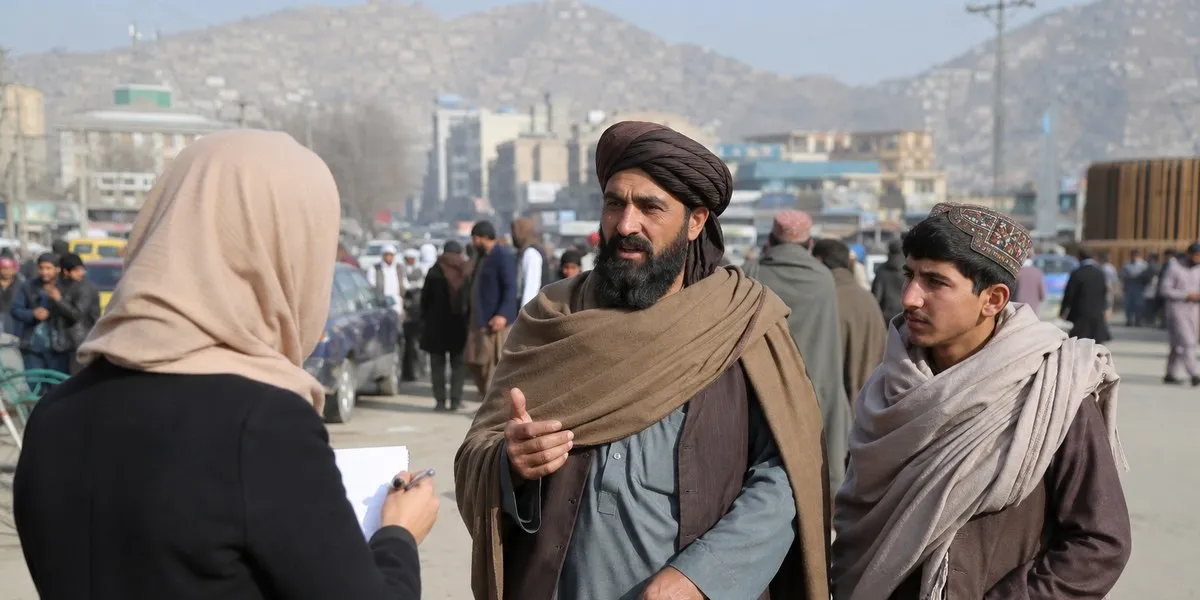
In Afghanistan, journalist Zahra Joya describes the lives of women under Taliban rule, media work and forced emigration in her memoir The Vanishing Girl of Kabul, written with British-American journalist Amy Ferris-Rotman. As Dawn notes, the book combines Joya’s personal story with journalistic investigations into cases of violence against and disappearances of women after the Taliban returned to power in 2021.
Education under another name
During the Taliban’s first rule in the 1990s, Joya’s family allowed her to live as a “bacha posh” — a girl dressed and raised as a boy. She became Mohammed in order to attend school, as education was available to boys but forbidden to girls.
Later, Joya returned to studying under her own name. After the fall of the first Taliban regime and the US-led intervention, she received a university education, becoming the first woman in her family to attend university. Joya later became a journalist and reported on corruption and violations of women’s rights.
More current news is available on the UA.News Telegram channel Telegram.
The work of Rukhshana Media
Joya’s acquaintance with the Sahar Speaks initiative, founded by Ferris-Rotman, later led to the creation of Rukhshana Media — a women-led organization that covers the stories of Afghan women and girls. After the Taliban seized power, its work became a way to document cases that, according to the review, the authorities sought to conceal.
The book mentions dozens of cases of killings or disappearances of women documented by Joya and her colleagues. Among them is teacher Khatira, who was found strangled with her own scarf; the Taliban explained her death as an armed robbery. It also describes the killings of two teenage girls in Mazar-i-Sharif and the case of 29-year-old economics lecturer and activist Frozan Safi, who was identified in a morgue by her clothing.
Forced departure
After the Taliban returned, Joya went into hiding and later left for London with her family. They initially lived in a hotel and then settled in North London. According to the author, the family arrived with one shared backpack and diapers and gradually managed to establish their daily life.


