
German state ministers scrap unanimity rule — The Local Germany
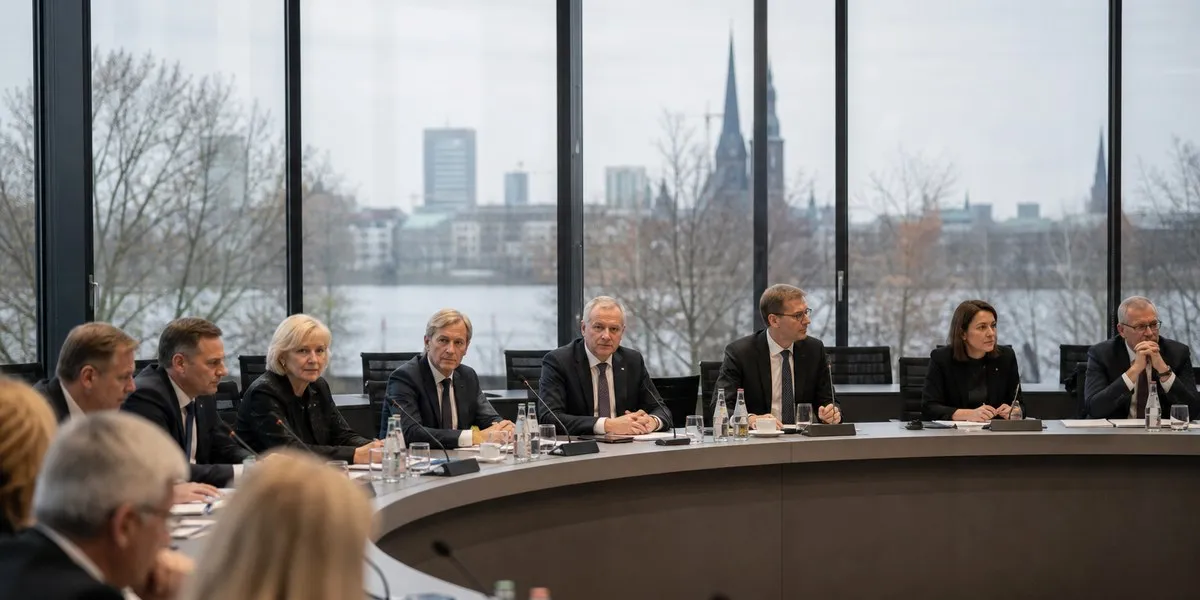
Interior ministers of Germany’s federal states have abandoned the long-standing practice of adopting decisions at the Conference of Interior Ministers only by unanimous consent. In the future, at least 13 out of 16 votes will be sufficient to approve resolutions, The Local Germany reports.
New voting procedure
The change was approved through a written decision. Previously, there was an unwritten agreement under which a resolution could be adopted if none of the federal states raised a formal objection. Abstentions were permitted, but a single vote against could block a decision.
The Conference of Interior Ministers of Germany’s federal states was established in 1954 to coordinate cooperation in security and law enforcement. It usually meets twice a year, in spring and autumn, and holds extraordinary meetings when necessary.
More current news is available on the UA.News Telegram channel Telegram.
Concerns over AfD participation
According to German media, the procedural change is linked to the political situation in Saxony-Anhalt, where the Alternative for Germany (AfD) party won 43.8% of the vote in state elections in September. Although the party did not secure an absolute majority, its leader, Ulrich Siegmund, said he aims to become minister-president in December.
If the AfD joins or leads the future state government and gains control of the state Interior Ministry, a party representative will be able to participate in the conference. Under the previous rule, such a representative could have blocked joint decisions by withholding consent.
Security officials and politicians have also expressed concern over the AfD’s plans for the state Office for the Protection of the Constitution in Saxony-Anhalt. Before the election, party representatives spoke about reforming the service and raised the possibility of abolishing it.




