
Oil Prices Fall Amid Expectations of Talks Between Iran and Qatar — Reuters
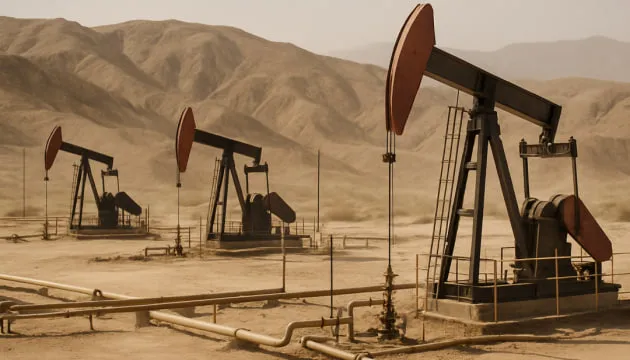
On Thursday, global oil prices continued to fall amid expectations that the Strait of Hormuz might reopen following talks between Iran and Qatar.
Investors hope that the agreements will help reduce oil supply disruptions caused by the war in the Middle East, which is putting additional pressure on prices.
Brent crude futures fell by 41 cents (0.5%) to $87.43 per barrel at 03:30 GMT (05:30 Kyiv time), continuing their decline for the fourth consecutive day.
West Texas Intermediate (WTI) crude oil futures fell by 37 cents (0.5%) to $81.86, continuing their decline for the fifth consecutive day.
Iran and Oman are working to finalize the details of an agreement on control of the Strait of Hormuz, a senior Iranian source told Reuters on Wednesday. This came after the Islamic Revolutionary Guard Corps announced that the two countries had agreed on the terms for joint use of this waterway, which connects major oil producers in the Persian Gulf with export markets, as well as on the distribution of revenues from it.
Data from vessel-tracking systems showed that after Iran took measures to block the Strait of Hormuz in response to the U.S.-Israel war, oil shipments fell to about a quarter of their pre-war levels.
“Crude oil prices have fallen slightly, as the prospects for restoring the passage through the Strait of Hormuz have improved amid ongoing negotiations,” noted Daniel Gaines, senior commodities strategist at ANZ Bank, in an analytical report on Thursday.
At the same time, he added that “concerns about a shortage in the oil market persist.”
The Prime Minister of Qatar will travel to Iran on Thursday to resume diplomatic talks aimed at ending the conflict, which has been ongoing for nearly six months.
The U.S. has suspended its attacks on Iran for about a month and is seeking to exert greater economic pressure on Tehran, which has heightened investors’ expectations that supply disruptions in the Persian Gulf will ease.
However, the countries’ positions on demands for a ceasefire remain far apart, and Iran is striking ships in the Persian Gulf and the Strait to assert its control over this waterway.
Iranian officials have also stated that the strait will not be reopened until the U.S. complies with the terms of a temporary ceasefire agreement that was reached in June but was subsequently terminated.
“Iran’s nuclear program remains at the heart of the conflict, and it is unlikely to be resolved quickly... Iran also recognizes the importance of its geographical location and the leverage provided by the Strait of Hormuz, so the risk of prolonged uncertainty remains,” said Priyanka Sachdeva, head of market analysis at Phillip Nova.
She noted that as long as supply risks persist, oil prices may continue to reflect a certain “war premium.”
Gaines also pointed to the impact of the war in the Middle East and Russia’s war against Ukraine on the diesel fuel market. The conflict in the Middle East has damaged oil refineries, while Ukraine has launched strikes against several Russian refineries, leading to a reduction in exports from a country that was previously one of the world’s leading suppliers of diesel fuel.
The decline in global diesel production is reflected in inventory data. On Wednesday, the U.S. Energy Information Administration reported that distillate stocks, including diesel fuel and heating oil, fell by 2.2 million barrels to 103.4 million barrels for the week ending August 21.
Hines noted that this is the lowest level of distillate inventories ever recorded for this time of year.
This was reported by Reuters.
Iran’s attack forced Qatar to curb gas production, according to Bloomberg.
On July 9, Iran continued to launch strikes against Persian Gulf countries in response to recent U.S. attacks. There are reports of missiles and drones launched toward Jordan, Kuwait, Bahrain, and Qatar, though most of the aerial targets were intercepted.
On July 9, oil tanker traffic through the Strait of Hormuz came to a near standstill. This was caused by new U.S. strikes against Iran, Tehran’s response, and a sharp increase in risks to shipping in the region.
On Thursday, July 9, Iran stated that it had fired ten ballistic missiles at a U.S. military base in Jordan. At the same time, Jordanian authorities reported that all missiles were intercepted and that there were no reports of damage or casualties.




