
The water level in the Po River has dropped to historically low levels
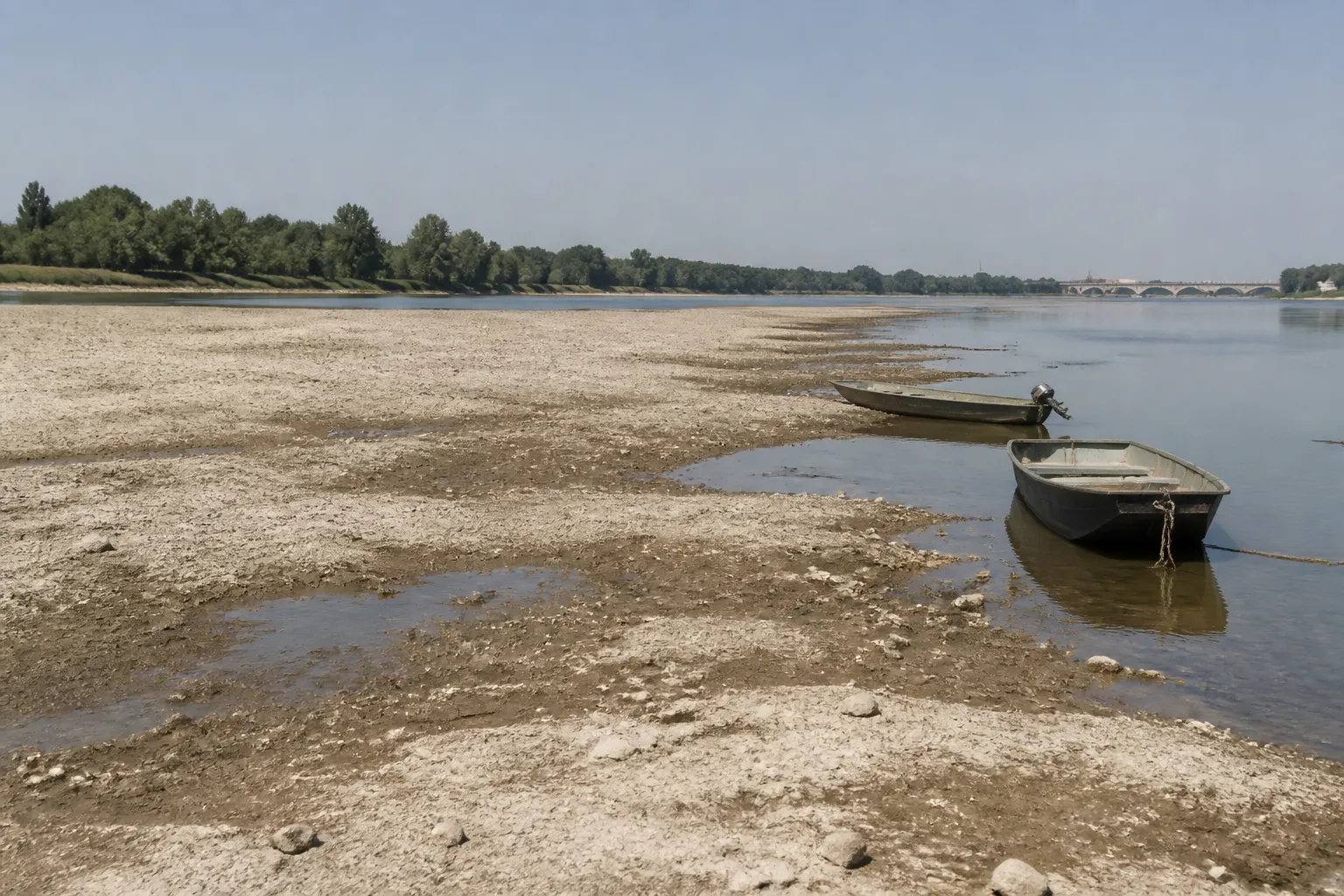
Water levels in Italy’s Po River have dropped to historically low levels amid the fourth heat wave of the summer. Near Pavia, large sections of the riverbed have been exposed, and the drought threatens water supplies and agriculture in northern Italy, according to Euronews.
At the confluence of the Po and the Ticino rivers, boats are stuck in shallow, muddy water, surrounded by sand, algae, and exposed gravel shoals. The Po River Basin Authority stated that water flow is significantly below seasonal averages. At several monitoring stations, water levels are approaching or reaching record lows recorded during the severe drought of 2022.
The Po is a key source of water for the country’s northern agricultural regions, particularly the food-producing area around Parma, where fruit, vegetable, and rice crops depend on its water. The ANSA news agency reported that water is being delivered by tanker trucks to more than 100 municipalities in Piedmont and Lombardy.
For more breaking news, follow the UA.News Telegram channel.
Near Pavia, the river has narrowed to a shallow channel, making navigation difficult for pleasure boats and rowing clubs. In the rice-growing region of Lomellina, officials warned that without significant rainfall, the situation could worsen, and farmers will have to rely increasingly on groundwater and emergency measures.
Further downstream, near Parma, tributaries and irrigation canals—which support intensive fruit and vegetable cultivation—are also drying up. Farmers report that water supply restrictions are already affecting irrigation schedules. The river basin authority has identified the area downstream of Piacenza as particularly vulnerable, where falling water levels are exposing tree trunks and other debris.
In Turin, the Po has turned into a slow-moving channel covered with algae. City services are using excavators on barges to clear dense growths of invasive aquatic plants near the city center. According to regional data, water flow in Turin has more than halved since June, and at the monitoring station near Sant’Antonio Island downstream, it has at times dropped to about a quarter of its usual level.


