
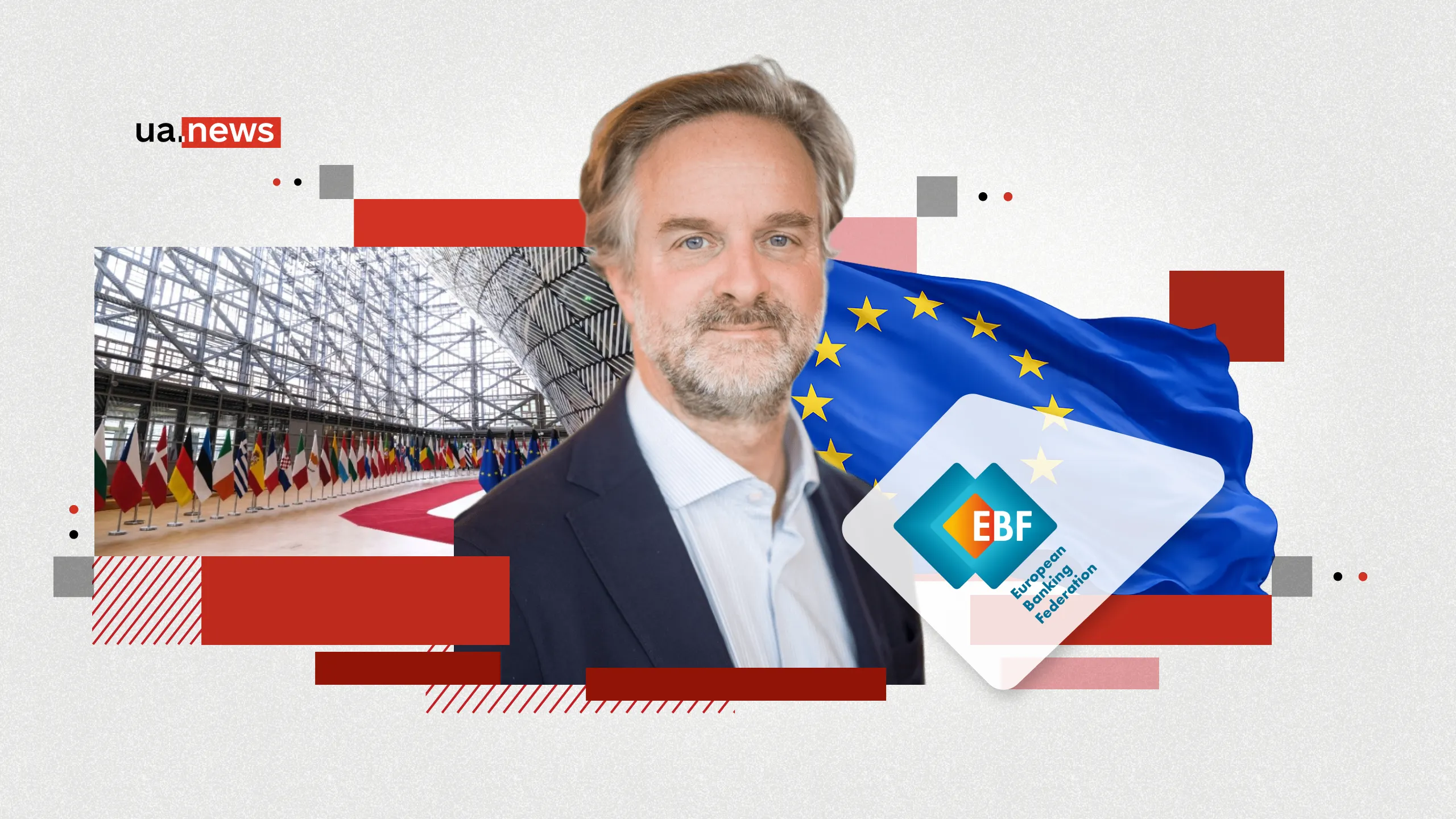
Sébastien de Brouwer is Deputy CEO at the European Banking Federation (EBF). As part of his work, Sébastien de Brouwer is also a member of the Board of the European Payments Council (EPC) and a member of various expert groups at EU level.
How is the war in the Middle East increasing risks for the eurozone economy, and how will the EU banking system respond to them? Why is competitiveness the main challenge for European banks? And what lessons in resilience in the face of war has Ukraine’s banking system demonstrated? In an exclusive interview with Sebastian de Brouwer for UA.News.
On the new risks posed by the energy and economic crisis
The European banking sector is responding in three main ways.
First, banks are treating the renewed Middle East shock primarily as a macro-financial and energy-price shock, rather than as a classic banking-sector crisis. The immediate channels are higher oil and gas prices, weaker confidence, pressure on some corporate sectors, and renewed inflation uncertainty. In practice, that means closer monitoring of vulnerable borrowers, tighter scrutiny of liquidity and collateral, and more selective credit underwriting in sectors most exposed to transport, trade disruption and energy costs. The broader European policy response has also focused on affordability, competitiveness and security of supply, with the Commission stressing that the conflict has materially raised the EU fossil-fuel import bill and energy-price pressure.
Second, banks are trying to remain part of the solution to the real economy. They are expected to keep financing households and firms, but in a more risk-sensitive environment. This is why the issue for banks is not only “higher prices”, but also the cumulative burden of geopolitical fragmentation, weaker growth and still-heavy compliance and reporting obligations. The European Commission’s current work on the competitiveness of the EU banking sector reflects that wider context: the question is how banks can continue financing Europe effectively while remaining globally competitive.
As for the ECB, its reaction has been explicit. In March 2026, the ECB built the Middle East war directly into its macro projections: higher energy prices, higher inflation, and lower growth. The ECB’s baseline now assumes headline inflation of 2.6% in 2026 and euro area growth of 0.9% in 2026, with the conflict in the Middle East cited as a key reason for the upward revision in inflation and downward revision in growth. The ECB has therefore not treated this as a temporary nuisance, but as a genuine macroeconomic risk with implications for price stability and resilience.
From a supervisory point of view, the ECB is also increasingly framing geopolitical risk as a structural driver of bank risk, not an exceptional event. That matters because it pushes supervisors to assess institution-specific geopolitical exposures, cyber vulnerabilities and second-round effects more systematically.
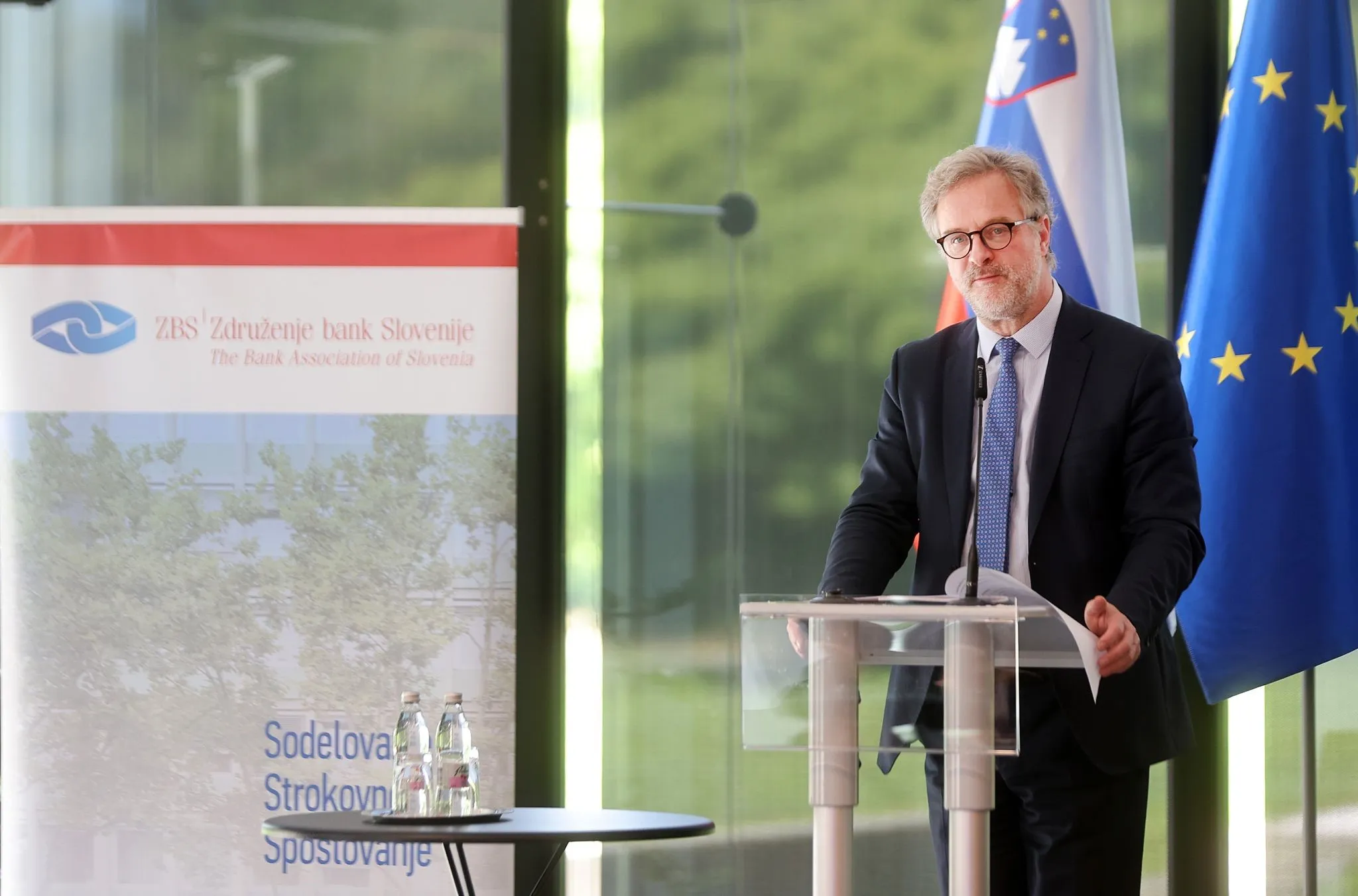
The challenges and opportunities facing the ECB and the EU financial sector
The main challenge is clearly competitiveness. European banks remain resilient, but they operate in an environment that is often more fragmented, more complex and more burdensome than that of some major international peers. That is why the debate is no longer just about safety and soundness in isolation, but about whether the regulatory and supervisory framework allows banks to finance Europe’s priorities at sufficient scale and speed. The Commission itself has now launched a targeted consultation precisely on the competitiveness of the EU banking sector, including simplification, effectiveness of the framework, and how to deepen the single market and banking union.
A second major challenge is the need to build a genuine level playing field, both inside the EU and globally. Inside the Union, fragmentation still matters: differences in supervisory practice, reporting layers, and market structures still reduce scale benefits. Globally, European banks compare themselves not only with each other, but with US and UK competitors that may face a different prudential and market environment. The ECB has itself supported simplification principles that preserve resilience while improving harmonisation, effectiveness and financial integration.
A third challenge is how to make the Savings and Investments Union real. Europe needs much more private capital to finance strategic priorities, and the Commission explicitly links SIU to the need for hundreds of billions of additional annual investment. For banks, this is both a challenge and an opportunity: challenge, because Europe’s financial ecosystem remains incomplete; opportunity, because banks can play a central role in channelling savings into productive investment, especially when capital markets, securitisation, advisory capacity, and retail investment frameworks work better together.
Then there is digitalisation and innovation. This includes AI, tokenisation, stablecoins, faster payments, and the digital euro. Here, the opportunity is very significant: lower costs, better client experience, programmable finance, more efficient collateral and settlement, and stronger European strategic autonomy in payments. But innovation also raises governance, cyber, interoperability and financial-stability questions. The ECB has moved the digital euro project into its next phase, while also setting out a broader payments strategy and a growing interest in tokenised financial markets and settlement in central bank money. Meanwhile, the Commission explicitly treats digitalisation, tokenisation and the emergence of stablecoins as relevant factors in its banking competitiveness work.
Finally, cybersecurity and operational resilience are now front-rank strategic issues. Geopolitical risk, outsourcing risk, concentration risk in ICT providers and the increasing sophistication of attacks mean cyber resilience has become inseparable from prudential resilience. The EBA and ECB both treat cyber and ICT risks as elevated and increasingly structural.

On the need to simplify the regulation of the EU banking sector
In my view, the right question is whether Europe can simplify, optimize and, perhaps, review part of the existing framework, whilst, of course, maintaining stability and resilience.
Thus, we are seeking not so much deregulation but simplification, streamlining and recalibration, so that banks, whilst remaining safe, can properly fulfil their role in financing the economy. This is precisely why the issue of the banking sector’s competitiveness is truly key. Not only for us, but also at the level of the European Commission.
The Commission’s 2026 banking competitiveness consultation explicitly asks how to improve the effectiveness of the framework and deepen the single market; the ECB, for its part, has supported simplification based on maintaining prudential resilience, strengthening harmonisation and avoiding unnecessary complexity.
In July 2026, the Commission will present a report on the competitiveness of the European banking sector. Firstly, this will be a diagnostic assessment, as well as an action plan, which we hope will be followed by a series of legislative initiatives in the coming months.
At the same time, we are not arguing obviously for a return to the pre-crisis model. The mainstream position is closer to this: keep the resilience gains, but remove overlap, inconsistency, unnecessary gold-plating and low-value reporting layers.
On the model of financial support for Ukraine and the role of private banks
The current model is sustainable in the short to medium term, but not indefinitely if it remains overwhelmingly public-sector driven. The EU highlights almost €195 billion in overall support for Ukraine, including economic, humanitarian and military elements, while also using proceeds from immobilised Russian sovereign assets to help underpin parts of the financing structure. That shows impressive solidarity, but it also underlines how large and persistent the financing need is.
Over time, sustainability will depend on moving from emergency support to a model that attracts more private capital. Public money is indispensable for budget support, guarantees, reconstruction of public goods and de-risking. But reconstruction, recovery and eventual accession will also require project finance, trade finance, payment infrastructure, SME lending, mortgage finance, insurance-related intermediation and advisory support. That is where private European banks should come in. They should not replace governments; they should complement them by mobilising capital, structuring bankable projects and rebuilding financial intermediation where risk can be made manageable.
So the role of private banks should expand in three areas: first, helping restore ordinary economic circulation through payments, deposits, trade finance and working capital; second, leveraging public guarantees and IFI instruments to crowd in private investment; and third, helping Ukraine converge toward EU standards in governance, compliance, risk management and market practice. The ECB has also noted Ukraine’s progress in adopting a risk-based supervisory model inspired by the SSM, which is encouraging for future integration.
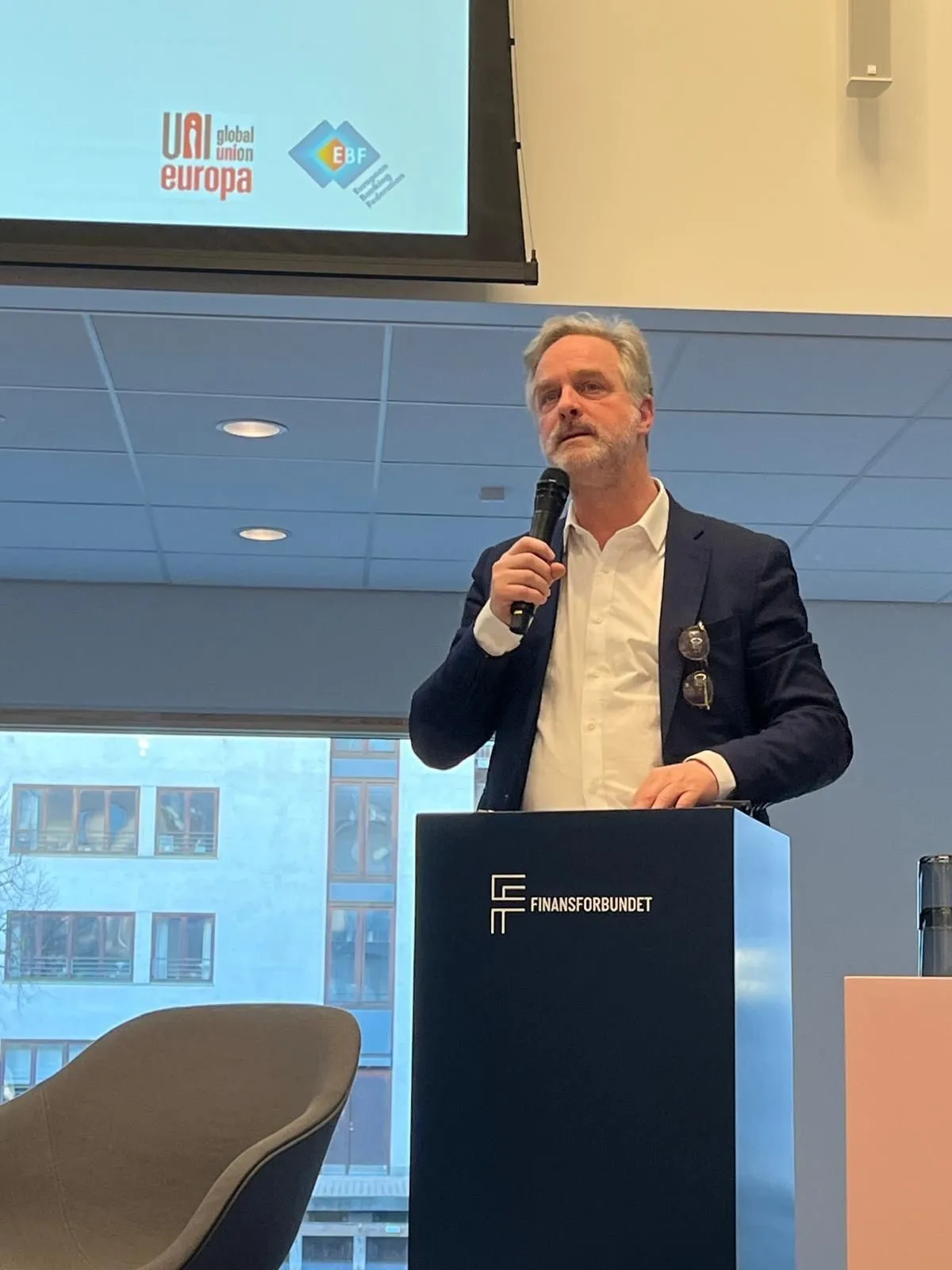
How the EU banking system is adapting to growing cybersecurity threats
European banks are adapting on the assumption that cyber risk is now a permanent geopolitical risk, not just an IT issue. The response has several layers: stronger governance, tighter incident reporting, more testing, better third-party risk management, and much greater focus on business continuity and recovery. At EU level, the direction of travel is reinforced by DORA and by supervisory attention from the ECB and EBA, both of which now treat cyber and ICT risks as materially elevated.
The lesson from the war is that operational resilience matters as much as capital resilience. European banks have therefore been investing more in segmentation, backup capability, crisis communication, supplier mapping and scenario testing. The ECB has also folded geopolitical shocks into its supervisory thinking more generally.
On cooperation with Ukraine, there is real substance, even if it is not always branded as “bank-to-bank cyber cooperation”. The National Bank of Ukraine’s international technical partnerships explicitly cover cybersecurity, payment systems, financial stability and supervision, and Ukraine’s own financial-sector strategy explicitly envisages deeper cooperation with the ECB and EU supervisory bodies, including alignment with EU-style digital operational resilience. The EU and Ukraine also continue institutional cyber dialogue more broadly.
So cooperation exists, but mostly through regulatory, supervisory, technical-assistance and policy channels, rather than through one single highly visible banking-sector cyber platform.

On loopholes in preventing sanctions evasion
I believe that the biggest gaps are not usually in the headline sanctions themselves, but in implementation, data and circumvention techniques.
A first risk is the use of complex intermediary chains: shell companies, opaque ownership structures, third-country routing, and trade-based schemes that make end-use or end-beneficiary analysis difficult. The EU has repeatedly tightened anti-circumvention measures and in October 2025 even imposed transaction bans on certain third-country banks and traders involved in circumvention. That shows the problem is not theoretical.
A second gap is uneven information and outdated risk understanding. The EBA has already found that in some member states AML/CFT risk assessments were relying on old national risk assessments and therefore did not adequately capture emerging risks linked to Russia’s war, crypto-assets and other new channels. That matters because poor risk understanding at the supervisory or institutional level leads to weak controls in practice.
A third risk concerns crypto-assets, payments innovation and AI-enabled evasion techniques. These do not replace traditional evasion methods, but they can accelerate layering, obfuscation and cross-border movement. The EBA’s recent risk work also points to growing fraud and operational risks, including those amplified by AI.
Lessons from Ukraine’s banking system in wartime
First and foremost, I would like to note that we are impressed by the resilience of Ukrainians as a whole, as well as that of the banking sector. The war and the current situation have shown that resilience is first evident at the operational level, and only subsequently in the statistics. Yes, capital and liquidity are important. But in the long term, it is just as important whether payments continue, whether branches or digital channels remain operational, whether data remains secure, and whether trust is maintained – which appears to be the case in Ukraine.
The second lesson is the value of a strong and credible central bank-supervisor. The NBU has combined wartime crisis management with continued modernisation, including risk-based supervision and closer integration with European standards. That is an important lesson for Europe too: resilience is strongest when supervision, payments, cyber preparedness and crisis communication reinforce each other.
The third lesson is that digital capability and redundancy are strategic assets. A system under physical threat needs remote access, reliable payment rails, cybersecurity discipline and the ability to reroute operations quickly. This is highly relevant for Europe’s own debates on DORA, the digital euro, payment autonomy and cyber resilience.
And finally, Ukraine shows that resilience and competitiveness are not complete opposites. A system that can function under extreme stress is also a system that can inspire trust, attract capital and support recovery. In that sense, Ukraine’s banking sector has demonstrated that resilience is not only about surviving shocks; it is also about preserving the foundations for future growth.


