
Russian employers are reluctant to hire contract workers after the war
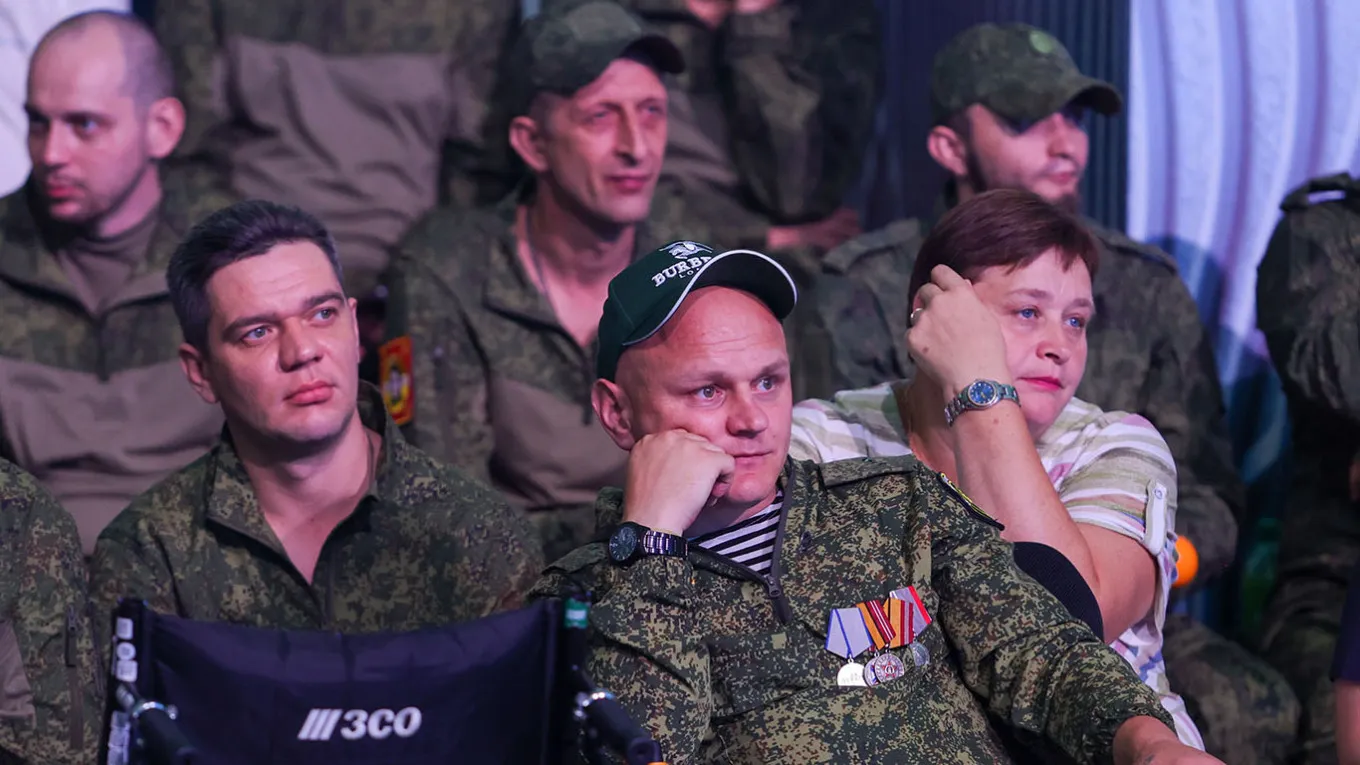
Russian authorities are urging employers to prepare for the return of a large number of contract soldiers from the war and to hire them. However, a study has revealed the opposite: men who voluntarily signed up to fight in the war against Ukraine receive fewer positive responses from Russian employers than those who served as conscripts.
This is the conclusion reached by researcher Sergey Alekseev. In 2025, he conducted an experiment in which he used 60 pairs of fictional résumés and submitted them to real job openings. In each pair, the candidates’ profiles were identical. The men were roughly the same age—between 25 and 35—had similar educational backgrounds, and had three to five years of work experience.
There was only one difference. One resume stated that the candidate had voluntarily served on a contract basis in the Russian army and participated in the so-called “special military operation.” The other stated that the man had completed regular conscripted military service. The results were unfavorable for those whom the Russian authorities call “heroes of the special military operation.” Only 36.7% of contract soldiers received a positive response from an employer. Among candidates who had served as conscripts, the rate of positive responses was significantly higher—55%.
The researcher defined a positive response as any reaction from the employer within 30 days. This could have been an invitation to an interview or a request for additional information. Thus, the mere fact of voluntarily participating in the war did not help a candidate find a job. On the contrary, in this experiment, it noticeably reduced the chances of receiving a positive response from a recruiter.
Where Contract Workers Are Least Wanted
Resumes were submitted for entry-level and mid-level positions. These included job openings in retail, logistics, IT, administrative work, and manufacturing. The study covered various cities in Russia. Resumes were sent to employers in Moscow and St. Petersburg, other major cities, as well as in small towns and rural areas.
The situation was worst for candidates who mentioned having served as volunteers in the war in the retail sector and in Moscow. However, the study does not identify the exact reason why employers reacted more negatively to these particular candidates. The author of the study suggests several possible explanations.
Recruiters may fear psychological issues stemming from combat experience. Others may doubt the discipline of such employees, worry about potential reputational risks, or simply not want to deal with people associated with the war. Another possible reason is the attitude of Russians themselves toward those who volunteered for the war.
State propaganda says one thing; employers say another
The results of the experiment are particularly striking in light of Russian state policy. For years, the Russian government has portrayed war participants as heroes and patriots, and is now trying to prepare the country in advance for their return. Last week, Vladimir Putin stated that many of those who fought in the war will return to Russia once it ends. According to him, the government and society need to prepare for this in advance, particularly by addressing the issue of their employment. “After the special military operation ends, many of our young men will return. They will need jobs, and they will come with healthy ambitions,” Putin said.
The Russian president urged officials to begin preparing for this task in advance. Back in February, he approved a package of directives on employment and personnel policy regarding war veterans. However, research findings show that the state’s image of a “hero” does not always translate to civilian life.
The study’s author, Sergei Alekseev, notes that official rhetoric attempts to portray all war participants as heroic patriots. At the same time, some Russians draw a clear distinction between those who were conscripted and those who volunteered to fight as contract soldiers. “If the state’s heroic rhetoric were directly carried over into civilian life, the opposite would be observed,” the researcher notes. According to him, volunteers may be perceived as people who went to war for money, and they may also be associated with psychological trauma or possible war crimes.
Russia is already preparing positions for them
The issue of employment for veterans has become particularly pressing for the Russian authorities due to the way the Kremlin is replenishing its army. After the start of the full-scale invasion in 2022, Russia lost a significant portion of its professional military personnel who participated in the early stages of the war. The Kremlin used various methods to further replenish the army.
In the fall of 2022, Russia carried out a so-called “partial mobilization,” during which the authorities announced the conscription of approximately 300,000 people. Before the war, fighters from private military companies—notably “Wagner”—were also recruited en masse, as were prisoners, who were offered the chance to participate in combat operations in exchange for a pardon. However, the main source of reinforcements for the Russian army has been the recruitment of contract soldiers.
Russian officials regularly report tens of thousands of new contract soldiers. In particular, Dmitry Medvedev stated that more than 30,000 people allegedly join the army this way every month. That is why, once the war ends, Russia may face a large number of people returning from the front lines and looking for work.
The government wants to introduce quotas
The Kremlin is already trying to address the problem through more than just appeals to the business community. The State Duma is considering a bill that could establish a quota for employers to hire war veterans. The proposed quota ranges from 2% to 4% of an organization’s total workforce. At the federal level, such a requirement is not yet in effect. At the same time, more than 30 Russian regions have already introduced various rules regarding the employment of veterans.
Some regions have set quotas specifically for participants in the so-called “special military operation.” In others, the quota applies to a broader category of combat veterans, which may also include veterans of the wars in Afghanistan and Chechnya. According to Alexeyev, this could prove particularly controversial in regions where separate quotas are specifically designated for volunteers and contract soldiers. This creates a paradoxical situation. The state is trying to give war veterans an advantage in the labor market, but some employers may view their military experience as an additional risk.
“Hero” on a poster and a job candidate at an interview
The researcher believes that the results of the experiment directly contradict the image that Russian authorities are trying to create around war veterans. “The study’s findings contradict the heroic narrative about participating in war that the state promotes,” notes Alexeyev. He emphasizes that if state propaganda truly influenced employers’ behavior, voluntary military service should be neutral for a candidate—or even give them an advantage.
But the experiment showed the opposite result. A contract soldier received a positive response less often than a man with the same experience but who had completed mandatory military service. This could become a serious problem for the Russian authorities if, after the war, hundreds of thousands of people with combat experience enter the civilian labor market at the same time. While the government speaks of the need to support and employ “heroes of the special military operation,” according to the study, some Russian businesses may be in no hurry at all to hire them. This is reported by Russian media.
On Monday, Russian leader Vladimir Putin authorized the government of Russia—the aggressor state—to take control of private critical infrastructure facilities if they are deemed insufficiently protected against Ukrainian attacks or other threats. This was reported by ERR News.


