
Holiday on August 7, 2026: Côte d'Ivoire celebrates Independence Day
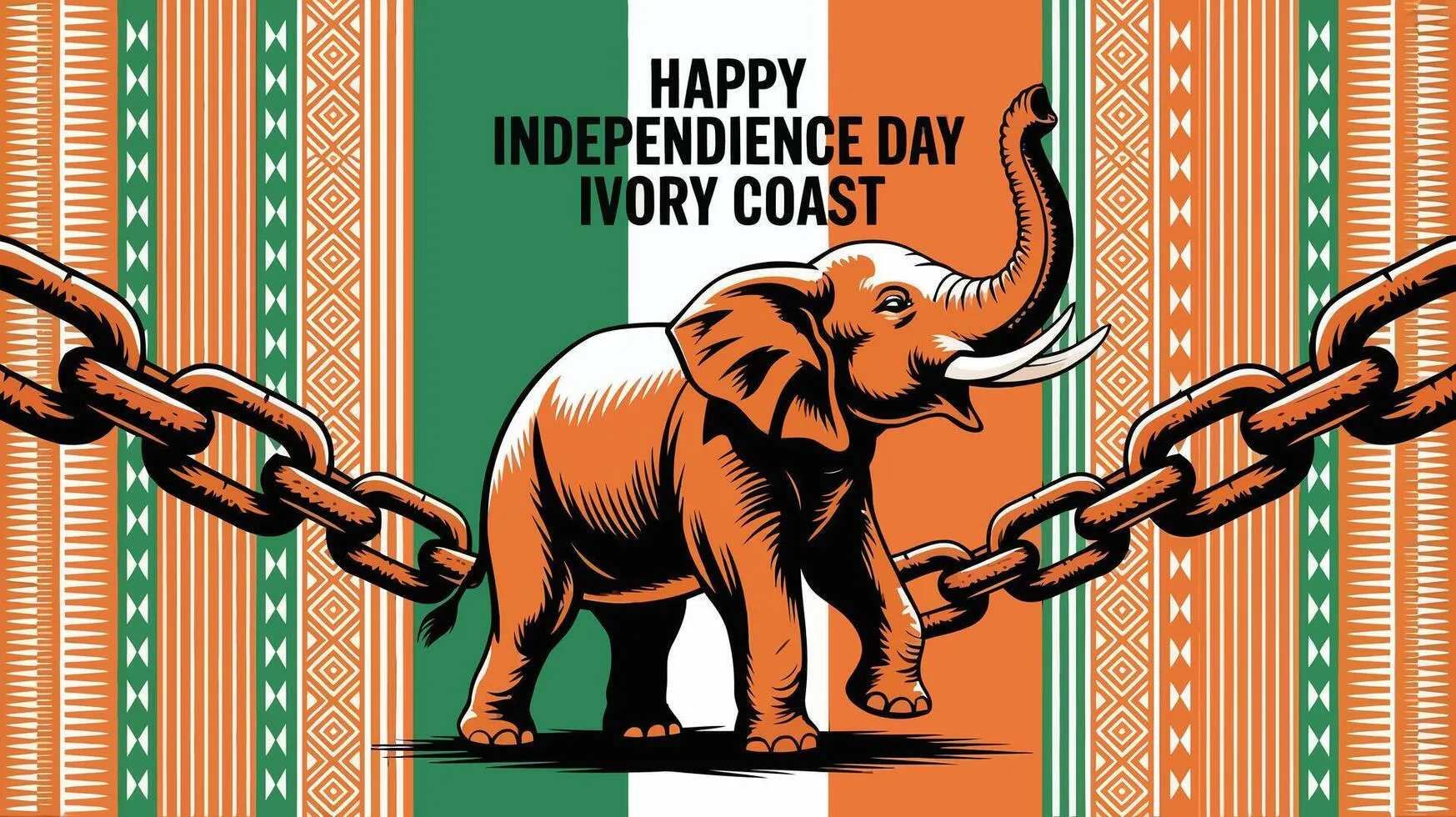
On August 7, Côte d’Ivoire celebrates Independence Day—the country’s most important national holiday. It was on this day in 1960 that the country declared its independence from France, completing the transition from colonial status to full sovereignty. In 2026, Côte d’Ivoire will celebrate the 66th anniversary of its independence, and across the country, this day will serve as an occasion to reflect on the nation’s history, its first president, Félix Houphouët-Boigny, its national symbols, and its cultural heritage.
Ivory Coast’s Independence Day falls on August 7 each year. It is a national holiday of special significance for the country and its citizens. In 2026, the date falls on Friday, August 7, and Côte d’Ivoire will celebrate 66 years since the declaration of independence.
For Ivorians, this is not just another day off. August 7 commemorates the moment when the country gained the right to independently determine its own political course and build state institutions. On this day, people remember those who fought for political rights and self-governance, as well as the first generation of leaders of independent Côte d’Ivoire. Félix Houphouët-Boigny holds a special place in this history—a politician who led the country at the time of independence and remained its president until 1993.
How Côte d’Ivoire Achieved Independence
The country’s path to independence was not a single decision made in a single day. It spanned decades and involved gradual political changes. France began actively establishing control over the territories of modern-day Côte d’Ivoire in the 19th century. In 1893, the French colony of Côte d’Ivoire was officially established, and over the following years, the French administration expanded its control over the interior regions.

After World War II, the situation began to change. In 1946, Côte d’Ivoire was granted the status of an overseas territory of France, and its inhabitants gradually gained more political rights. Félix Ufue-Buany played an important role in this process. He was a doctor by training, a farmer, and a politician, and later became one of the most influential figures in French West Africa.
In 1956, French reforms expanded opportunities for local self-government. This was one of the steps toward future independence. In 1958, Côte d’Ivoire became an autonomous republic within the French Community. Formally, the country already had its own government, but key issues—including defense, foreign policy, and the monetary system—remained tied to France.
What Happened on August 7, 1960
In 1960, the process of decolonization of French territories in West Africa accelerated. France agreed to grant Côte d’Ivoire full sovereignty. On August 7, 1960, the country’s independence was officially proclaimed. This date became the basis for the country’s main national holiday. Félix Houphouët-Boigny, who had previously headed the government of the autonomous republic, became the first president of independent Côte d’Ivoire. According to official government records, it was he who proclaimed independence on this historic day.

In his speech, Ufue-Buany stated: “I solemnly proclaim the independence of Côte d’Ivoire.” Independence meant that the country gained full sovereignty and could independently determine its domestic and foreign policies. At the same time, the transition from a colonial past to an independent state was relatively peaceful. Ufué-Buanyí advocated for close economic and political ties with France, and after declaring independence, Côte d’Ivoire did not pursue a sharp break with its former colonial power.
Who Is Félix Ufue-Buany
Félix Ufue-Buany is one of the central figures in the history of modern Côte d’Ivoire. He was born in 1905 and initially worked as a doctor. He later entered politics and became Côte d’Ivoire’s representative in the French Parliament. Ufue-Buany was one of the founders of the Democratic Party of Côte d’Ivoire. He gradually emerged as the country’s chief political leader and headed the government on the eve of independence.
After the declaration of independence, he became the first president of Côte d’Ivoire. Ufué-Buanyí remained in this position for more than three decades—until his death in 1993. His policies largely shaped the first decades of the nation’s existence. He focused on agriculture, foreign investment, and close economic ties with France.
Why Independence Became Important for the Country
For Côte d’Ivoire, August 7 became a symbol of the transition to independent statehood. Before independence, key decisions regarding the country were made by the French colonial administration. After 1960, Côte d’Ivoire gained the ability to form its own government, set its own policies, and represent itself on the international stage. But independence did not mean that all problems automatically disappeared. The new state had to establish its own institutions, develop its economy, build infrastructure, and forge a shared political identity.

In the first decades after independence, Côte d’Ivoire experienced very rapid economic growth. The country’s official historical records describe the period from 1960 to 1980 as a time of sweeping changes in agriculture, industry, trade, and finance. It was during this time that Côte d’Ivoire’s reputation as one of West Africa’s most dynamic economies took shape.
The “Ivorian Miracle” and the Role of Agriculture
After gaining independence, Côte d’Ivoire’s economy grew rapidly. Agriculture played a key role in this growth. The country actively developed the production of cocoa, coffee, palm oil, and other crops. The cocoa sector became particularly important and remains of immense significance to the economy today. Côte d’Ivoire remains one of the world’s leading cocoa producers. According to estimates by the International Cocoa Organization, the country accounted for approximately 1.68 million metric tons of cocoa bean production in the 2024/25 season, making it the world’s largest producer.

This means that a significant portion of the chocolate sold worldwide is directly or indirectly linked to farms in Côte d’Ivoire. At the same time, this dependence on agriculture also creates challenges. Yields depend on the weather, plant diseases, soil conditions, and global commodity prices. Therefore, it is important for Côte d’Ivoire today not only to grow more cocoa but also to develop its processing and capture the majority of the added value within the country.
How Independence Day Is Celebrated
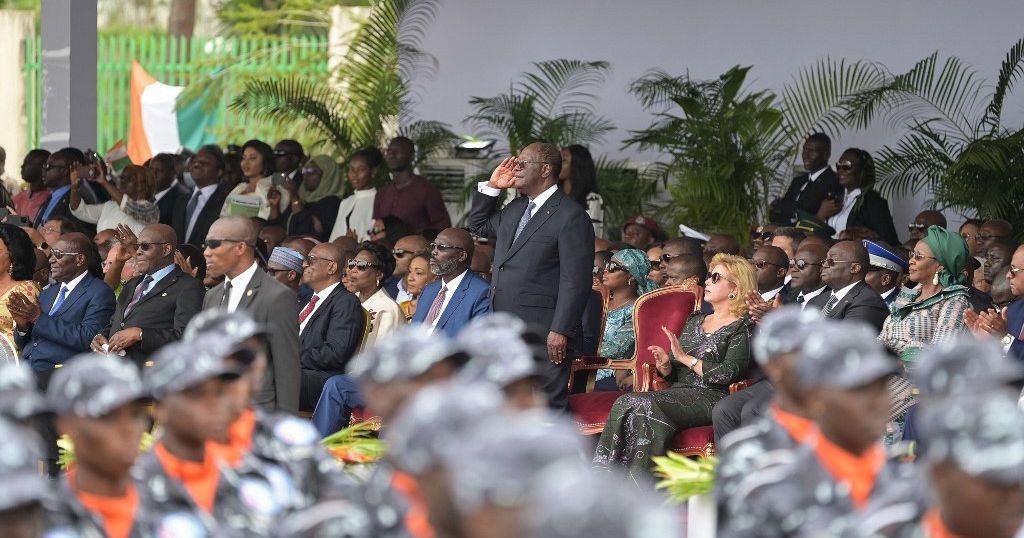
Independence Day is celebrated on a grand scale in Côte d’Ivoire. The format of the celebrations may vary from year to year, and the venue for the main festivities is often chosen in a different city. One of the main traditions is the official parade, in which the military, law enforcement, and civil organizations participate. For example, in 2024, the main events marking the 64th anniversary took place in Grand-Basam, a historic city that was once the first capital of Côte d’Ivoire. Fifteen civilian groups and 11 military units took part in the parade, and there were also aerial and motorized displays.

In 2025, Bouaké became the center of the official celebrations. A large-scale parade took place on Rein Pokou Boulevard, featuring defense and security forces, while the motorized contingent included approximately 550 vehicles and armored equipment. In other words, the main celebrations do not necessarily take place only in Abidjan or Yamoussoukro every year. Choosing a different city allows the national holiday to be an event for various regions of the country.
The parade is not the only part of the holiday
The official ceremonies are complemented by cultural and community events. In different years, the program has included concerts, torchlight parades, sports matches, community initiatives, and events for young people. For example, in Grand-Basam in 2024, there was a beach cleanup, a hospital cleanup, awareness campaigns, a concert, and a match between young people and representatives of the defense and security forces.
In 2025, in Bouaké, a large-scale choreographed performance titled “Unity in Motion” was added to the military parade. Through dance and stage compositions, it showcased the country’s various regions, cultural identities, and the idea of national unity. Such events demonstrate that Independence Day for Côte d’Ivoire is not merely a military ceremony. Significant attention is given to culture, youth, sports, and civic engagement. As a result, the holiday combines state celebrations with more informal events for ordinary citizens.
National Symbols of Côte d’Ivoire
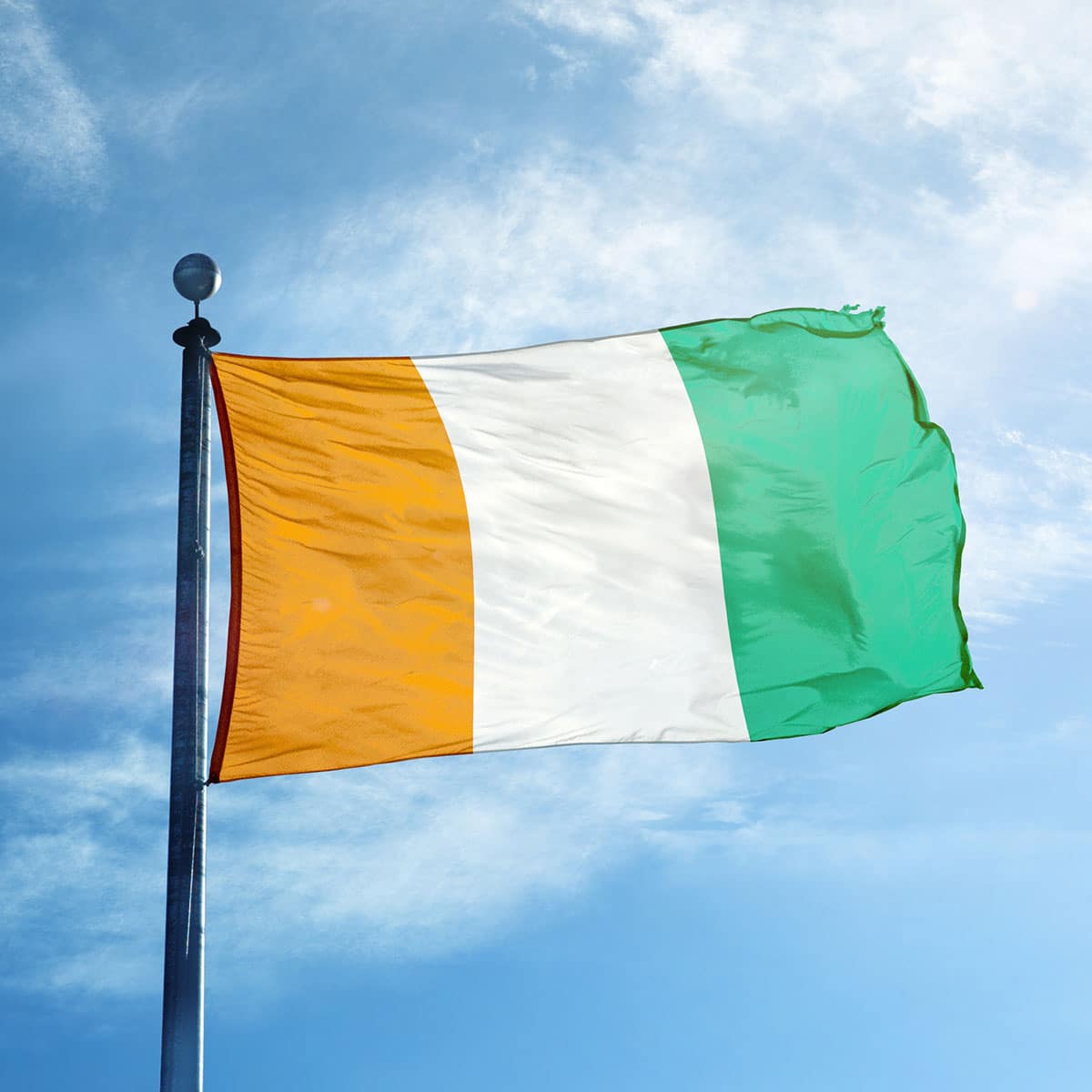
On Independence Day, special attention is paid to national symbols. The flag of Côte d’Ivoire consists of three vertical stripes—orange, white, and green. It is one of the main symbols of the country’s sovereignty. The national anthem is titled “Abidjanesa.” According to the government of Côte d’Ivoire, it was first performed at midnight on August 7, 1960—the day independence was declared.
The country’s national motto is “Unity—Discipline—Work.” These words are often repeated in official addresses on Independence Day. In 2024, President Alassane Ouattara emphasized brotherhood, unity, discipline, and work as the values that should unite society. Therefore, the national holiday is also a time to remind people that independence requires not only symbols but also constant work to build the nation.
Côte d’Ivoire has two capitals
Côte d’Ivoire has an interesting feature: the country’s political capital is Yamoussoukro, while Abidjan remains the main economic and business center. Yamoussoukro became the country’s capital in 1983. It is the hometown of Félix Houphouët-Boigny.
Abidjan was the capital for a long time and remains the largest and one of the most important cities in the country. It is home to major enterprises, banks, commercial institutions, and port infrastructure. This is also significant for Independence Day. Official celebrations may take place in different cities to emphasize that the national holiday belongs not to a single region, but to the entire country.
Culture of Côte d’Ivoire
Côte d’Ivoire is a multicultural country with a wide variety of ethnic groups and linguistic traditions. This is particularly evident during national holidays, when cultural groups showcase traditional costumes, music, and dances. One of the most famous cultural phenomena is the zaouli—a dance tradition of the Guro people that combines music, dance, and masks. UNESCO has inscribed the zaouli tradition on the List of Intangible Cultural Heritage of Humanity.

The musical genres zouglou and coupé-décalé are also popular in the country. They have become an important part of modern Ivorian culture and have spread far beyond the country’s borders. That’s why, during Independence Day, alongside the official ceremonies, you can see concerts, dance performances, and other cultural events.
What Else You Should Know About Côte d’Ivoire
Côte d’Ivoire is located in West Africa on the Atlantic coast. The country has access to the Gulf of Guinea, and its largest city, Abidjan, is one of the region’s major economic hubs.
Côte d’Ivoire is also known for its natural areas. The Taï and Komoe National Parks are listed as UNESCO World Heritage Sites. The country boasts a diverse natural landscape—ranging from tropical forests to savannas. Its national parks are home to rare animals and plants that require protection. Another distinctive feature is its great cultural diversity. That is why national holidays often provide an opportunity to showcase the country’s various regions and their traditions.
Independence Day as a Reminder of Unity
Ivory Coast’s history since independence has not been without its challenges. The country has endured political crises, military uprisings, and civil conflict. That is why the theme of unity is regularly emphasized in speeches on Independence Day. In 2012, following a severe political crisis, President Alassane Ouattara emphasized in an address to the nation that independence and freedom must be strengthened every day.
In the years that followed, official events also frequently focused on peace, brotherhood, civic responsibility, and a shared future. This explains why Côte d’Ivoire’s Independence Day today is not merely a commemoration of 1960. For the government, it is also an opportunity to discuss the country’s future, and for citizens, to reflect on history, culture, and what unites people despite regional and ethnic differences.
Interesting Facts About Côte d’Ivoire’s Independence Day
Independence was declared on August 7, 1960. This date became the country’s main national holiday.
Félix Houphouët-Boigny became the first president. He led Côte d’Ivoire until 1993.
In 1958, the country had already become an autonomous republic. However, it did not yet have full sovereignty.
The national anthem was performed for the first time on August 7, 1960. According to government records, this took place at midnight on the day independence was declared.
The main celebrations may take place in different cities. In 2024, Grand-Bassam hosted the festivities, and in 2025, it was Bouaké.
Côte d’Ivoire is the world’s leading producer of cocoa. According to ICCO estimates, the country produced approximately 1.68 million metric tons of cocoa beans during the 2024/25 season.
The country’s motto is “Unity—Discipline—Work.” These words are one of the key national symbols of Côte d’Ivoire.
Abidjan is not the country’s political capital. In 1983, the capital was moved to Yamoussoukro, although Abidjan remained the main economic center.
What August 7 Means for Côte d’Ivoire
Ivory Coast’s Independence Day is a date that brings together history, politics, and culture. On August 7, 1960, the country took the final step from autonomy to full sovereignty. This moment marked the beginning of a new era in which Côte d’Ivoire began to build its own nation and define its place in the world. Over the decades, the country has experienced periods of rapid economic growth, serious political crises, and difficult times. But Independence Day has remained an important date that annually draws attention to the issue of national unity.

On August 7, 2026, Côte d’Ivoire will celebrate 66 years of independence. The country will once again commemorate the events of 1960, its first president, Félix Houphouët-Boigny, and the people who were at the nation’s founding. Along with this, there will be music, the national anthem, festive events, and cultural performances. For Côte d’Ivoire, this is not just a date on the calendar. It is a day when the country reflects on its beginnings as an independent nation and envisions its future.


