
A nearly extinct species of antelope has returned to the jungles of Kenya
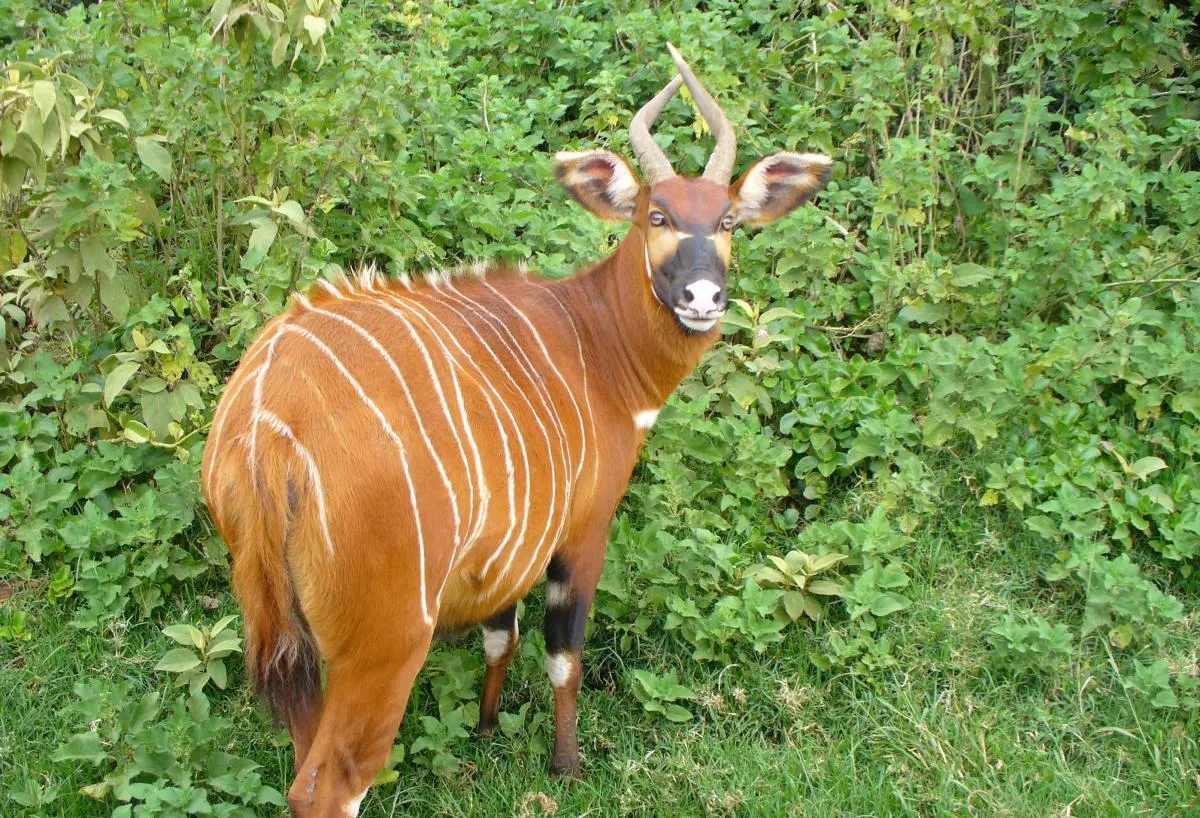
In Kenya, camera traps have captured images of a rare bongo antelope, which had not been seen in the region for over five years and was already considered nearly extinct. The animal’s appearance in the Masai Mau forests came as a surprise to researchers and conservationists.
An event occurred in the mountain forests of Kenya that sounds almost like a small miracle to scientists—camera traps captured a rare bongo antelope, which, due to its ability to hide in dense foliage, is also called the “ghost of the forest,” and which was already considered virtually extinct in this region.
The bongo is one of Africa’s rarest large antelopes, inhabiting remote mountain forests and possessing such effective camouflage that it literally blends in with the vegetation. This is precisely why it is very difficult to spot in the wild, and the prolonged lack of sightings only heightened fears that the population might have disappeared from part of its range.
The article notes that until recently, it was believed that bongos had almost completely disappeared from the Masai Mau forests, as they had not been recorded there for about five years. The main population, researchers speculated, might have remained only in the Aberdare Mountains region.
To investigate the situation, conservationists set up a network of camera traps in the region, and it was these that yielded an unexpected result. The cameras captured the animals in the Masai Mau forest, located about 200 kilometers from Aberdare, which was a significant sign for scientists. “When we first reviewed the photos, there was incredible excitement at the camp. This photograph is the result of many years of hard work by our rangers on the ground in one of Kenya’s most inaccessible forests,” said Oscar Dyer, Director of Operations for the Mountain Bongo Project.
According to him, the reappearance of the bongo in this area could serve as an impetus to strengthen conservation measures and expand the protection of forest areas where these animals may still potentially remain.
Experts emphasize that the bongo is on the brink of extinction due to habitat loss and poaching, and its population in the wild is critically low. That is why every new sighting of this species is of great importance for the survival of the population. “I believe the world would be poorer without them. Their presence makes the forest more magical. This is a problem caused by humans, and we need people to solve it,” noted one of the conservationists, emphasizing that without joint efforts, the bongo could disappear for good.
The discovery in Masai Mau was not only a scientific breakthrough for researchers but also a reminder of just how fragile ecosystems remain and how quickly rare species can vanish and then unexpectedly reappear in remote corners of the wilderness. IFLScience reports on this.
The 17th Ebola outbreak has been recorded in the Democratic Republic of the Congo, claiming the lives of 80 people so far. This time, the disease was likely caused by the little-studied Bundibugyo ebolavirus strain, rather than the more common Zaire ebolavirus.
Ethiopia has recorded its first outbreak of the Marburg virus, which is clinically similar to Ebola. The pathogen is capable of spreading rapidly, but there are no vaccines against it.


