
About a thousand little penguins in Australia receive first H5N1 vaccine dose
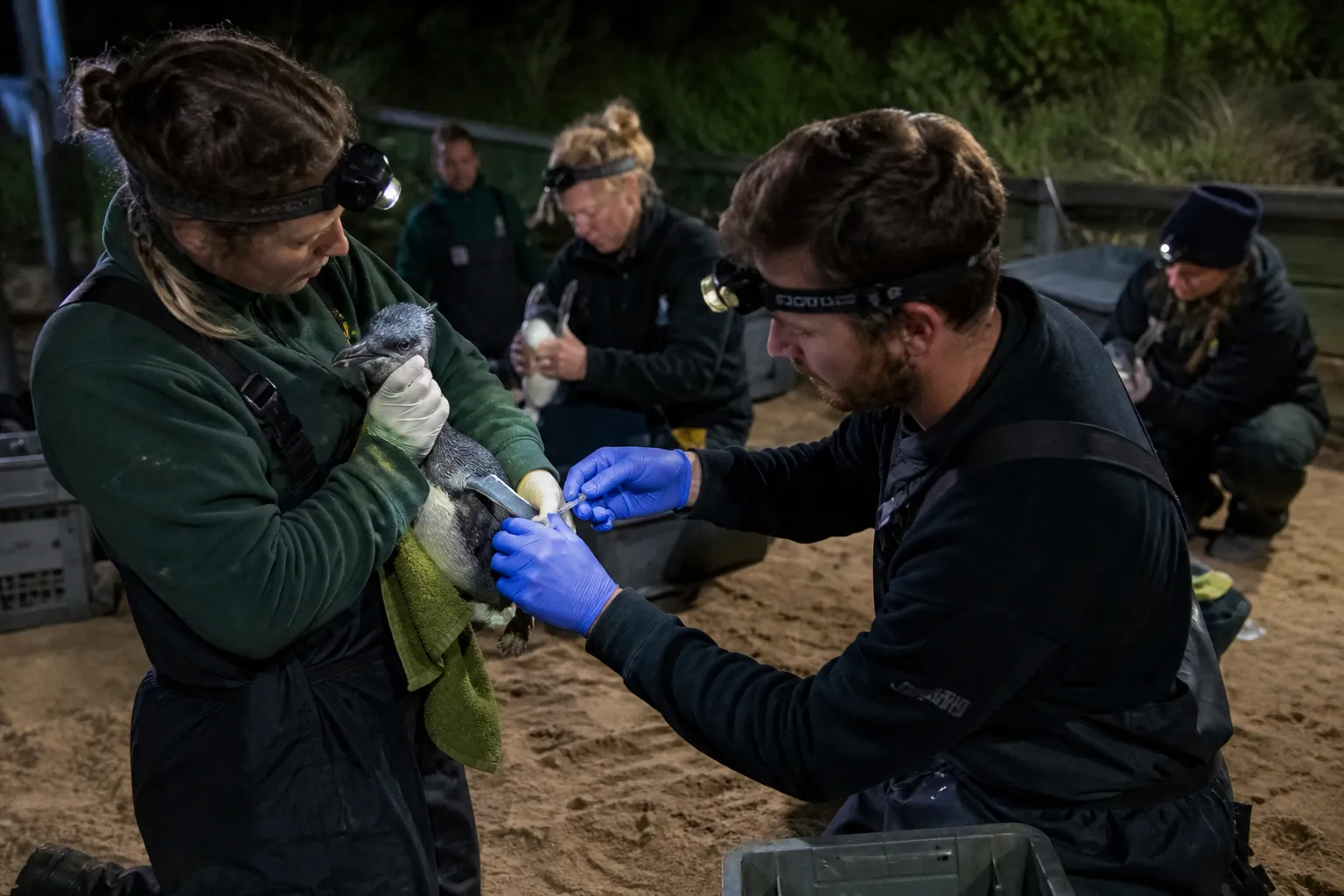
On Phillip Island in the Australian state of Victoria, about a thousand little penguins have received the first dose of a vaccine against H5N1 avian influenza. Authorities plan to vaccinate 5,000 birds on Phillip Island and in St Kilda, ABC News Australia reports.
Two-dose program
Over the past week, workers have been catching and vaccinating hundreds of penguins every evening. The two-dose program requires about 10,000 vaccine doses.
Penguins taking part in the nightly “penguin parade” on Phillip Island are expected to be recaptured in three to four weeks to receive the second dose. Victoria’s Environment Minister Jaclyn Symes said the vaccine should increase antibody levels in the birds, but it is not yet known whether it will prevent influenza infection. According to her, vaccination may provide some level of protection and help the penguins recover if they become infected.
More current news is available on the UA.News Telegram channel Telegram.
The species’ largest colony
Phillip Island is home to about 40,000 little penguins, the world’s largest colony of this species. Worst-case scenario modelling suggests that a major avian influenza outbreak could result in the deaths of between 8,000 and 16,000 birds.
Phillip Island Nature Parks manager Ben Thomas said that after returning from the beach, the penguins are directed into an enclosure and then moved into smaller pens for vaccination. He noted that the team is trying to act quickly and carefully, as the virus could spread rapidly through the colony because the birds live in close proximity.
On the day the thousandth penguin was vaccinated, the H5N1 strain was detected in a long-nosed fur seal in South Australia. This was the first confirmed case of the strain crossing into a mammal population in Australia. Phillip Island Nature Parks chief executive Catherine Basterfield believes that a mass vaccination program on this scale may be the first in the world.


